
AeroGenie — Ihr intelligenter Copilot.

Trends
Categories
Boeing Employs AI to Accelerate Parts Validation
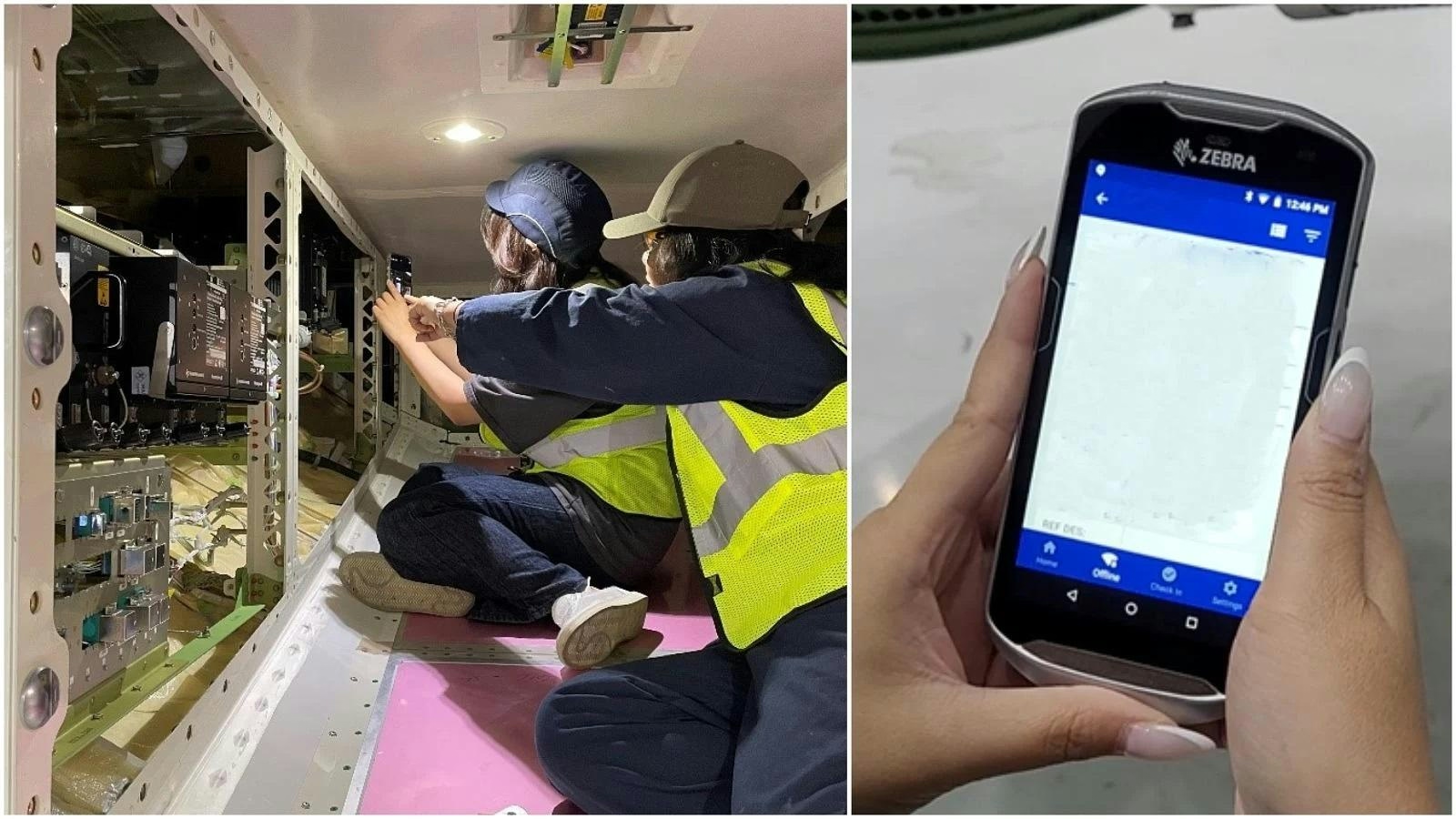
Boeing Employs AI to Accelerate Parts Validation
Advancing Aerospace Manufacturing with Artificial Intelligence
Boeing is enhancing its manufacturing operations by integrating artificial intelligence (AI) to improve the accuracy and efficiency of aerospace parts validation. At its Renton and Everett facilities in Washington, the company has introduced a new AI-powered handheld device developed internally. This tool enables inspectors to rapidly verify the correct installation of aircraft components by capturing images of parts, thereby reducing manual effort, minimizing errors, and automatically updating part information within Boeing’s digital systems.
Maintaining traceability of aircraft parts remains a critical priority for Boeing, ensuring both safety and regulatory compliance. The company’s Aircraft Readiness Log (ARL) meticulously records the origin, manufacturing details, usage, and maintenance history of every component installed on an aircraft. This comprehensive documentation not only guarantees transparency and adherence to standards but also serves as a safeguard against the introduction of unapproved or counterfeit parts into the supply chain.
Collaborative Development and Operational Impact
The AI tool represents a collaborative achievement involving Boeing engineers across the United States, the Boeing Korea Engineering & Technology Center (BKTEC), and Boeing Artificial Intelligence (BAI). Utilizing Optical Character Recognition (OCR), the device captures serial numbers and cross-references them against master databases. This automation streamlines data entry, enhances first-pass accuracy, and facilitates seamless integration of digital information across multiple systems, thereby optimizing the inspection workflow.
Wanbin Song, AI team lead at BKTEC, emphasized the importance of user input in the tool’s design, noting that quality inspectors identified challenges in existing processes and helped shape a solution that minimizes disruption to established workflows. Hector Silva, Vice President of Regulatory Compliance and Core Quality at Boeing, highlighted the extensive collaboration between engineers and inspectors on the factory floor to ensure the tool’s smooth adoption.
Currently, the AI device supports validation for over 1,400 parts of the Boeing 737, with plans for broader implementation across other models. The technology delivers significant benefits by reducing manual data entry, improving data quality through accurate serial number capture, saving time and costs by minimizing rework, and enabling integrated digital data management.
Challenges and Industry Implications
Despite these advancements, Boeing faces challenges in workforce adaptation to AI-driven processes and the need for consistent, accessible data to support AI systems effectively. Additionally, geopolitical tensions pose risks to delivery schedules and order volumes, complicating the company’s global operations.
Market analysts are closely monitoring Boeing’s return to profitability, with many attributing operational improvements to AI integration. The broader aerospace industry is also responding to this technological shift; for instance, SpaceX’s collaboration with Cursor AI exemplifies the growing emphasis on AI adoption in aerospace manufacturing.
Boeing’s AI initiatives are not only enhancing quality, efficiency, and safety in aircraft production but are also accelerating digital transformation across the aerospace sector.

ViewTech Borescopes Highlights New 3D Stereo Measurement Video Borescope at MRO Americas

New York Launches First Point-to-Point Electric Air Taxi Flights
Cargo Drones to Operate Over East River in Yearlong New York Trial

India’s Jio-bp and VJaitra to Launch Nationwide eVTOL Charging Network
Avora Aviation Sells CFM56 Engines to Setna iO

Air Nostrum E&M Renews ATR Maintenance Agreement

The Role of Independent Technical Oversight in Business Aviation
Engine Fire on Swiss Flight During Delhi Takeoff, Passengers Unharmed
Safran Launches Helicopter Engine Maintenance Hub in Germany

ESBU Seeks to Tax Transport Leasing as Royalties, Overlooking Judicial Precedent
