
AeroGenie — Ihr intelligenter Copilot.

Trends
Categories
Catering Truck Strikes Singapore Airlines A380 Engine, Delaying Frankfurt Flight
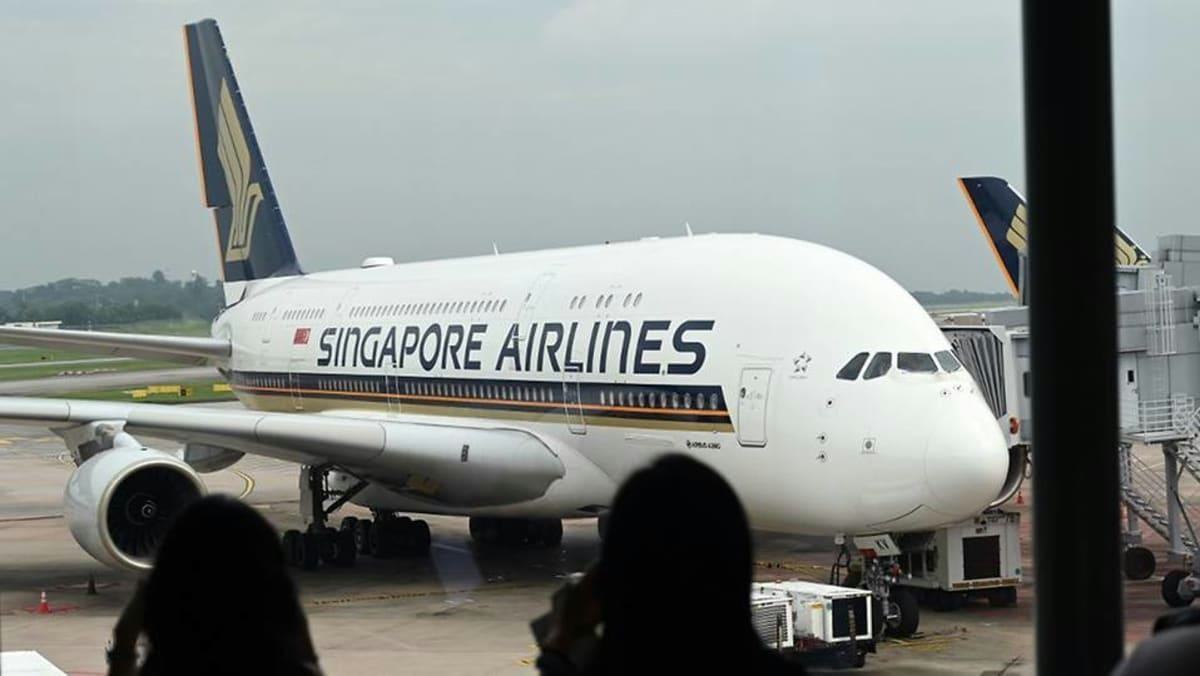
Catering Truck Incident Delays Singapore Airlines A380 Flight to Frankfurt
A Singapore Airlines flight bound for Frankfurt experienced a substantial delay after a catering truck struck one of the Airbus A380’s engines at Singapore’s Changi Airport. The incident occurred during ground handling prior to passenger boarding, necessitating immediate technical inspections and operational adjustments to ensure safety.
Flight SQ326, initially scheduled to depart at 12:35 pm, was held on the ground after the catering vehicle grazed the engine cowling. Although airline officials characterized the contact as minor, engineers conducted detailed assessments to verify the engine’s structural integrity. To mitigate extended disruption, Singapore Airlines deployed a replacement aircraft in accordance with established safety protocols.
No passengers were present on board at the time of the incident, and no injuries were reported. The damaged engine cowling was subsequently repaired, allowing the aircraft to return to service. Following the aircraft substitution, SQ326 departed at 2:13 pm, nearly two hours behind schedule, carrying 452 passengers and 28 crew members. The flight arrived in Frankfurt at 8:40 pm local time.
The delay had further operational consequences. The return flight, SQ325 from Frankfurt to Singapore, was cancelled due to curfew restrictions at Frankfurt Airport, which prohibit late-night departures. Singapore Airlines responded by providing affected passengers with refreshments, hotel accommodations where necessary, and assistance with rebooking onward connections. The airline reiterated its commitment to safety and underscored the critical importance of close coordination between ground handlers and flight crews to prevent similar incidents, particularly in busy airport environments.
Broader Industry Context and Operational Challenges
This disruption occurs amid wider challenges facing the aviation sector. Rising fuel costs and capacity constraints are anticipated to cause additional operational disruptions during the peak summer travel season, with potential repercussions for the hospitality industry. Airlines globally are adjusting capacity and flight schedules in response to these pressures.
Meanwhile, Lufthansa, a key competitor, continues to grapple with operational difficulties stemming from ongoing labor disputes. Widespread strikes have left tens of thousands of passengers stranded and forced the cancellation of most long-haul flights. In response, Lufthansa is accelerating the retirement of certain aircraft fleets and exploring outsourcing options. These developments may influence how other carriers, including Singapore Airlines, manage their operations amid increasing market pressures.
The incident at Changi highlights the complexity of ground operations at major international hubs. Even minor contact between ground vehicles and aircraft can lead to significant delays due to the necessity of comprehensive safety inspections. As airlines confront both immediate operational incidents and broader industry challenges, maintaining safety standards while minimizing passenger inconvenience remains a central focus of their response strategies.

ViewTech Borescopes Highlights New 3D Stereo Measurement Video Borescope at MRO Americas
New York Launches First Point-to-Point Electric Air Taxi Flights
Cargo Drones to Operate Over East River in Yearlong New York Trial

India’s Jio-bp and VJaitra to Launch Nationwide eVTOL Charging Network
Avora Aviation Sells CFM56 Engines to Setna iO
Air Nostrum E&M Renews ATR Maintenance Agreement
The Role of Independent Technical Oversight in Business Aviation
Engine Fire on Swiss Flight During Delhi Takeoff, Passengers Unharmed

Safran Launches Helicopter Engine Maintenance Hub in Germany

ESBU Seeks to Tax Transport Leasing as Royalties, Overlooking Judicial Precedent
