
AeroGenie — Votre copilote intelligent.
Posez toutes vos questions. Analysez tout. Agissez instantanément.

Tendances
Categories
Actualités aéronautiques. Propulsé par l'IA.
Vérifié par ePlane AI
L'IA vérifie les faits de chaque histoire avant sa mise en ligne.
Dernières nouvelles
Actualités tendances
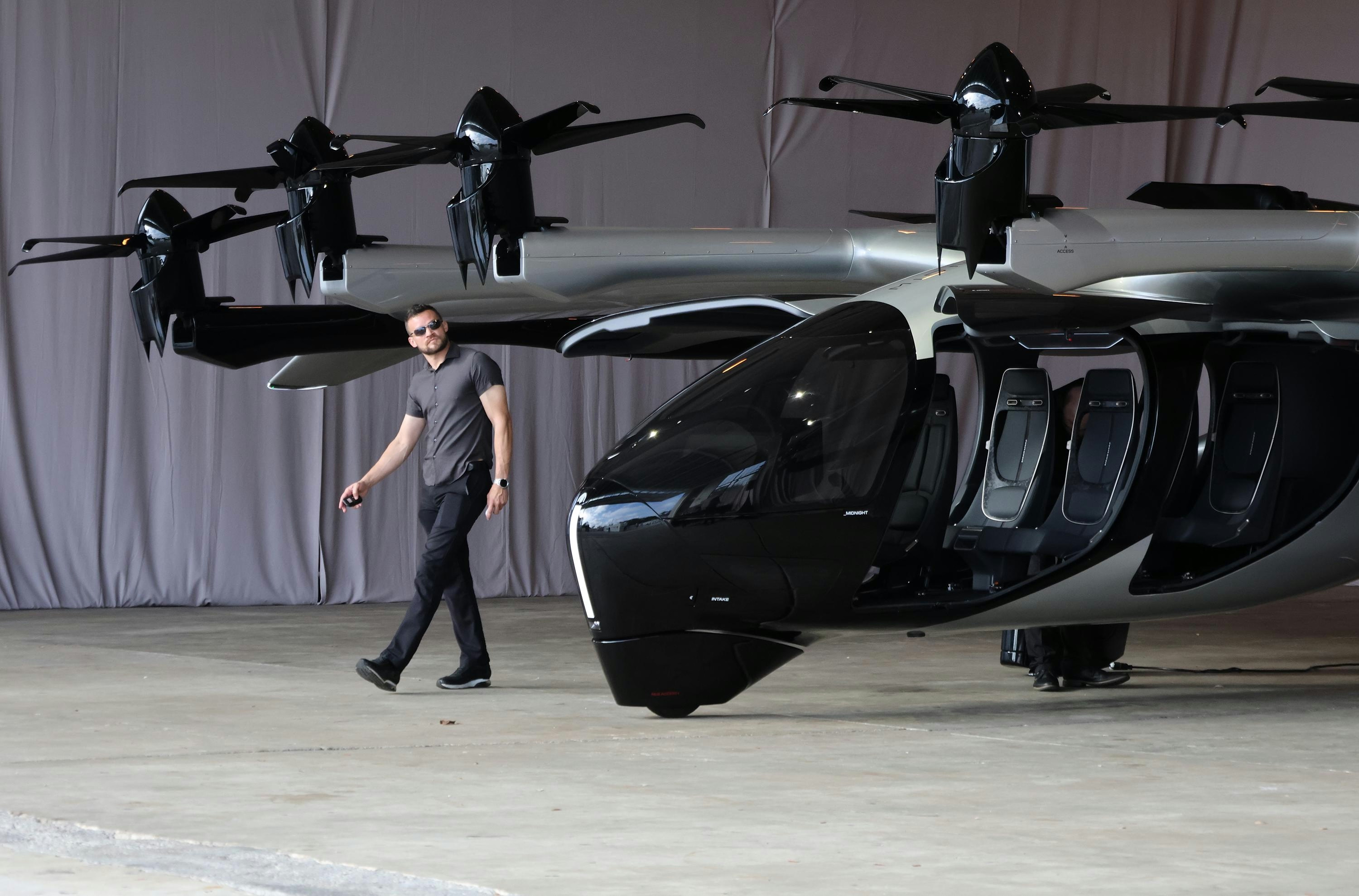
Archer Aviation Shares Rise 15% Following Miami Air Taxi Initiative and Tiltrotor Deal
Archer Aviation Shares Rise 15% Following Miami Air Taxi Initiative and Tiltrotor Deal
Archer Aviation’s shares surged 15% this week after the company announced plans to establish an electric air taxi network across the Miami metropolitan area and revealed an exclusive partnership with Karem Aircraft to utilize its validated tiltrotor technology. These developments highlight Archer’s strategic focus on connecting key destinations in South Florida with electric vertical takeoff and landing (eVTOL) aircraft, while simultaneously expanding its footprint in both commercial and defense sectors.
Miami Air Taxi Network and Strategic Partnerships
The Miami initiative involves collaboration with infrastructure and real estate partners to retrofit existing helipads and build new vertiports, positioning Miami as a flagship launch market alongside New York and select locations in the Middle East. The partnership with Karem Aircraft enhances Archer’s ambitions to develop a versatile aircraft platform capable of serving civilian and military applications. This dual-use approach aims to broaden the company’s market reach and technological capabilities.
In a related development, Archer signed agreements to acquire control of Hawthorne Municipal Airport in Los Angeles for $126 million. The airport is intended to serve as the central hub for Archer’s planned Los Angeles air taxi network and function as an artificial intelligence aviation testbed, reinforcing the company’s presence in major urban markets.
Financial Position and Legal Challenges
To support these expansion efforts, Archer launched a $650 million registered direct offering, which will finance the Hawthorne acquisition and underpin ongoing growth initiatives. Despite the recent share price rally, the company continues to face significant financial challenges, reporting a GAAP operating loss of $129.9 million in the third quarter of 2025. Archer remains a pre-revenue, capital-intensive enterprise, and concerns persist regarding its ability to convert high-profile announcements into sustainable commercial and defense programs without further dilution or erosion of investor confidence.
Complicating the company’s outlook is an ongoing legal dispute with competitor Joby Aviation. Joby has filed a lawsuit alleging that Archer improperly used proprietary information obtained from a former Joby employee to secure a partnership deal. This legal challenge, combined with persistent financial losses, continues to place Archer’s stock under close scrutiny despite recent positive momentum.
Investor sentiment remains divided, with community fair value estimates for Archer ranging broadly from approximately $2 to $22 per share. This wide variance reflects uncertainty over the company’s execution risks and long-term prospects. While the Miami air taxi network and tiltrotor collaboration have bolstered Archer’s investment narrative, near-term catalysts such as progress on aircraft certification, clear service launch timelines, and transparent capital deployment will be essential to maintaining investor confidence.
As Archer Aviation advances its vision for urban air mobility and dual-use aircraft, its ability to fulfill these ambitions while navigating legal and financial hurdles will be critical in determining whether the recent gains in its share price can be sustained.
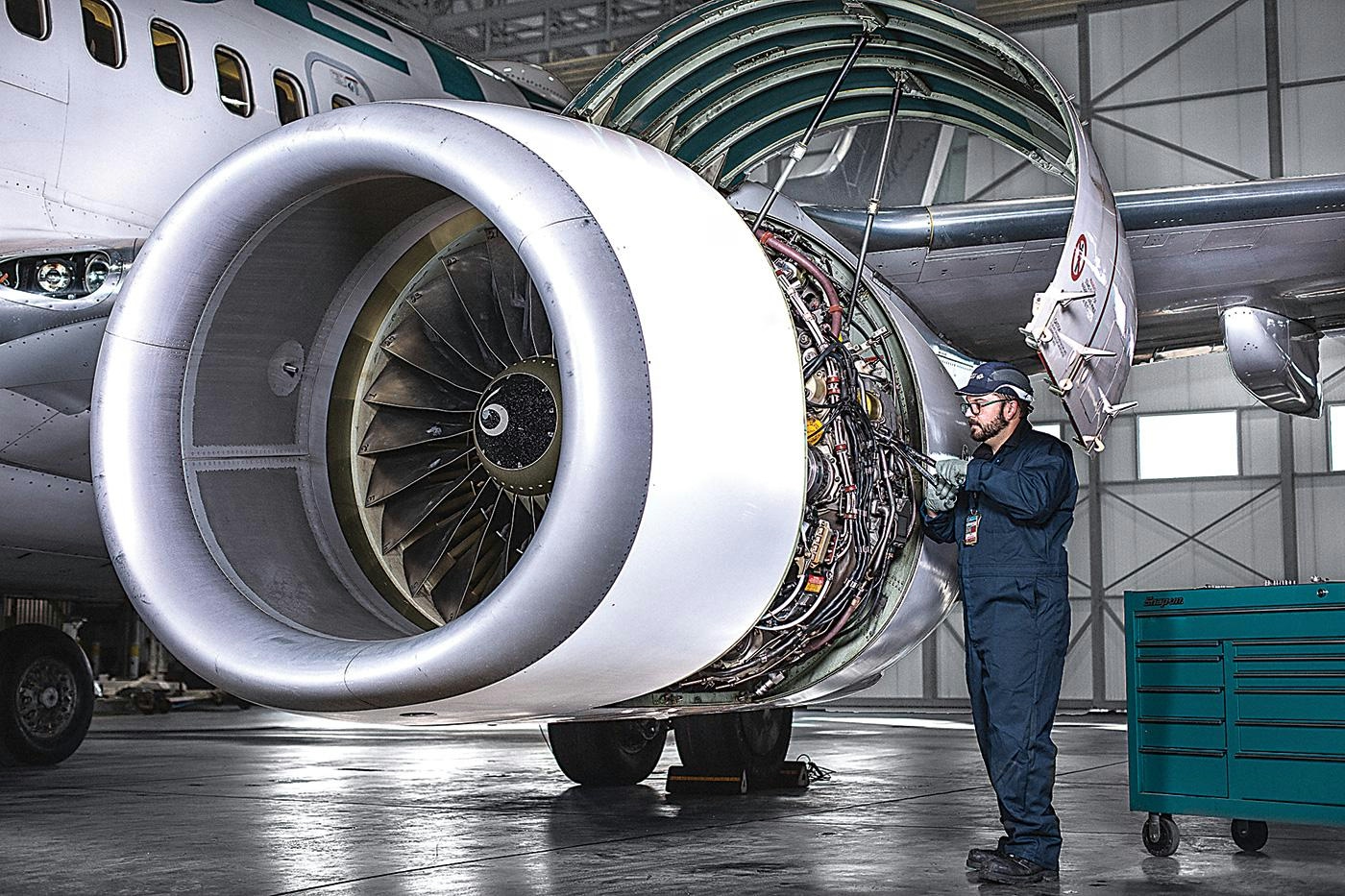
Air Canada Secures FAA Waiver Despite Engine Issues
Air Canada Secures FAA Waiver Amid Engine Maintenance Challenges
Air Canada has obtained a rare slot waiver from the U.S. Federal Aviation Administration (FAA), enabling the airline to maintain critical takeoff and landing rights at New York’s LaGuardia Airport despite persistent engine maintenance difficulties affecting its Airbus A220-300 fleet.
FAA Grants Exception Due to Engine Delays
The FAA’s waiver, announced on December 9, 2025, covers the period from March 31 to April 30, 2025, during which Air Canada faced challenges meeting LaGuardia’s stringent slot usage requirements. The agency acknowledged ongoing supply chain and servicing delays related to the Pratt & Whitney PW1500G engines, circumstances deemed beyond the airline’s control. Without this exemption, Air Canada risked violating the FAA’s “80% use-it-or-lose-it” rule, which governs the retention of historic slots at congested airports including LaGuardia, JFK, and Washington National (DCA). A notable stipulation of the waiver is that Air Canada is prohibited from transferring the protected slots should it cease operations at LaGuardia.
Operational Impact and Industry Context
Air Canada initially requested relief in March 2025, citing broader operational challenges amid engine reliability issues. During the peak of the 2024–2025 winter season, seven of the airline’s 34 A220-300 aircraft were grounded, disrupting key East Coast routes from Toronto and Montreal. Although some engines were returned to service, approximately 5% of the fleet remained out of operation into early 2025, necessitating schedule reductions and resulting in four unused LaGuardia slots during the affected month. These difficulties were further exacerbated by a concurrent pilot shortage at Jazz Aviation, Air Canada’s regional partner.
This situation reflects wider industry pressures. While the PW1500G engine on the A220 has avoided the powder-metal blade issues that affected the PW1100G on A320neo aircraft, operators worldwide have contended with extended repair times. Cirium data indicated that by early 2025, over 80 A220-300s were grounded globally, although this number has since decreased. As of December 2025, 342 A220-300s remain in service, with 61 still parked.
Regulatory Environment and Competitive Challenges
The FAA’s decision arrives amid intensified regulatory scrutiny concerning engine safety and reliability. The agency recently proposed mandatory replacement of high-pressure compressor blades on V2500 engines, highlighting the critical nature of compliance across the sector. Concurrently, Pratt & Whitney Canada is advancing certification efforts for new engines, including the PT9A-11 turboprop and PW220A turboshaft, aiming to address reliability concerns and bolster market confidence.
Air Canada’s competitors are also confronting operational hurdles. Airbus, for instance, has dealt with software recalls and quality control issues affecting its A320 family, underscoring the competitive pressures airlines face to sustain operational reliability and meet regulatory standards.
Outlook
The FAA waiver ensures Air Canada’s continued access to LaGuardia as the airline manages ongoing engine supply constraints, a challenge anticipated to ease later in 2025 with improvements in the supply chain. This episode highlights the intricate balance between regulatory compliance, operational resilience, and competitive dynamics within the contemporary aviation industry.
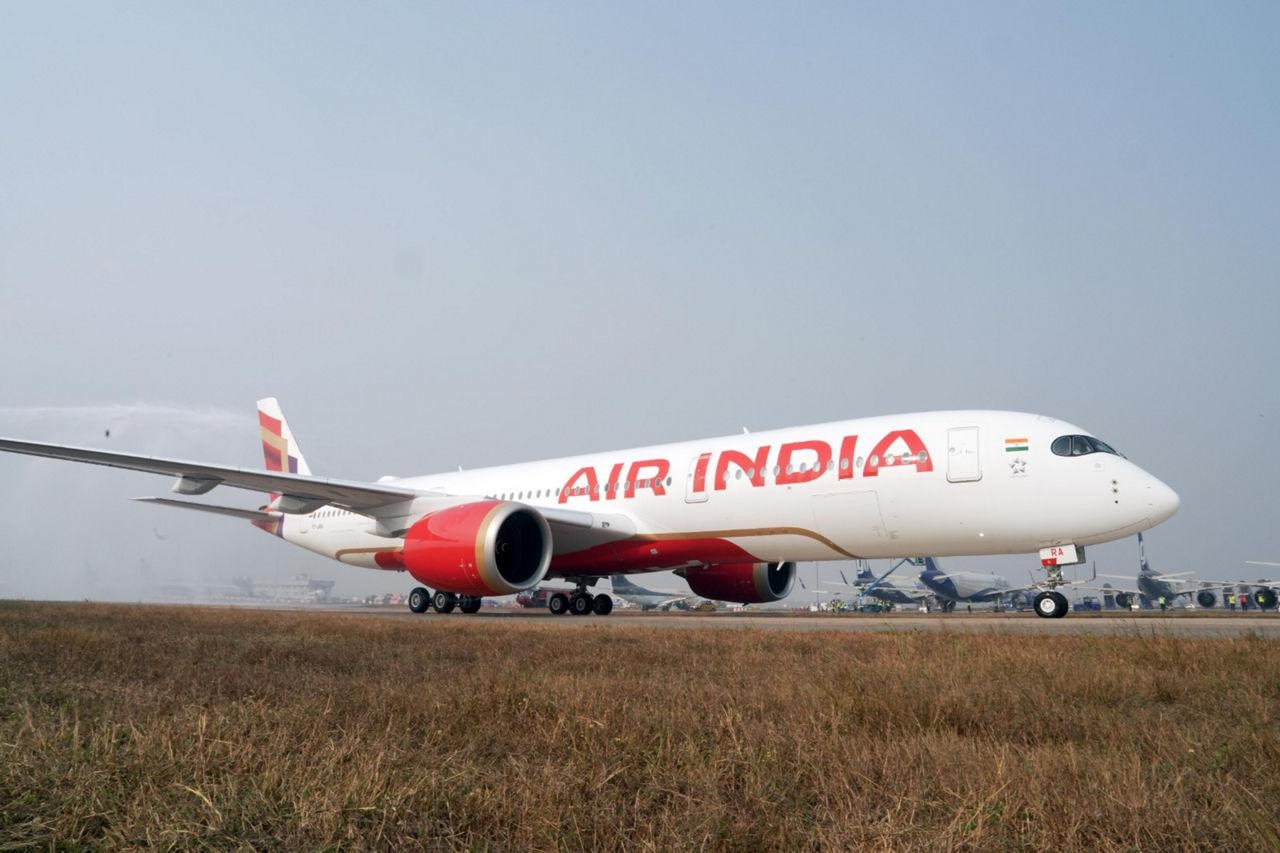
Air India Announces Delivery Schedule for A321neo, A350-1000, and 787-9 Aircraft
Air India Announces Delivery Schedule for A321neo, A350-1000, and 787-9 Aircraft
Major Fleet Modernization Underway
Air India Group, now under the ownership of the Tata Group, is advancing a landmark fleet renewal initiative that promises to transform its operational capabilities and competitive positioning within the Indian aviation sector. Central to this effort is an unprecedented order of 570 aircraft, among the largest in the history of commercial aviation. This extensive acquisition includes the latest models from Airbus and Boeing, notably the A321neo, A350-1000, 787-9 Dreamliner, and 777-9. These additions are expected to significantly expand Air India’s capacity and modernize its fleet.
Delivery Timeline and Deployment Plans
To date, the Air India Group—which comprises both Air India (AI) and Air India Express (IX)—has taken delivery of six Airbus A350-900s alongside more than 40 Boeing 737 MAX aircraft. The next phase of this fleet expansion is scheduled to commence in mid-2025, with the introduction of the first A321neo, A350-1000, and 787-9 Dreamliner aircraft. This phase represents a critical step in the airline’s strategy to increase capacity and enhance service offerings.
Air India Express will be the initial operator of the new A321neo, launching scheduled services from April 15, 2025. The inaugural routes will connect Delhi (DEL) with Bengaluru (BLR) and Srinagar (SXR), with subsequent expansions on April 20 to include Ayodhya (AYJ) and Jaipur (JAI). The A321neo will be configured with 180 economy seats and 12 business class seats, providing improved passenger options on key domestic routes. Currently, Air India operates two A321neos (registrations VT-RTC and VT-RTD) in a 192-seat dual-class layout.
Supply Chain Challenges and Operational Adjustments
Despite the progress, Air India continues to grapple with significant supply chain disruptions. CEO Campbell Wilson has acknowledged ongoing difficulties in procuring essential components such as engines, fuselages, and premium cabin seats. These challenges are expected to cause delivery delays from both Airbus and Boeing, potentially affecting the airline’s growth trajectory for the next four to five years. In response, Air India is extending the operational lifespan of older aircraft, which entails increased maintenance costs, and is facing obstacles in leasing additional planes due to global shortages. The airline is also exercising prudence regarding further Boeing orders amid manufacturing and regulatory constraints.
Widebody Fleet Expansion: A350-1000 and 787-9
The first A350-1000 destined for Air India is nearing completion at Airbus’s Toulouse facility and is anticipated to be delivered in 2026. Currently registered as F-WZFI, the aircraft will soon be re-registered under the VT-series for Indian operations. Concurrently, the initial Boeing 787-9 Dreamliners from the 2023 order are expected to arrive by the end of 2025. Three 787-9s are presently in production at Boeing’s Charleston, South Carolina plant, equipped with General Electric GEnx-1B engines.
Order Composition and Market Implications
Air India’s comprehensive 570-aircraft order includes 20 A350-900s, 20 A350-1000s, 140 A320neos, and 70 A321neos from Airbus, alongside 20 787-9 Dreamliners, 10 777X, and 190 737-8 MAX aircraft from Boeing. Additionally, a 2024 order comprises 10 more A350s and 90 A320 Family aircraft. This sweeping modernization is anticipated to provoke strategic responses from rival carriers, who may reassess their fleet plans in light of Air India’s expanded capacity. Industry analysts expect this development to intensify competition and elevate passenger service standards across the Indian aviation market.
Commitment to Sustainability and Efficiency
Air India’s investment in next-generation aircraft reflects a strong commitment to operational efficiency, passenger comfort, and environmental stewardship. The new A350 and 787-9 models offer substantial fuel savings and reduced emissions, aligning with global efforts to promote sustainable aviation. As these aircraft enter service from mid-2025 onward, Air India is positioned to lead the industry’s transition toward eco-friendly, high-capacity air travel.
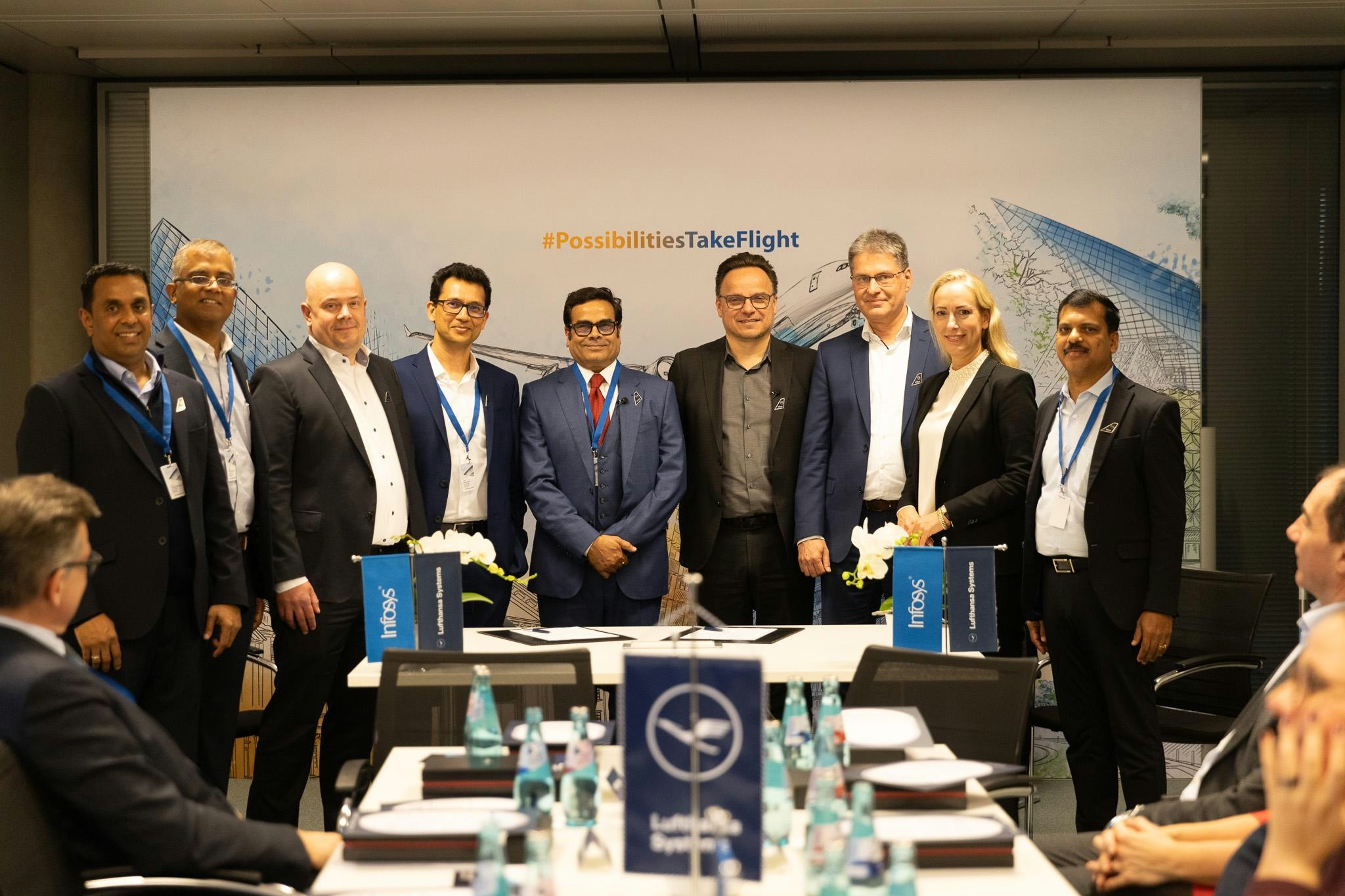
Lufthansa Systems Establishes IT Subsidiary in India
Lufthansa Systems Expands Global Presence with New IT Subsidiary in India
Lufthansa Systems has inaugurated Lufthansa Systems India, a new IT subsidiary based in Bengaluru, marking a pivotal advancement in the company’s global expansion efforts. This new entity will serve as a central component of the Global Capability Center (GCC), developed in collaboration with Indian IT leader Infosys. The GCC is designed to accelerate software and product development for both the Lufthansa Group and external airline clients, with a focus on leveraging cutting-edge technologies such as artificial intelligence.
Luigi Celmi, Managing Director of Lufthansa Systems India, emphasized the strategic importance of the new subsidiary, stating that it lays the foundation for future-ready IT services that blend agility, innovation, and deep aviation expertise. He highlighted Bengaluru’s vibrant technology ecosystem as an ideal environment to enhance the company’s capabilities and attract top-tier talent.
Strategic Significance and Industry Implications
The Bengaluru office joins Lufthansa Systems’ existing network of 19 locations worldwide, including key hubs in Gdańsk and Budapest, expanding the company’s global workforce to approximately 3,100 employees. This expansion aligns with Lufthansa’s broader focus on operational efficiency and market adaptability, positioning the company to better meet the evolving demands of the aviation industry.
Stefanie Neumann, CEO of Lufthansa Systems, described the launch of the Indian subsidiary as a crucial step in building a resilient and diversified delivery model. She underscored the company’s commitment to excellence and innovation in aviation IT and expressed enthusiasm about deepening the partnership with Infosys to broaden the company’s industry impact.
Industry analysts suggest that Lufthansa Systems’ move into India may attract increased investor interest by demonstrating the company’s dedication to innovation and its capacity to adapt to new markets. Nonetheless, the venture faces challenges, including navigating India’s complex regulatory environment, managing cultural differences, and ensuring stringent cybersecurity compliance. Additionally, competitors may respond by enhancing their own IT infrastructures or pursuing similar regional expansions.
The establishment of Lufthansa Systems India marks the beginning of a new chapter for the company as it aims to build a smarter, more connected future in aviation technology, reinforcing its position as a global leader in aviation IT solutions.
Airbus Signs €50 Million Contract to Integrate AI into French Armed Forces Systems
Airbus Secures €50 Million Contract to Integrate AI into French Armed Forces Systems
Airbus Defence and Space has been awarded a framework contract worth up to €50 million by the French Defence Procurement Agency (DGA) to incorporate artificial intelligence (AI) across a wide range of military information, communication, cybersecurity, and weapons systems utilized by the French armed forces. This contract includes systems developed by both Airbus Defence and Space and Airbus Helicopters, underscoring France’s strategic commitment to enhancing sovereign military AI capabilities and reducing dependence on foreign technologies.
Strategic Coordination and Initial Focus
The project is being closely coordinated with the Ministerial Agency for Defence AI (AMIAD), established in May 2024 to spearhead France’s military AI strategy. This strategy prioritizes expanding the operational use of AI while ensuring national control over critical defense infrastructure. The initial phase of the contract will concentrate on upgrading Spationav, France’s maritime surveillance system. AI integration will automate the fusion of satellite surveillance data with Spationav’s sensor inputs, thereby improving situational awareness and expediting decision-making processes in naval operations. Beyond maritime surveillance, AI applications are being developed or assessed in intelligence gathering, cybersecurity, and military telecommunications, including real-time decision support for network management and optimization.
Challenges and Market Dynamics
The DGA highlights the exponential increase in sensor-generated data—from satellites, radars, drones, smartphones, and social networks—as a driving force behind the necessity for AI. AI technologies are expected to accelerate data processing and triage tasks traditionally performed by personnel, while also undertaking missions beyond human capacity due to the volume and urgency of information. Establishing robust infrastructure for data storage, archiving, and structuring is a parallel priority to support these extensive AI systems.
Nonetheless, integrating AI into existing military platforms presents significant challenges. The complexity of merging new AI technologies with legacy systems, the need for comprehensive data-sharing protocols, and the development of secure, scalable infrastructure remain critical obstacles. As defense sector investments in AI grow, market analysts and investors are increasingly scrutinizing the long-term viability and return on investment of such initiatives. This scrutiny has prompted a shift toward focusing on the most complex and impactful AI challenges, amid concerns of a potential market correction in AI investments.
Competitive Landscape and Future Prospects
Competitors such as Dassault Aviation are expected to intensify efforts to secure technological leadership, particularly in collaborative programs like the Future Combat Air System. This competitive environment is likely to stimulate further innovation and strategic partnerships as defense firms strive to maintain their positions amid rapid technological advancements.
As France advances its military AI capabilities, the success of this initiative will hinge not only on effective technological integration but also on navigating the operational, market, and strategic complexities inherent in a rapidly evolving defense landscape.
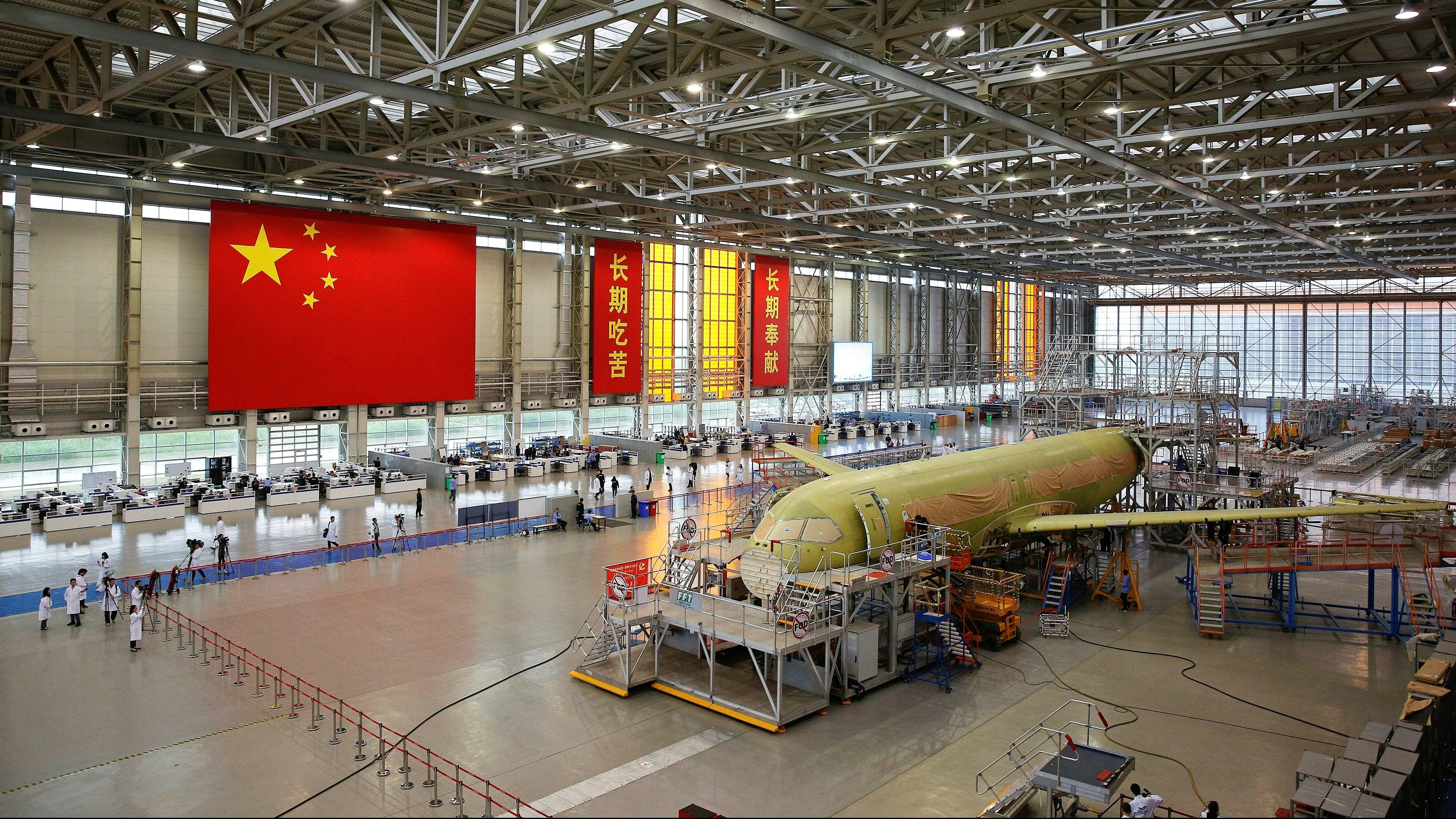
Airbus Approved to Deliver Jets in China, Awaits New Orders
Airbus Receives Approval to Deliver Jets in China Amid Uncertainty Over New Orders
Airbus has secured official approval from Chinese authorities to proceed with the delivery of 120 aircraft previously ordered, the European aerospace manufacturer confirmed. This development allows the company to fulfill existing commitments but does not extend to new large-scale orders, which remain elusive amid ongoing geopolitical tensions.
Delivery Authorization and Geopolitical Context
The agreement, signed in Beijing, permits Airbus to deliver jets already recorded in its order book, a standard procedure for transactions involving Chinese customers, according to an Airbus spokesperson. China’s state purchasing agency has not issued any comment on the matter. This approval follows French President Emmanuel Macron’s recent visit to China, where discussions centered on geopolitics and trade. Despite high expectations, the visit did not result in announcements regarding the anticipated order for 500 new aircraft that Airbus has been pursuing for over a year. While some French media speculated about the possibility of 120 new orders, Airbus clarified that the current agreement pertains solely to existing orders.
Both Airbus and its American rival Boeing have been awaiting progress on significant Chinese orders, which have been delayed amid the broader geopolitical climate. Industry insiders note that China typically exercises caution with major purchases during periods of uncertainty, and there is little indication that either manufacturer will secure a substantial new order from Beijing within the current year.
Market Position and Operational Challenges
Airbus has engaged in intermittent negotiations since early 2024 to secure a 500-jet order, aiming to narrow the gap with Boeing in the annual order tally and to meet its internal target of approximately 1,200 aircraft deliveries. Through the first eleven months of the year, Airbus reported 700 net orders after cancellations, compared to Boeing’s 782 net orders by the end of October.
However, Airbus faces additional hurdles. The company recently identified a quality issue involving metal panels on certain A320 aircraft already in service, leading to a downward revision of its delivery forecasts and a notable decline in its share price. In contrast, Boeing’s stock rose following the company’s pledge of positive cash flow for 2026, despite a 17% month-on-month drop in November deliveries, with Boeing handing over 44 jets compared to Airbus’ 72.
Both manufacturers continue to grapple with supply chain disruptions. The head of the International Air Transport Association (IATA) remarked in Geneva that confidence in Airbus meeting its delivery targets has diminished, while Boeing’s performance has shown signs of improvement.
Outlook for Airbus
Looking forward, Airbus’ defense division remains optimistic, anticipating further sales of its A330 tanker and exploring the potential development of an A321-based airborne early warning and control (AEW&C) aircraft. Nevertheless, the commercial division’s wait for new Chinese orders persists, with no immediate breakthrough expected.
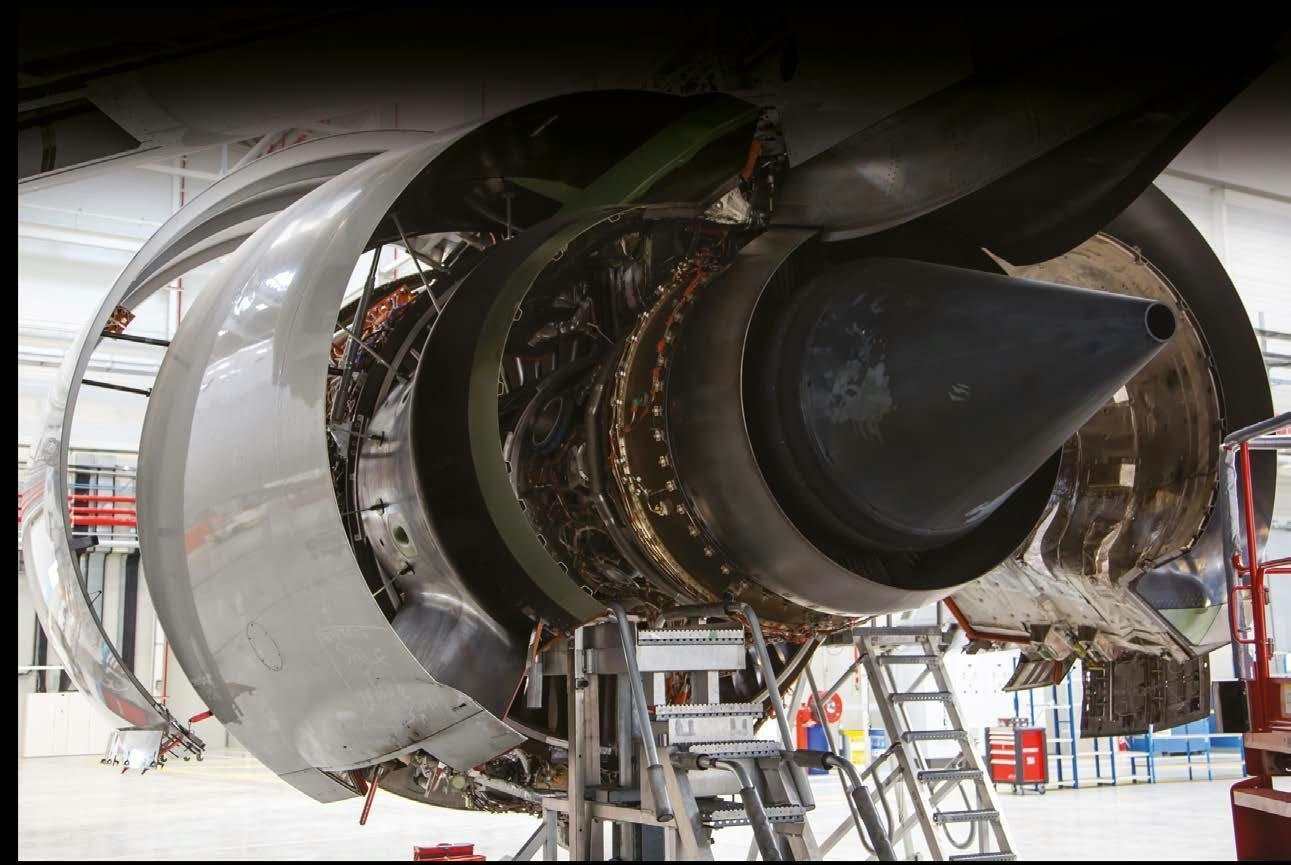
Delta TechOps Wins Korean LEAP-1B MRO Contract
Delta TechOps Secures Korean Air LEAP-1B MRO Contract
Delta TechOps has been awarded a significant contract by Korean Air to provide maintenance, repair, and overhaul (MRO) services for the CFM LEAP-1B engines that power the airline’s Boeing 737 MAX fleet. This agreement marks a notable achievement for both companies, positioning Delta TechOps as the sixth CFM Premier MRO provider for LEAP engines under CFM’s Branded Services Agreement worldwide, and the first such provider based in North America.
Strategic Partnership and Industry Significance
Alain Bellemare, Executive Vice President and President of International as well as Chairman of Delta MRO, emphasized the growing demand for advanced engine maintenance as airlines transition to next-generation aircraft. He highlighted Delta TechOps’ expertise with the LEAP-1B engine as a demonstration of the company’s technical mastery and innovative capabilities, setting a new standard within the global MRO industry.
Jongseok Yoo, Executive Vice President and Chief Safety and Operating Officer at Korean Air, expressed confidence in Delta TechOps’ technical proficiency and maintenance quality. He noted that the agreement would strengthen collaboration across the full spectrum of MRO services and reaffirmed the mutual commitment to achieving the highest operational standards for their next-generation fleet.
Delta TechOps’ experience with Korean carriers is well established, having previously supported General Electric CF6 engines on Asiana Airlines’ Boeing 747-400, 767-300, and 767-300ER fleets. John Laughter, Executive Vice President, Chief of Operations, and President of Delta TechOps, underscored the company’s dedication to innovation and reliability, stating that their LEAP-1B capabilities are backed by decades of industry knowledge and the expertise of highly skilled personnel.
Market Context and Competitive Landscape
The contract comes as both Delta and Korean Air prepare to introduce the yet-to-be-certified 737 MAX 10 aircraft. Delta currently holds orders for 100 of these aircraft, while Korean Air has 62 on order, collectively representing a fleet powered by 324 LEAP-1B engines, excluding spares.
Delta TechOps’ success in securing this contract occurs amid intensifying competition in the global MRO market. Safran recently inaugurated a €240 million MRO facility in Hyderabad, India, dedicated to servicing LEAP-1A and LEAP-1B engines, signaling a strong competitive presence in the Asian market. Additionally, General Electric has expanded its MRO capacity in Dubai, with further LEAP-related contract announcements anticipated at the upcoming Dubai Airshow. Turkish Airlines is also reportedly negotiating for LEAP-1B engine support, reflecting the increasing demand and competitive dynamics within the sector.
As airlines worldwide continue to modernize their fleets, the competition for LEAP engine MRO contracts is expected to grow. Delta TechOps’ latest agreement with Korean Air underscores its technical leadership and highlights the rapidly evolving landscape of global engine maintenance services.
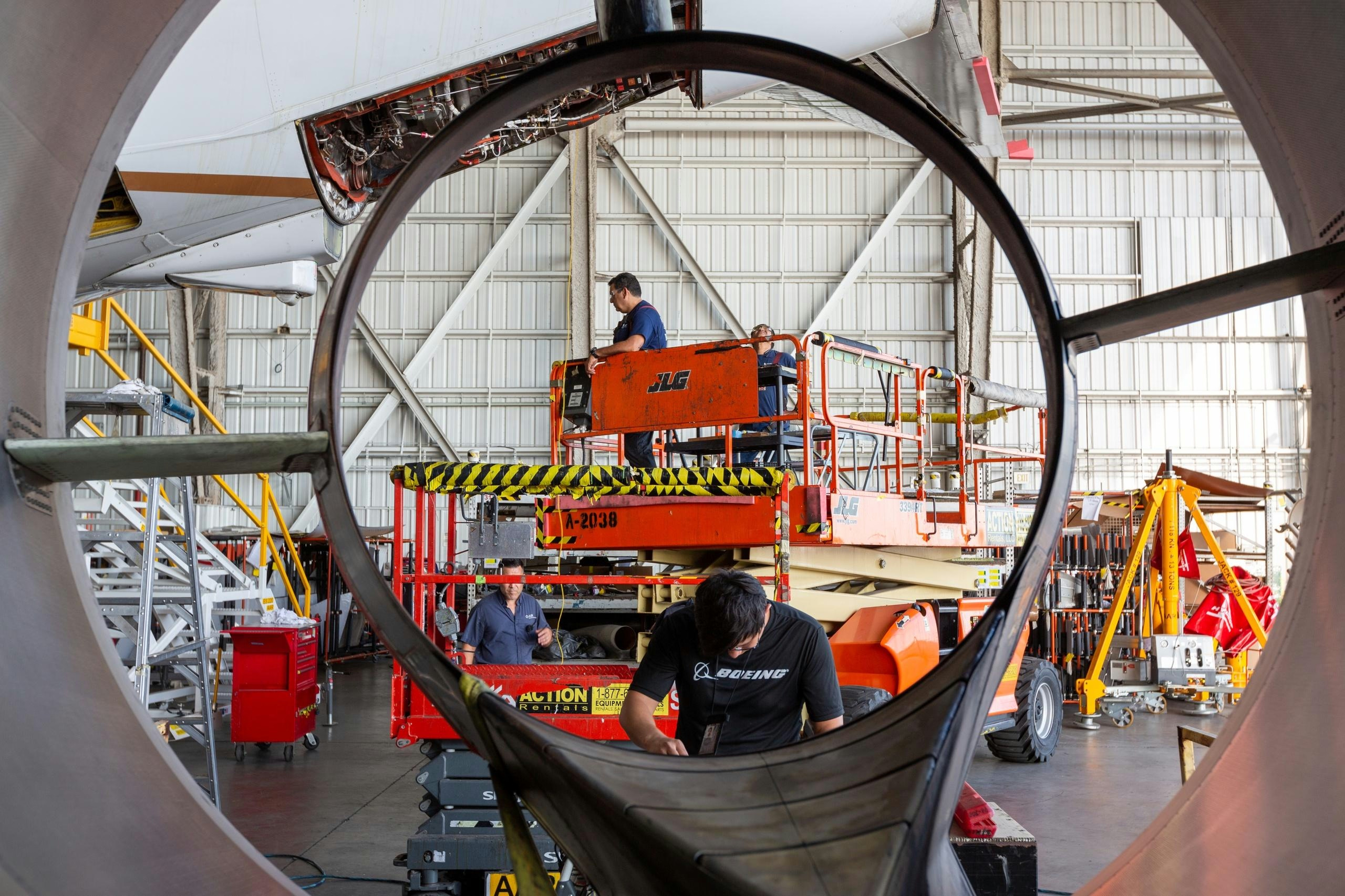
Aerospace Supply Chain Delays Continue to Impact Airlines
Aerospace Supply Chain Delays Continue to Impact Airlines
Persistent Supply Constraints Hampering Industry Growth
Geneva – The International Air Transport Association (IATA) has issued a stark warning regarding ongoing bottlenecks in the aerospace supply chain that continue to restrict airline expansion. Aircraft availability remains a critical challenge, with demand for new planes and engines significantly outstripping supply. According to IATA’s latest global outlook, although deliveries of new aircraft began to recover in late 2025 and production is expected to accelerate throughout 2026, the industry will face a prolonged period of supply shortages.
The current delivery shortfall stands at a minimum of 5,300 aircraft, while the backlog of orders has surged past 17,000 units. This backlog now represents nearly 60% of the active global fleet and corresponds to almost 12 years of production at current rates—a substantial increase from the historical backlog ratio of 30 to 40%. The average age of the global fleet has risen to 15.1 years, with passenger aircraft averaging 12.8 years, cargo planes 19.6 years, and wide-body jets 14.5 years. Paradoxically, despite the shortage of new aircraft, over 5,000 planes remain in storage, marking one of the highest levels on record.
Willie Walsh, IATA’s Director General, highlighted the broad impact of these supply chain challenges on airlines. He noted that higher leasing costs, diminished scheduling flexibility, delayed progress on sustainability initiatives, and increased reliance on less efficient aircraft types are among the most pressing issues. These factors collectively hinder airlines’ ability to enhance revenue, improve environmental performance, and deliver optimal customer service. Walsh also pointed out that travelers are facing higher costs due to the tighter demand-supply balance, urging all stakeholders to intensify efforts to resolve these issues before the situation worsens.
Underlying Causes of Delivery Delays
Several interrelated factors are contributing to the persistent delays in aircraft deliveries. Production imbalances have emerged as a key issue, with airframe manufacturing outpacing engine production. Engine supply remains constrained by ongoing technical challenges, resulting in completed airframes being held in storage while awaiting engines. Certification processes for new aircraft have also lengthened significantly, extending from the typical 12 to 24 months to as long as four or five years, particularly affecting the renewal of long-haul fleets.
Trade tensions, especially US-China tariffs on metals and electronics, have further exacerbated supply chain bottlenecks and increased maintenance costs. Additionally, labor shortages, particularly in engine and component manufacturing, are impeding efforts to ramp up production. The aerospace supply chain’s fragility is underscored by its heavy reliance on a limited number of suppliers for critical parts, meaning that even minor disruptions can escalate into significant delays.
Industry Responses and Strategic Adjustments
In response to these challenges, major aerospace manufacturers are adopting new strategies to enhance supply chain resilience and production efficiency. Boeing, for instance, is pursuing greater vertical integration to improve quality control and reduce dependency on external suppliers. This approach, while promising, may encounter initial integration difficulties. Boeing’s recent acquisition of Spirit AeroSystems has been positively received by the market, as reflected in a surge in its stock price, signaling investor confidence in the company’s efforts to regain control over key components.
Other industry players are also adapting to the evolving landscape. Taiwan’s Aerospace Industrial Development Corporation (AIDC) is investing in material innovations such as thermoplastic composites, aiming to streamline production processes and reduce reliance on traditional supply chains. Meanwhile, GE Aerospace has maintained an optimistic outlook, having raised its financial guidance and secured significant contracts, including a major engine deal with Turkish Airlines and the inauguration of a new On Wing Support facility in Dubai.
As the aerospace sector continues to navigate these complex disruptions, IATA stresses the urgent need for coordinated action among manufacturers, suppliers, and regulators. Such collaboration is essential to restore equilibrium between supply and demand and to support the industry’s long-term growth and sustainability objectives.
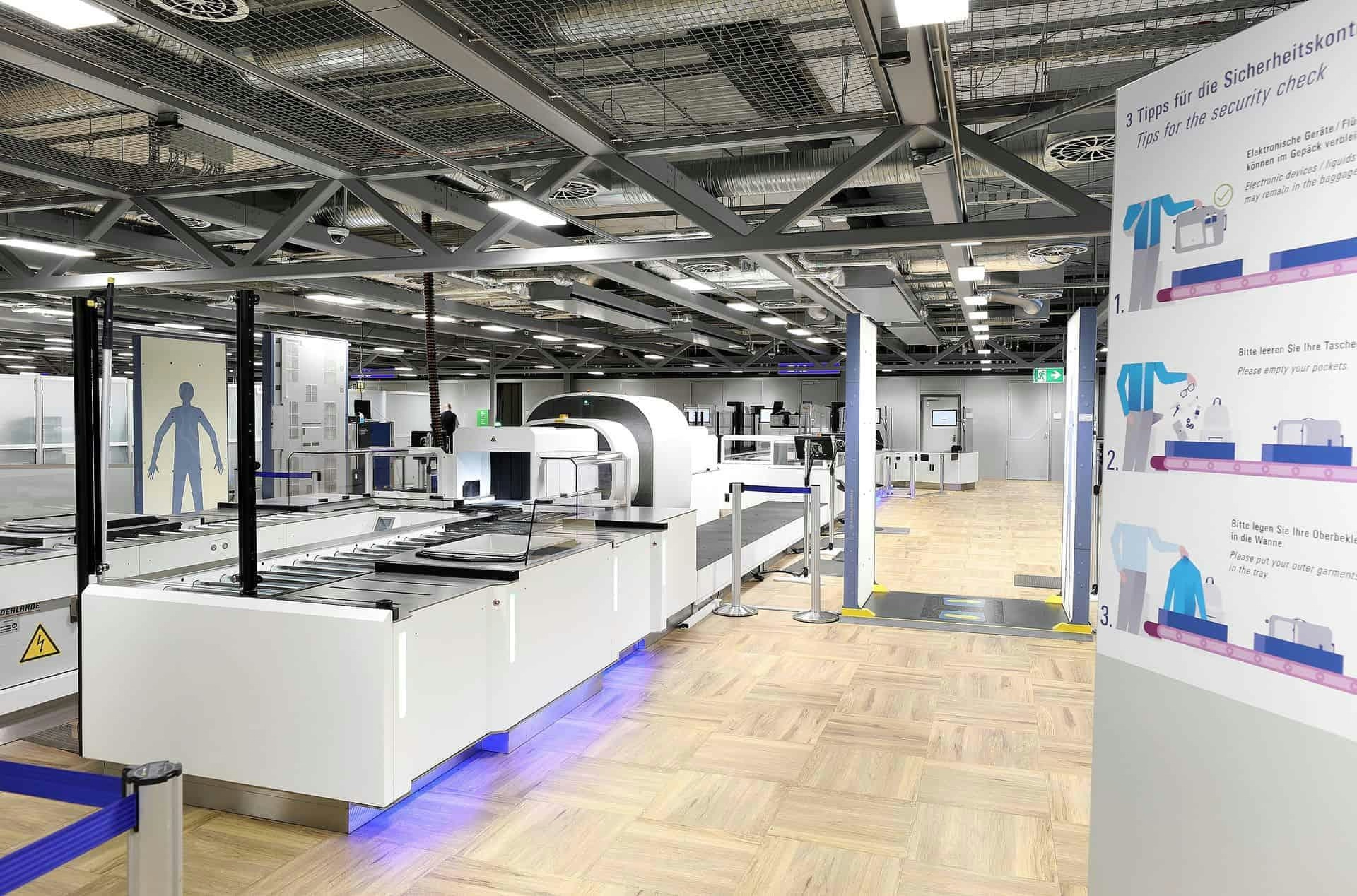
Assaia Secures $26.6 Million in Series B to Enhance AI for Airport Operations
Assaia Secures $26.6 Million in Series B to Enhance AI for Airport Operations
Assaia, a Zurich-based aviation technology company, has successfully raised $26.6 million in an oversubscribed Series B funding round led by Armira Growth, with participation from existing investors. This investment arrives amid increasing operational pressures faced by airports worldwide, as air traffic volumes surpass pre-pandemic levels and staffing shortages challenge efficiency and profitability. In response, the aviation sector is progressively adopting intelligent automation to strengthen resilience and streamline airport operations.
Advancing AI-Driven Solutions for Airport Efficiency
Assaia’s platform employs artificial intelligence and computer vision to deliver real-time visibility and control over aircraft turnaround processes for airports and airlines. By forecasting potential disruptions, automating critical procedures, and optimizing operational planning, the company’s technology aims to reduce turnaround times, enhance safety, and promote more sustainable airport environments.
The platform is currently operational at major international airports including New York JFK, London Heathrow, Dubai International, and Toronto Pearson. At these hubs, Assaia’s solutions have contributed to minimizing delays, improving on-time performance, and increasing gate utilization efficiency.
Christiaan Hen, CEO of Assaia, emphasized the significance of the funding round, stating, “Airports and airlines are increasingly relying on AI to address growing operational challenges. With Armira’s support, we are accelerating the rollout of new technologies and expanding our presence to deliver measurable value in some of the world’s most complex airport environments.”
Strategic Expansion and Industry Context
The newly secured capital will enable Assaia to scale its AI platform on a global scale and develop additional solutions tailored for airports, airlines, and ground handling services. A portion of the funding is earmarked for the launch of the next-generation StandManager, an AI-powered planning module designed to optimize gate and stand assignments prior to aircraft arrival, thereby enhancing predictability and gate utilization in high-traffic settings.
Assaia’s successful funding round reflects a broader surge of investor confidence in AI’s transformative potential within airport operations. However, this influx of capital also intensifies competitive pressures, compelling Assaia to accelerate innovation to maintain its market position. The sector is witnessing increased activity from competitors such as Amenitiz, which recently raised $45 million for AI tools in the hospitality industry, and EverySim, which secured seed funding for AI-based engineering simulation. Additionally, the $75 million raised by Israeli AI security firm Sweet Security highlights a wider trend of substantial investment in AI-driven security and operational solutions, factors that may influence Assaia’s strategic direction and competitive landscape.
As the deployment of advanced AI technologies in airport operations accelerates, Assaia’s latest funding positions the company to broaden its global footprint and continue driving innovation in one of the world’s most complex and high-stakes environments.
Avia Solutions Group Board Member Tadas Goberis on Billion-Dollar Investments in Aviation
Avia Solutions Group Board Member Tadas Goberis on Billion-Dollar Investments in Aviation
Tadas Goberis, recently appointed to the Board of Avia Solutions Group and head of the company’s aircraft leasing and acquisition division, brings over 15 years of expertise in aircraft management and leasing—a notable depth of experience within the Lithuanian aviation sector. Avia Solutions Group is recognized as the world’s largest provider of ACMI (aircraft, crew, maintenance, and insurance) services, overseeing a fleet of approximately 200 aircraft operating across six continents.
A Career Bridging IT and Aviation
Goberis describes his professional trajectory as transformative, having transitioned from the IT industry to aviation—two fields that differ fundamentally in culture and operation. He observes that while aviation is traditionally conservative and heavily regulated, IT thrives on rapid innovation. Despite these contrasts, he emphasizes that success in both sectors depends on a commitment to thoroughness, continuous learning, and transparent communication with clients and partners. The global scope of aviation has also afforded him valuable exposure to diverse cultures and markets, enriching his professional perspective.
Core Business and Strategic Expertise
Central to Avia Solutions Group’s business model is aircraft management, which integrates leasing with comprehensive services including crew provision, maintenance, and insurance. Goberis highlights the importance of understanding the entire aircraft lifecycle, from maintenance scheduling to cost control and market forecasting. He notes that even marginal efficiencies, such as optimized engine maintenance planning, can translate into multimillion-dollar savings. Leveraging this expertise, the Group has expanded its advisory capabilities and recently launched Wolf Holding, a new platform dedicated to aircraft investment and management services.
Challenges Amid Ambitious Investments
Despite its ambitious billion-dollar investments, Avia Solutions Group has faced operational and maintenance challenges that have affected performance, particularly within its SmartLynx airline division. These difficulties, compounded by a downturn in the cargo sector, have elicited a negative market response. After more than 30 years of operation, SmartLynx ceased its activities, underscoring the inherent risks in the aviation industry. The broader market has also seen competitors adjusting to shifting conditions: Norse Atlantic Airways has experienced profitability pressures due to a softening transatlantic market, while Wizz Air has reduced its commitments to the Airbus A321XLR.
Industry Insights and Structural Challenges
Goberis offers a candid assessment of the aviation industry’s structural dynamics, emphasizing the precarious position of airlines. He explains that airlines operate on the front line, generating revenue through ticket sales and managing payments to all service providers, all while striving to maintain profitability. Other market participants—such as maintenance centers, financiers, and leasing companies—do not engage directly with passengers but depend heavily on the financial stability of airlines. Leasing companies, in particular, mitigate operational risks and can swiftly transition from partners to creditors if payments are delayed or defaulted. Goberis underscores this point by noting that over the past decade, more than 200 airlines have declared bankruptcy, yet no leasing company has faced the same fate.
Despite recent setbacks, Avia Solutions Group continues to draw on its extensive experience and global presence to navigate industry volatility and pursue future opportunities in aircraft leasing and management.
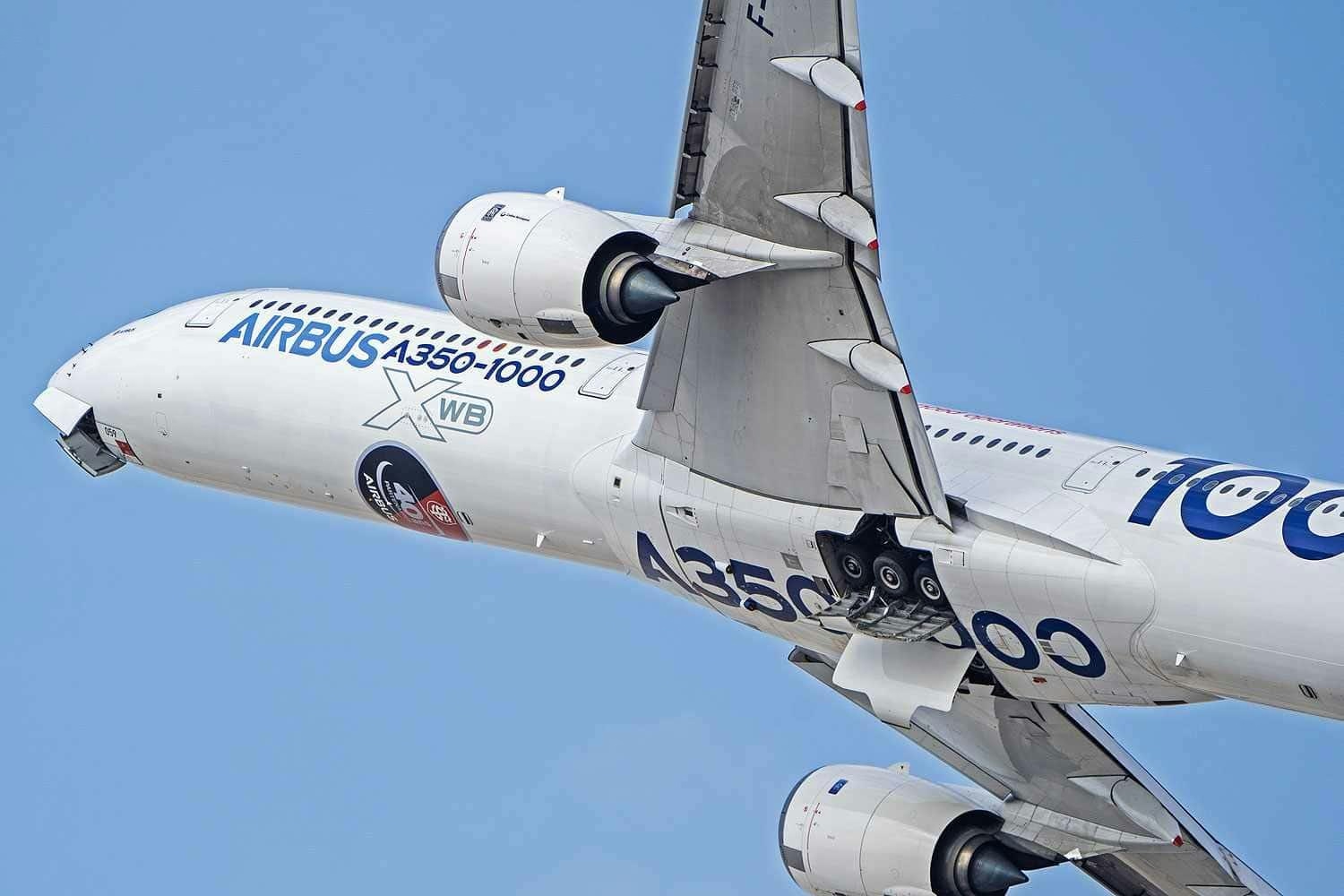
Airbus Receives New Order for A350-1000
Airbus Secures New Order for A350-1000 Amid Industry Dynamics
Airbus has announced a new order for eight A350-1000 aircraft, its largest twin-aisle model, as part of its November 2025 orders and deliveries update. The purchase, placed on November 14 by an undisclosed customer, raises the total A350-1000 commitments for the year to 77. In addition to this widebody order, the same client also acquired two A320neo jets, bringing the year-to-date total for that model to 102 aircraft as of November 30.
The practice of undisclosed orders is common within the aviation sector, often fueling speculation regarding the buyer’s identity. Such anonymity typically reflects ongoing fleet planning, strategic repositioning, or the involvement of aircraft lessors whose end customers have yet to be publicly identified. A recent example includes Etihad Airways, whose commitment to multiple Airbus models—including the A350-1000—was initially recorded under an undisclosed customer before being officially confirmed.
Renewed Momentum for the A350 Program and Market Context
With these latest transactions, Airbus’s net orders for 2025 have reached 700 aircraft after accounting for 97 cancellations from a gross total of 797. This strong order activity coincides with a growing airline interest in widebody jets, driven by the demand for more efficient and higher-capacity aircraft.
The A350-1000 program has gained renewed momentum, with Airbus actively exploring the feasibility of a stretched variant, informally dubbed the A350-2000 or A350 Stretch. Unveiled at the 2025 Dubai Airshow, this potential model aims to fill the market gap between the current A350-1000 and Boeing’s 777X family. Airbus CEO Christian Scherer has acknowledged increasing interest from global carriers—notably beyond Emirates—in a new high-capacity aircraft, particularly as the industry moves away from four-engine designs and lacks a true superjumbo replacement.
Nonetheless, developing a stretched A350 presents considerable challenges. Airbus must address the technical complexities involved in lengthening the airframe, ensure compliance with stringent certification and safety standards, and adapt to evolving customer requirements. The competitive environment is intensifying, with Boeing actively promoting its 777X variants and some airlines, including Emirates, expressing caution about committing to new Airbus models.
Market responses have been varied. While carriers such as Etihad Airways and Philippine Airlines have demonstrated enthusiasm for the A350-1000, others remain cautious, carefully evaluating their options amid ongoing industry shifts. Concurrently, Airbus is managing operational challenges, including an urgent software recall affecting the A320 family due to solar radiation interference, highlighting the broader difficulties aircraft manufacturers face as they innovate and expand their product offerings.
As Airbus advances its widebody strategy and contemplates new developments, the coming months will be pivotal in determining the future trajectory of its flagship A350 program and its competitive standing in the long-haul market.
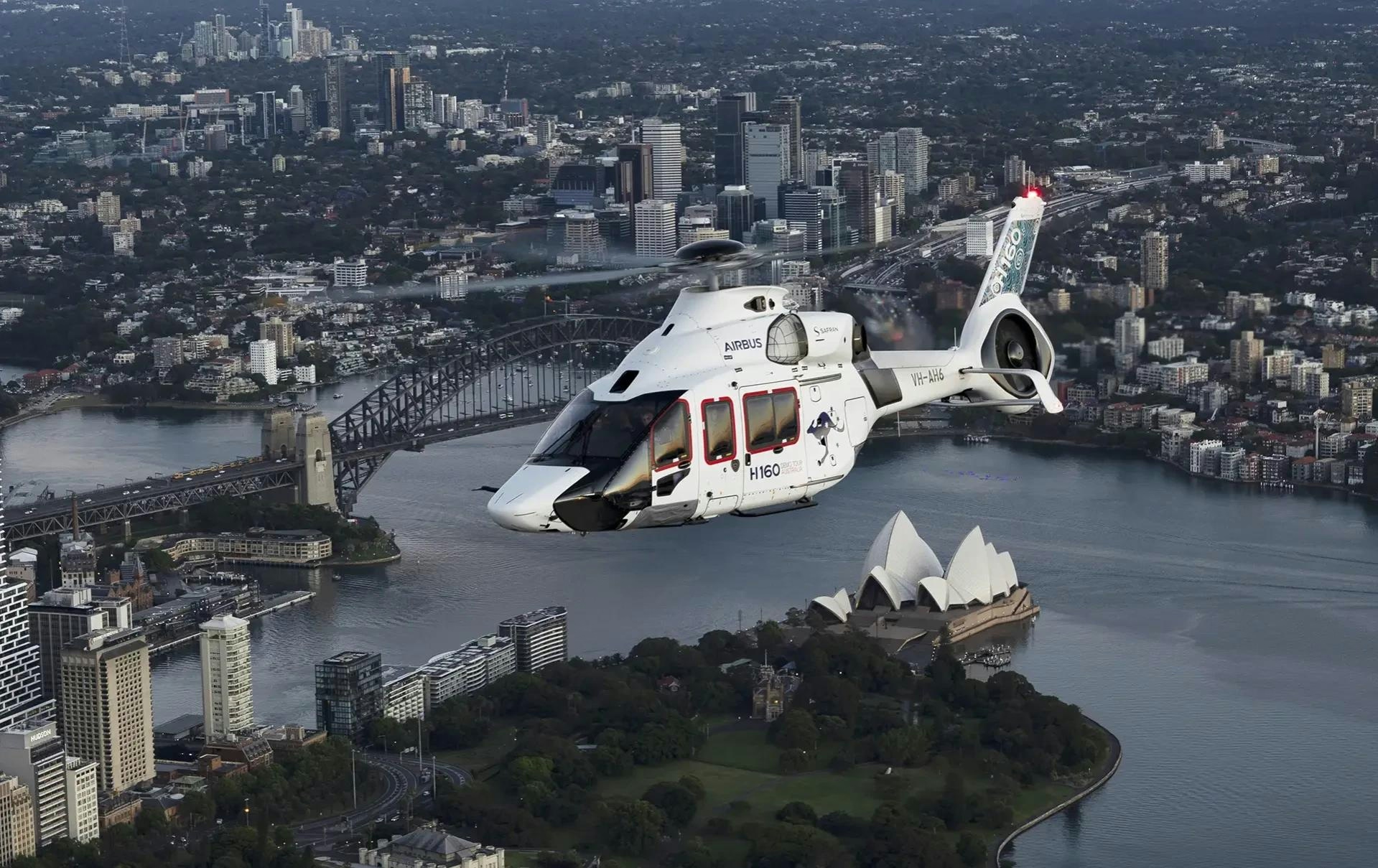
Airbus Secures First Australian Order for H160 Helicopter
Airbus Secures First Australian Order for H160 Helicopter
Airbus Helicopters has achieved a significant milestone by securing its first Australian order for the H160 helicopter. The logistics and supply chain company Linfox has selected the aircraft to support passenger transport missions across the country, marking the beginning of a new partnership between the two firms. This procurement represents Linfox’s initial acquisition from Airbus, underscoring the company’s confidence in the manufacturer’s capabilities.
Demonstration Tour Highlights Versatility
The order follows an extensive four-week demonstration tour throughout Australia, during which the H160 completed over 60 flights and covered more than 2,000 kilometres. This tour showcased the helicopter’s adaptability to Australia’s diverse operational environments and highlighted the increasing demand for advanced rotary-wing technology in the region. Lindsay Fox, founder of the Linfox Group of Companies, expressed enthusiasm about the acquisition, emphasizing the company’s anticipation of a long-term relationship with Airbus, a manufacturer known for its performance, safety, and reliability.
Competitive Market Dynamics and Global Momentum
Airbus’s success with the H160 comes amid intense competition from established rivals such as Sikorsky and Bell, both of which have recently secured substantial orders and partnerships within Australia and internationally. The Australian market has become a focal point for manufacturers competing across sectors including passenger transport and oil and gas. The H160’s recent lease by the Bristow Group for operations in Nigeria has further demonstrated its suitability for challenging environments, particularly offshore energy operations.
Industry analysts suggest that Airbus’s breakthrough with the H160 may stimulate greater interest among Australian operators seeking next-generation helicopters for a variety of missions. In response, competitors like Bell and Sikorsky are expected to intensify their efforts to expand market share, building on their recent successes in Europe and other regions.
Advanced Capabilities and Operational Efficiency
The H160 is gaining traction globally as a versatile platform supporting emergency medical services, rescue operations, private travel, and offshore work. Equipped with Safran Arrano engines, the helicopter achieves an 18% reduction in fuel consumption and is certified to operate with a 50% blend of sustainable aviation fuel (SAF). Its design emphasizes reduced maintenance requirements and a streamlined support architecture, delivering high availability and cost-efficiency for operators across multiple sectors.
With this inaugural Australian order, Airbus positions the H160 as a formidable contender in a dynamic and competitive market, aiming to address the evolving operational needs of helicopter operators throughout the region.

Key Updates on Vertical Aerospace’s New Valo eVTOL
Vertical Aerospace Unveils Valo: Next-Generation eVTOL Aircraft
Vertical Aerospace has officially introduced Valo, its latest electric vertical take-off and landing (eVTOL) aircraft, marking a pivotal advancement in the company’s evolution from prototype developer to aerospace manufacturer. The Valo replaces the previous VX4 model, presenting a redesigned production aircraft tailored for air-taxi services both within the United Kingdom and on the international stage.
Unlike the VX4, which primarily functioned as a technology demonstrator, Valo is engineered as a certifiable commercial product. Its design has been refined through extensive flight-test data and direct input from airline and operator customers. The company aims to achieve airliner-level safety certification by 2028, with commercial operations expected to commence shortly after regulatory approval. Initial service routes are anticipated to focus on airport-to-city centre connections, addressing a critical segment of the urban air mobility market.
Design Innovations and Enhanced Capabilities
Valo maintains the core mission established by the VX4, offering piloted, zero-emission flights capable of covering distances up to 100 miles at speeds reaching 150 miles per hour. However, the aircraft incorporates several significant design enhancements. The airframe features a more aerodynamic fuselage alongside a reconfigured wing and propeller layout, optimized to reduce drag and improve overall efficiency based on insights gained from VX4 flight tests.
A notable technical advancement is the introduction of a liquid-cooled under-floor battery system, replacing the previously distributed battery packs. This new architecture not only frees up valuable cabin space but also facilitates future battery upgrades. Additionally, the propulsion system has been redesigned to include updated propeller architecture and full certifiable redundancy of critical systems, aligning with stringent global safety standards.
Inside the cabin, Valo offers a premium four-seat layout at launch, with engineering provisions to support future variants accommodating up to six passengers plus an observer seat. The aircraft boasts the largest baggage capacity in its class, capable of holding six cabin bags and six checked bags. This enhancement directly responds to airline feedback emphasizing the importance of ample luggage space for airport transfer services. The flexible cabin configuration is intended to provide operators with commercial versatility, starting with a high-yield four-seat setup and expanding capacity as market demand increases.
Strategic Partnerships and Market Positioning
Vertical Aerospace has entered into a Memorandum of Understanding with Héli Air Monaco to pre-order Valo aircraft, signaling plans to establish sustainable air mobility routes along the French Riviera. This partnership underscores the company’s ambition to strengthen its presence in key European markets.
While competitors such as Joby Aviation, Archer Aviation, and Beta Technologies currently lead in the certification process, Vertical Aerospace highlights its advanced aircraft design, clear certification roadmap, and robust business model as key differentiators within the rapidly evolving eVTOL industry.
With the introduction of Valo, Vertical Aerospace seeks to set new benchmarks in safety, efficiency, and passenger experience, positioning itself as a formidable contender in the global race to commercialize eVTOL technology.

Cowling Detaches in Flight and Strikes Windshield
Cowling Detaches in Flight and Strikes Windshield
A Piper PA-28-180 encountered a mid-flight mechanical failure when the right side of its engine upper cowling became unlatched and struck the windshield during cruise between airports. Despite the left side of the cowling remaining secured, the incident caused substantial damage to the windshield. The pilot was able to maintain control and safely land the aircraft at an airport in Mesa, Arizona. Fortunately, no injuries were reported.
Investigation and Findings
A post-incident examination determined that the right front fastener pin, responsible for securing the upper cowling near the air intake, had separated from the cowling structure. This separation likely allowed the forward right side of the cowling to detach from the lower section and lift into the airstream. The resulting aerodynamic forces caused the right side latches to fail under overload. The National Transportation Safety Board (NTSB) identified the probable cause as the failure of the engine cowling’s right side latch pin and fasteners, which led to the partial separation of the cowling during flight. This event, documented under NTSB Identification 193480, underscores the critical importance of thorough pre-flight inspections and the secure fastening of engine components.
Context Within Industry Safety Concerns
This incident occurs amid heightened industry scrutiny regarding aircraft reliability and safety. Airbus, for example, has recently faced significant challenges following a major software recall affecting approximately 6,000 A320 family jets. The recall was initiated due to a vulnerability in the flight-control computers linked to a recent in-flight incident, resulting in the grounding of thousands of aircraft and widespread travel disruptions during a peak holiday travel period. Compounding these issues, reports of windscreen problems have caused diversions for flights operated by American Airlines and United Airlines, further intensifying concerns over product reliability. These developments have contributed to a sharp decline in Airbus shares, marking their steepest drop since April and reflecting broader market anxiety over ongoing technical difficulties.
The NTSB continues to publish detailed accident reports such as this to serve as educational tools for pilots and operators, aiming to improve aviation safety through lessons learned from past events.
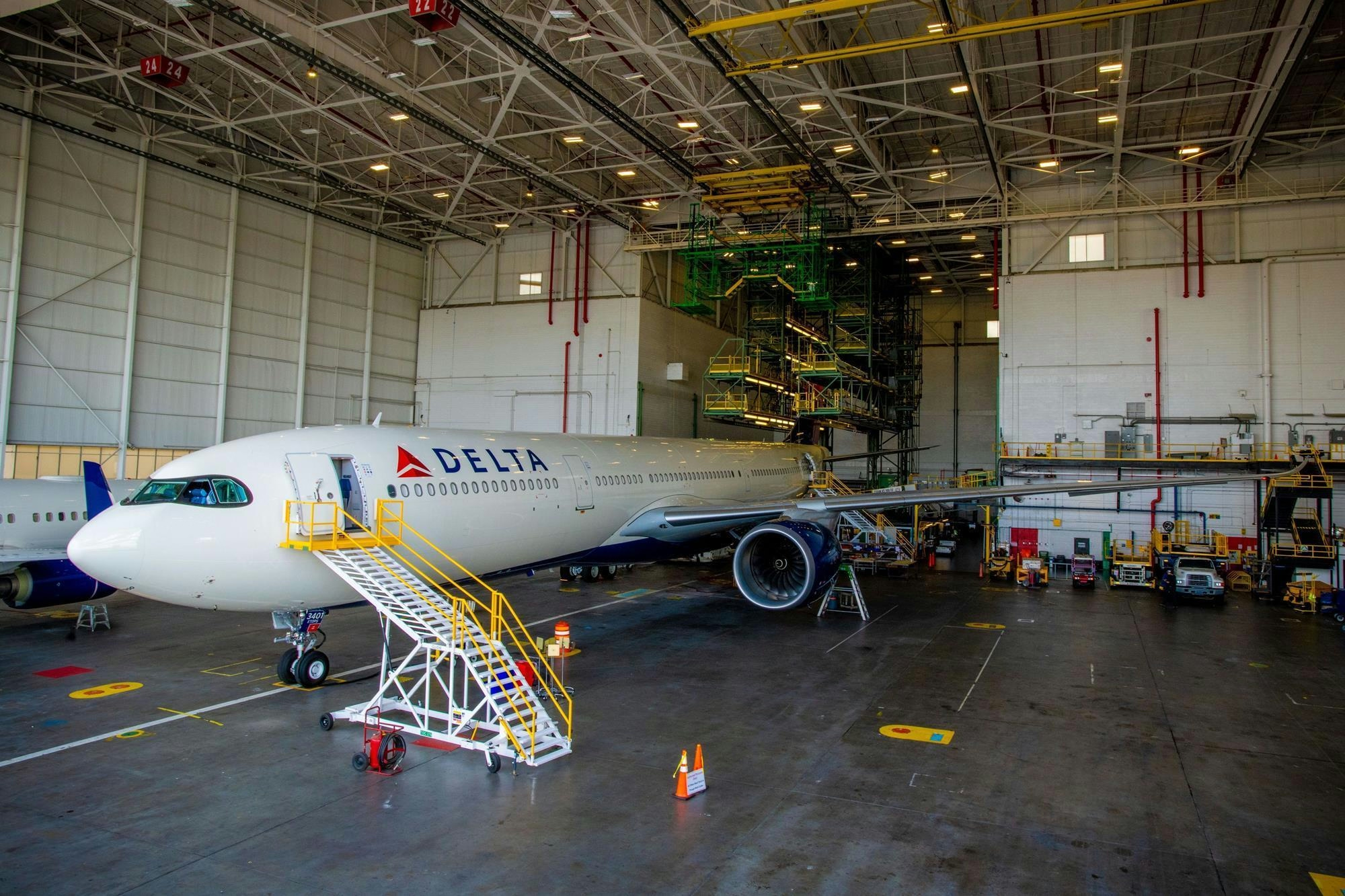
Aviation MRO Software Market Expected to Reach $10 Billion by 2030
Aviation MRO Software Market Projected to Reach $10 Billion by 2030
The global Aviation Maintenance, Repair, and Overhaul (MRO) software market is poised for significant growth, with projections indicating it will reach a valuation of $10 billion by 2030. This expansion is driven by the aviation industry's rapid digital transformation, the increasing size of aircraft fleets, and heightened regulatory requirements. Market Research Future Analysis forecasts a compound annual growth rate (CAGR) of 4.8% between 2024 and 2030, underscoring the sector’s robust momentum.
Market Dynamics and Growth Drivers
As airlines and operators manage expanding fleets and increasingly complex maintenance operations, traditional manual systems for maintenance tracking and scheduling have become insufficient. Aviation MRO software platforms have emerged as indispensable tools, facilitating streamlined maintenance scheduling, parts tracking, compliance documentation, and overall operational management. These digital solutions contribute to reducing aircraft downtime while enhancing efficiency, safety, and adherence to regulatory standards.
The sustained demand for MRO services is a critical factor propelling market growth. Aging aircraft fleets and persistent engine shortages are intensifying maintenance pressures globally. For instance, the Middle East is expected to receive nearly 160 business aircraft valued at $8.6 billion by 2035, reflecting strong regional growth and an escalating need for sophisticated MRO software solutions.
Several key trends are accelerating the adoption of aviation MRO software. The shift towards digital transformation and cloud-based platforms enables real-time data access, remote collaboration, and scalable operations, which are increasingly vital as maintenance demands grow worldwide. Advanced analytics, artificial intelligence (AI), and Internet of Things (IoT) technologies are facilitating predictive maintenance, allowing operators to anticipate failures, optimize part replacement cycles, and minimize costly downtime. Additionally, the expansion of aircraft fleets in both mature and emerging markets is generating more maintenance schedules and compliance requirements, further driving demand for robust software systems. Regulatory compliance remains a significant concern, with stringent global and regional mandates necessitating meticulous documentation and traceability—capabilities that MRO software effectively supports. Moreover, there is a notable industry shift towards subscription-based and cloud-hosted software models, offering operators greater flexibility and cost efficiency compared to traditional on-premise installations.
Industry Landscape and Challenges
The competitive landscape features prominent players such as IBS Software, Flatirons Solutions, Rusada, Sopra Steria, GE Aviation, and Honeywell International. Emerging competitors like FTAI Aviation and ITP are also well-positioned to benefit from evolving market conditions and technological advancements.
Despite the promising outlook, the industry faces challenges, notably concerns over software reliability and resilience. The recent Airbus A320 software recall has heightened scrutiny on aviation software systems, affecting investor confidence and operational timelines. As software becomes increasingly integral to aviation safety and operational efficiency, ensuring its robustness and dependability remains a critical priority.
For airlines and MRO operators, investing in advanced software platforms is becoming essential. These systems offer improved maintenance scheduling, reduced aircraft downtime, enhanced safety compliance, and long-term cost savings—advantages that are vital as fleets expand and operations become more complex. The ongoing evolution of the aviation sector suggests that demand for innovative and reliable MRO software solutions will continue to shape the future of aircraft maintenance on a global scale.

Aviation Startup Boom Shifts Focus to Gas Turbines to Support AI Energy Needs
Boom Supersonic Shifts Focus to Gas Turbines Amid AI Energy Surge
US-based aviation startup Boom Supersonic, renowned for its development of a next-generation supersonic passenger jet, is expanding its ambitions into the energy sector to meet the escalating power demands of artificial intelligence. The company’s founder, Blake Scholl, recently introduced "Superpower," a 42-megawatt gas turbine specifically designed to supply the substantial energy requirements of AI data centers.
Addressing AI’s Growing Energy Needs
The launch of Superpower comes at a critical moment as the US power grid struggles to keep pace with the rapid expansion of AI infrastructure. Increasingly, companies are seeking independent and reliable power solutions to support their operations. Boom’s new turbine builds on the core technology of its "Symphony" engine, initially developed for the Overture supersonic jet, but has been reengineered for stationary power generation. Unlike traditional turbines, Superpower can sustain full output even under high-temperature conditions without relying on water cooling, a notable advantage for data centers operating in challenging environments.
Navigating New Challenges and Market Opportunities
Transitioning from aviation to energy production presents significant technical and financial challenges for Boom Supersonic. Developing a novel gas turbine for stationary use requires substantial investment and expertise beyond the company’s established domain. Nevertheless, early market response has been encouraging. AI infrastructure startup Crusoe has committed as the launch customer, and Boom has secured $300 million in funding to initiate production. The company intends to reinvest revenue from its turbine business to support ongoing aircraft development efforts.
This strategic pivot aligns with a broader trend of increasing private equity investment in energy infrastructure, particularly in Europe, driven by the surging energy demands of AI technologies. While competitors have yet to respond, Boom’s move may stimulate interest from other aviation startups and established power plant manufacturers eager to capitalize on the expanding AI-driven energy market.
By leveraging its aviation expertise and adapting it to the evolving needs of AI, Boom Supersonic is positioning itself at the convergence of two dynamic industries—aviation and energy—addressing one of the most urgent challenges confronting the future of artificial intelligence: the provision of reliable, scalable power.
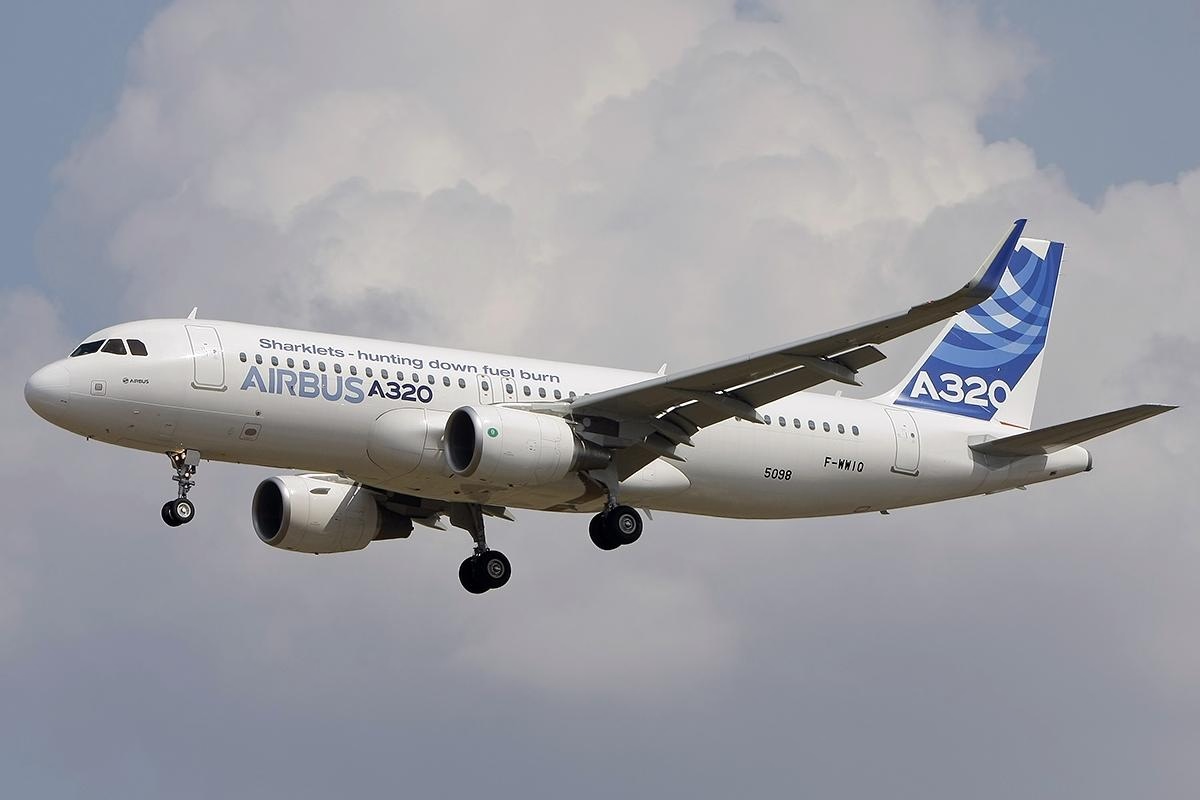
The Five Engines Used on Airbus A320 Family Aircraft
The Five Engines Powering the Airbus A320 Family
The Airbus A320 family has established itself as a cornerstone of commercial aviation, celebrated for its technological innovation and widespread adoption. Since its introduction in 1984 and first flight in 1987, the A320 series has become the world’s best-selling commercial aircraft family, surpassing the Boeing 737 in total orders by 2019. With over 19,000 orders and nearly 12,000 deliveries, the aircraft’s success is closely linked to its diverse engine options, which have played a pivotal role in its global appeal and operational versatility.
Engine Options and Their Evolution
From the beginning, Airbus adopted a strategy of offering customers a choice of engines, a decision that has significantly influenced the A320’s development. The original A320ceo (“current engine option”) models were equipped with either the CFM56-5 series from CFM International or the V2500 from International Aero Engines (IAE). More recently, the introduction of the A320neo (“new engine option”) and A321neo variants brought advanced powerplants into service: the CFM LEAP and Pratt & Whitney PW1100G engines. These newer models promise enhanced fuel efficiency and reduced emissions, aligning with the aviation industry’s increasing focus on sustainability.
CFM56-5A: The Original Workhorse
The CFM56-5A engine, developed by CFM International—a joint venture between General Electric and Safran—powered the A320’s maiden flight. Building upon earlier CFM56 models, the -5A variant offered increased thrust and incorporated advanced materials. It first powered the A320-100, the family’s initial variant, which entered service in 1988, followed by the more widely adopted A320-200. The CFM56 series has since become the most extensively used commercial jet engine globally, with over 33,000 units produced and more than one billion flight hours logged. While the majority of these engines power Boeing 737 aircraft, over 10,000 have been installed on Airbus models, underscoring their reliability and performance.
IAE V2500: Efficiency and Reliability
The V2500 engine emerged from a consortium formed in 1983, comprising Pratt & Whitney, Rolls-Royce, Japanese Aero Engine Corporation, MTU Aero Engines, and Fiat. Certified in 1988, the V2500 provided A320 operators with an alternative to the CFM56, offering comparable thrust but enhanced fuel efficiency and lower emissions due to its higher bypass ratio. Its quieter operation also made it well-suited for airports with stringent noise regulations. Over time, the V2500 has become a mainstay of the A320 fleet, valued for its dependable performance and operational economy.
New Generation Engines: CFM LEAP and Pratt & Whitney PW1100G
The advent of the A320neo and A321neo introduced two new engine options: the CFM LEAP and the Pratt & Whitney PW1100G. Both engines represent significant technological advancements, delivering marked improvements in fuel consumption, emissions reduction, and noise abatement. These developments reflect the broader industry commitment to environmental sustainability. However, the integration of these advanced engines has not been without challenges. Technical difficulties and supply chain disruptions have caused delays and increased maintenance demands, complicating production schedules for both Airbus and its airline customers.
Industry Challenges and Competitive Dynamics
Engine reliability and availability have become critical concerns for Airbus amid ongoing global supply chain disruptions and labor shortages. These factors have contributed to slower aircraft deliveries and heightened maintenance requirements. Concurrently, Boeing, Airbus’s principal competitor in the narrow-body aircraft market, is grappling with its own engine and certification challenges. This competitive environment intensifies the pressure on both manufacturers as they strive to meet growing market demand.
Despite these obstacles, the A320 family’s adaptability and broad range of engine options have solidified its position as a leader in commercial aviation. The aircraft continues to serve airlines worldwide, navigating decades of technological change and evolving industry demands.
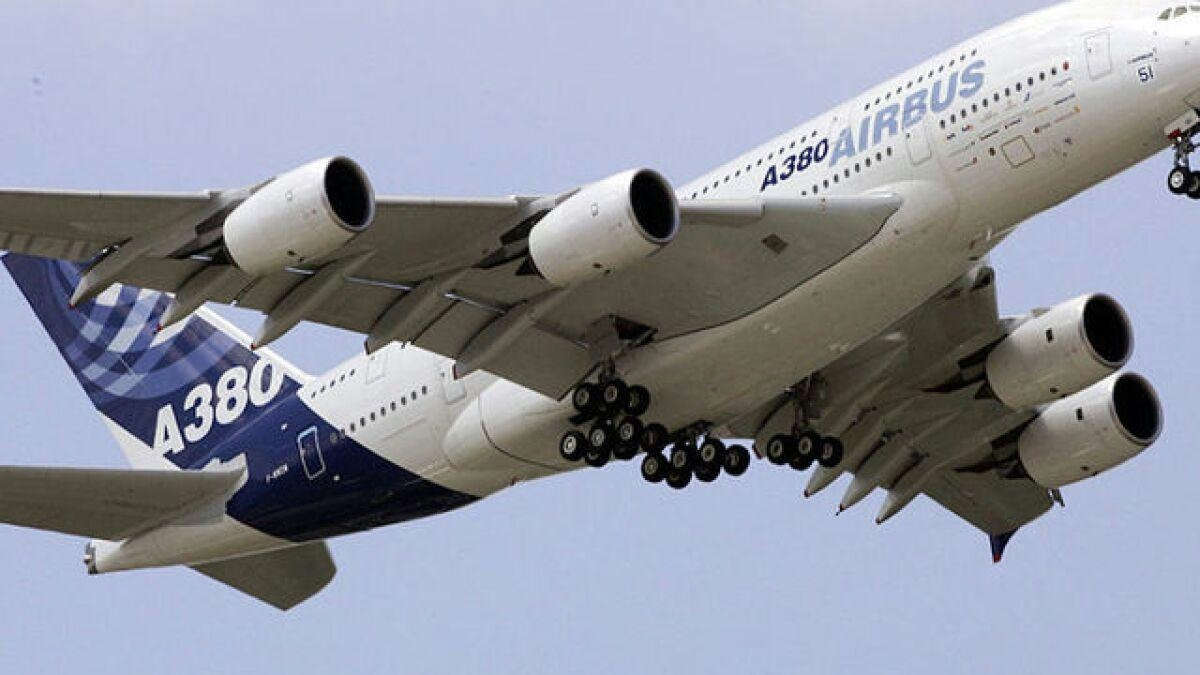
All Four Engines Failed at 37,000 Feet, and the Captain Remained Calm
All Four Engines Failed at 37,000 Feet, and the Captain Remained Calm
At 37,000 feet above the Indian Ocean, passengers aboard British Airways Flight 9 were abruptly plunged into an unsettling silence. The familiar roar of the Boeing 747’s four engines ceased without warning. There was no turbulence—only an eerie stillness, accompanied by a faint smell of smoke and dimming cabin lights. Anxiety quickly spread through the cabin as passengers grasped the gravity of the situation. In the cockpit, Captain Eric Moody and his crew confronted an extraordinary emergency: all four engines had failed simultaneously.
The Incident and the Captain’s Response
The 1982 flight, en route from Kuala Lumpur to Perth aboard the Boeing 747 named City of Edinburgh, had unknowingly entered a cloud of volcanic ash emanating from Indonesia’s Mount Galunggung, which had erupted earlier that day. Volcanic ash, invisible to radar and easily mistaken for ordinary cloud, poses a severe hazard to jet engines. Within minutes, the abrasive ash caused all four engines to flame out, transforming the 350-ton aircraft into the heaviest glider in the sky.
Captain Moody’s response to the crisis became emblematic of calm leadership under pressure. Over the public address system, he delivered a measured announcement: “Ladies and gentlemen, this is your captain speaking. We have a small problem. All four engines have stopped. We are doing our utmost to get them going again. I trust you are not in too much distress.” His understated tone helped to steady the passengers, some of whom initially believed the message to be a joke, while others gripped their seats in disbelief. Moody’s composure was precisely what the moment required.
Navigating a Crisis and Its Aftermath
With all engines offline, the 747 began a rapid descent at nearly 2,000 feet per minute. The flight crew calculated they had approximately 23 minutes before reaching the ocean below. Within this narrow timeframe, they faced the daunting tasks of restarting the disabled engines, navigating out of the volcanic ash cloud, managing the aircraft’s structural limits, and reaching a safe altitude with breathable air. Against the odds, after losing nearly 20,000 feet, the crew successfully restarted the engines and executed a safe landing, averting what could have been a catastrophic disaster.
The incident not only became a seminal case study in crisis management but also prompted broader discussions about aviation safety. In its aftermath, scrutiny intensified regarding pilot fitness, particularly as the industry grapples with an aging pilot population, with some captains continuing to fly into their eighties. Concerns emerged about the capacity of older pilots to respond effectively to emergencies, while pilot associations struggled to recover from the operational disruptions caused by the Covid-19 pandemic.
Market reactions reflected increased anxiety among passengers and industry stakeholders about the safety of aging aircraft and the imperative for rigorous pilot training. Competitors sought to reassure the public by emphasizing their own safety protocols and training standards, aiming to distinguish themselves amid a climate of heightened caution. The calm and professional leadership demonstrated on Flight 9 remains a benchmark for handling emergencies, even as the aviation sector continues to confront evolving challenges and expectations.
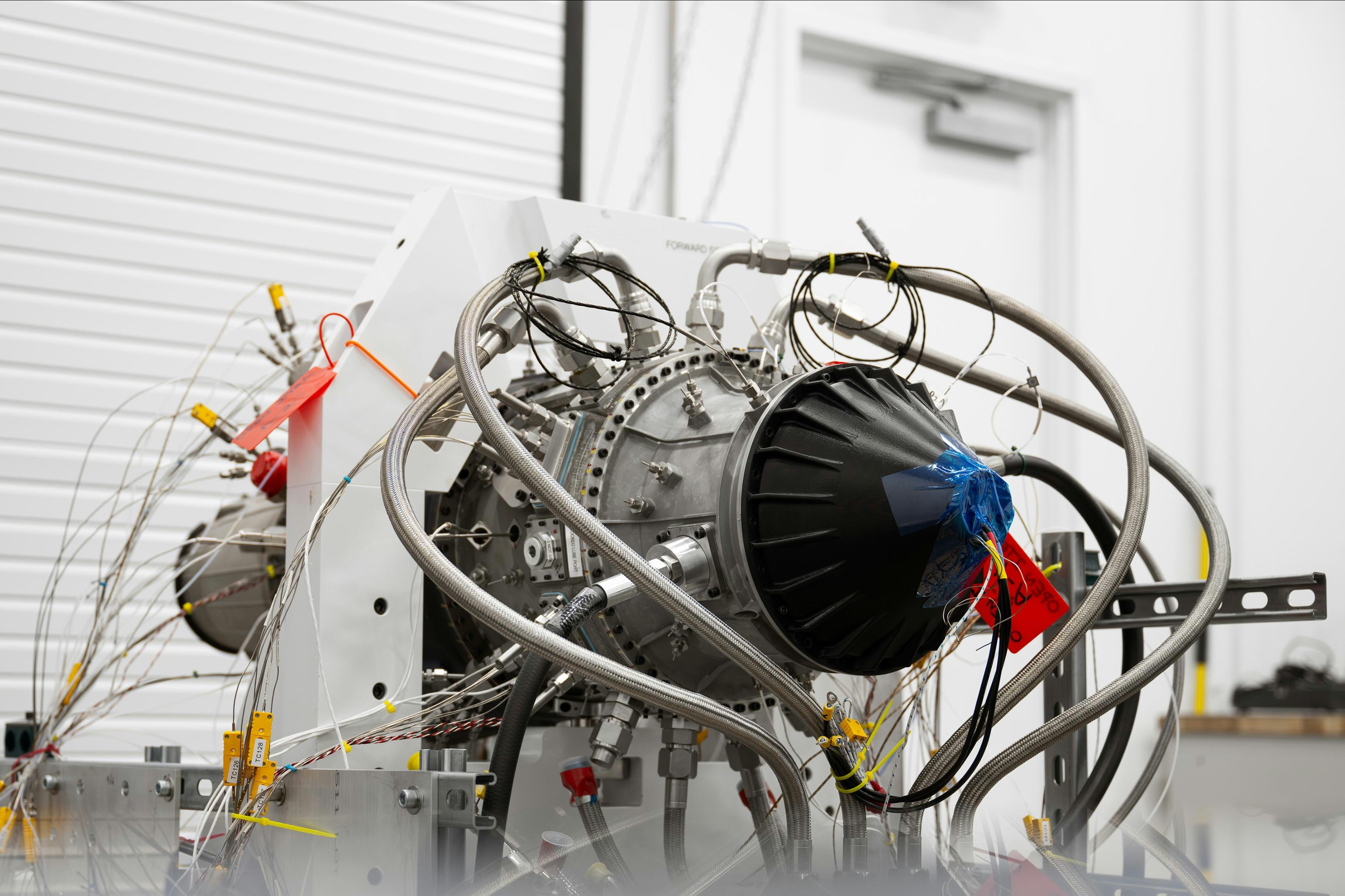
Beehive’s 3D-Printed Frenzy Engine Advances Toward 2026 Flight Tests
Beehive’s 3D-Printed Frenzy Engine Advances Toward 2026 Flight Tests
High-Altitude Testing Marks a Key Milestone
Additive manufacturing is revolutionizing military propulsion by drastically shortening the timeline from engine design to testing. This rapid development cycle aligns with the Pentagon’s objective to deploy quickly produced powerplants for a new generation of uncrewed aircraft. In this context, Beehive Industries has reached a significant milestone with the successful completion of high-altitude testing for its 200-pound-thrust, 3D-printed Frenzy engine, developed specifically for the US Air Force.
The recent tests, conducted at a government facility in Ohio, represent a crucial step toward the engine’s planned flight trials in early 2026. Frenzy belongs to a new class of small jet engines created almost entirely through advanced digital modeling and additive manufacturing. This approach enables rapid prototyping, iterative modification, and streamlined production. Building on the success of Beehive’s earlier Rampart engine, Frenzy exemplifies the Pentagon’s pursuit of scalable propulsion solutions tailored for uncrewed systems.
David Kimball, Chief Technology Officer at Beehive Industries, highlighted the significance of this achievement: “This milestone confirms Frenzy’s readiness for flight integration. In less than a year, we have gone from concept to proven high-altitude performance, ahead of schedule, thanks to our talented and determined team. Frenzy is now flight-ready, and our production system is prepared to scale alongside it.”
Accelerated Development and Test Outcomes
Beehive’s development timeline for the Frenzy engine has been notably compressed. Within four months, the company completed ground tests on six engines before shipping two prototypes to Ohio for altitude trials. During these tests, engineers assessed ignition behavior, low-pressure stability, fuel consumption, and thermal performance under demanding conditions.
The engines demonstrated reliable ignition and operation across the full flight envelope, achieving rapid acceleration from light-off to full power. Turbine temperatures and fuel consumption metrics exceeded initial predictions, while the hardware remained in “like new” condition after runtime equivalent to a full mission life. These results are particularly significant given the unique stresses imposed by high-altitude environments on small turbine engines. Stable ignition and smooth acceleration are critical factors, especially for engines intended for high-volume, cost-sensitive uncrewed platforms.
Kimball emphasized that the test campaign validated not only the engine’s capabilities but also Beehive’s broader development philosophy. “We are not just accelerating development timelines; we are ensuring America’s warfighters have the technology they need, when they need it most,” he stated.
Future Challenges and Industry Implications
Looking ahead, Beehive faces the challenge of integrating the Frenzy engine with its flight test vehicle and addressing any technical issues that may arise during upcoming flight trials. The successful demonstration has already attracted heightened interest from defense contractors and potential customers focused on autonomous fighter jets.
This achievement is also expected to intensify competition within the industry. Major players such as Pratt & Whitney, GE Aerospace, Rolls-Royce, and Honeywell Aerospace are anticipated to accelerate their own engine development efforts, targeting the emerging market for autonomous military aircraft.
Beehive’s “additive-first” strategy—emphasizing rapid cycles of printing, testing, refining, and reprinting engine components—continues to define its development pipeline. As the defense sector moves toward high-volume, rapidly evolving uncrewed systems, Beehive’s approach positions the company at the forefront of next-generation propulsion innovation.
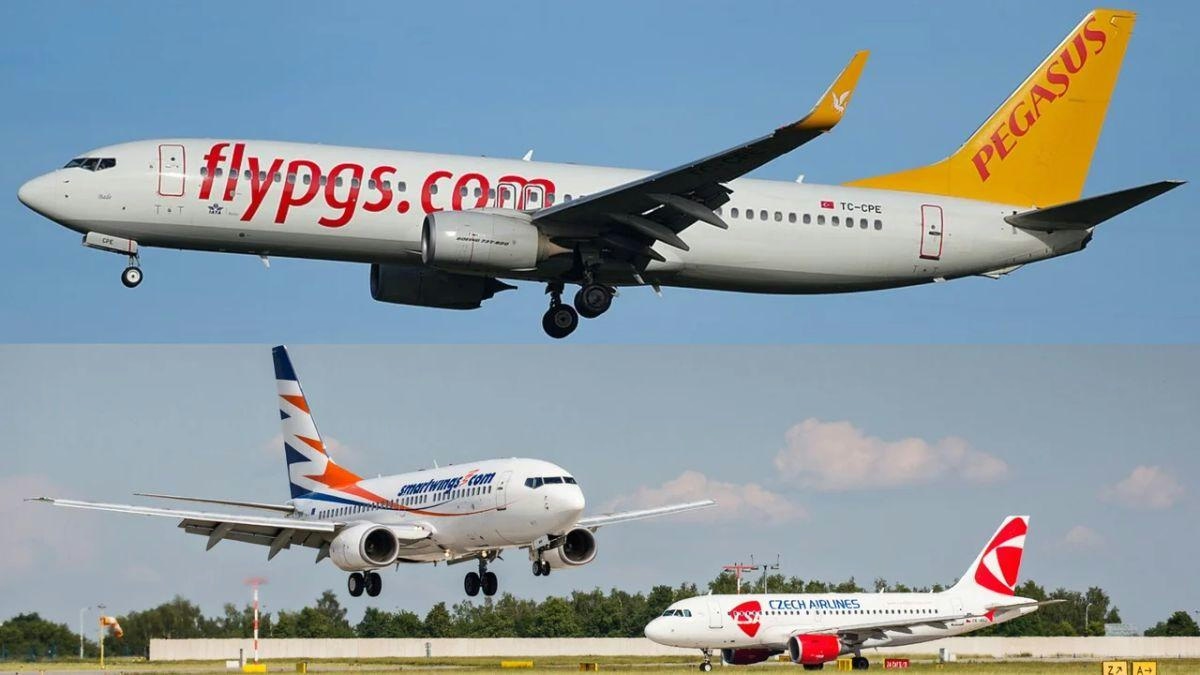
Pegasus Airlines Acquires Czech Airlines and Smartwings
Pegasus Airlines Acquires Czech Airlines and Smartwings in €154 Million Deal
Pegasus Airlines has reached an agreement to acquire Czech Airlines and its subsidiary Smartwings in a transaction valued at €154 million ($180 million). This acquisition represents a significant milestone in the Turkish carrier’s strategy to expand its footprint across Europe and beyond. The deal encompasses both airlines and their associated liabilities. Pending regulatory approval, the merger will maintain the Pegasus and Smartwings brands, while the historic Czech Airlines (CSA) name, which was retired following the carrier’s cessation of operations in October 2024, will not be revived.
Strategic Expansion and Fleet Integration
The acquisition is poised to strengthen Pegasus Airlines’ network by incorporating Smartwings’ established routes and fleet, thereby enhancing the carrier’s reach throughout Europe. Pegasus currently operates a fleet of 127 aircraft, predominantly Airbus A320neo and A321neo models, serving 158 destinations in 55 countries. Smartwings operates mainly Boeing 737 aircraft, flying to 80 destinations across 20 countries. The combined operations will add 47 aircraft to Pegasus’s portfolio, significantly expanding its capacity and market presence.
Güliz Öztürk, CEO of Pegasus Airlines, emphasized the company’s growth trajectory since its founding in 2005. She highlighted the airline’s evolution from a modest fleet of fourteen aircraft to one of the most efficient and profitable carriers globally. Öztürk described the acquisition as the opening of a new chapter in Pegasus’s expansion, underscoring the strategic importance of joining forces with Czech Airlines and Smartwings.
Shareholders of Czech Airlines and the founders of Smartwings expressed confidence in Pegasus’s ability to further develop and strengthen the combined operations. They acknowledged Pegasus’s potential and resources as key factors in driving future growth.
Challenges and Market Implications
Despite the promising outlook, the acquisition faces several challenges. Regulatory authorities are expected to conduct thorough reviews, particularly concerning antitrust issues, given Pegasus’s increased market share in the European low-cost carrier sector. The integration of operations, fleets, and corporate cultures also presents complex hurdles that will require careful management.
Market reactions to the deal have been mixed. Some analysts view the acquisition as a strategic move that will accelerate Pegasus’s international expansion and enhance its competitive position. Others caution about the difficulties inherent in merging two distinct airline operations and the potential for intensified competition from rival carriers.
Competitors in the European low-cost market are anticipated to respond with increased activity as Pegasus leverages Smartwings’ established network and customer base. This acquisition aligns with Pegasus Airlines’ broader ambition to grow its global footprint and solidify its standing among Europe’s leading airlines.
The transaction remains subject to final approval by relevant regulatory bodies and the successful integration of the airlines’ operations.

Qatar Airways Names Hamad Ali Al-Khater as New CEO
Qatar Airways Names Hamad Ali Al-Khater as New CEO
Qatar Airways has announced the appointment of Hamad Ali Al-Khater as its new Group Chief Executive Officer, effective December 7, 2025. He succeeds Engr. Badr Mohammed Al-Meer, who has led the airline since 2023, steering it through a period marked by record growth and significant industry recognition.
Leadership Transition Amidst Continued Success
Al-Khater assumes leadership at a critical juncture for Qatar Airways, which recently secured its ninth ‘World’s Best Airline’ title at the 2025 World Airline Awards. The airline continues to expand its global reach, operating a fleet that serves over 170 destinations worldwide. This leadership change comes as the company seeks to sustain its momentum and further enhance its position in the competitive aviation sector.
With over two decades of experience in aviation and strategic operations, Al-Khater is widely regarded for his operational expertise. Prior to his appointment, he served as Chief Operating Officer at Hamad International Airport, where he managed major infrastructure expansions and improved passenger services, contributing significantly to the airport’s reputation for excellence. His background also includes senior roles at QatarEnergy, where he oversaw large-scale projects and spearheaded business development initiatives.
Expectations and Industry Outlook
His Excellency Saad Sherida Al-Kaabi, Chairman of Qatar Airways Group, expressed strong confidence in Al-Khater’s appointment, highlighting his proven track record in operational excellence and strategic leadership. Al-Kaabi emphasized the airline’s commitment to building on its solid foundations and enhancing its global network to deliver exceptional travel experiences.
Al-Khater’s leadership is anticipated to focus on maintaining the airline’s growth trajectory and profitability following Al-Meer’s departure. While his operational success at Hamad International Airport inspires optimism, some industry observers remain cautious about the potential impact of the leadership transition on Qatar Airways’ momentum. Regional competitors are expected to closely monitor any strategic shifts under the new CEO.
During Al-Meer’s tenure, Qatar Airways achieved numerous milestones, including multiple ‘World’s Best Airline’ awards spanning from 2011 through 2025, as well as recognition for its business class, regional leadership, and service excellence. As Al-Khater takes the helm, the airline faces the challenge of preserving its industry-leading reputation while adapting to the evolving dynamics of global aviation. His experience in managing complex infrastructure projects and commitment to innovation are poised to play a pivotal role in guiding Qatar Airways through its next phase of growth.

Tata Consultancy Services Joins Airbus Skywise Certified Partner Program
Tata Consultancy Services Joins Airbus Skywise Certified Partner Program
Tata Consultancy Services (TCS), a global leader in IT services, consulting, and business solutions, has officially joined the Airbus Skywise Certified Partner Program. This collaboration aims to deliver scalable, data-driven solutions to aviation operators worldwide by leveraging the Skywise digital platform. As part of the Skywise Partner Programme—a network of certified organizations providing advanced analytics for the aviation sector—TCS will assist airlines in optimizing operations and ensuring seamless data continuity across the industry.
Advancing Aerospace Through Technology
Anupam Singhal, President of Manufacturing at TCS, emphasized the company’s dedication to transforming the aerospace industry through innovative technologies. He stated, “At TCS, we are redefining the future of the aerospace industry through transformative technologies like generative AI, digital twins, and quantum computing. Our expertise on the Skywise platform empowers airlines with data-driven capabilities to unlock significant levels of operational efficiency. We are building a resilient and interconnected aerospace ecosystem, paving the way for future-ready skies that are smarter.”
The partnership is designed to accelerate the digital transformation of airlines by providing tools that enhance operational efficiency and support growth within an increasingly connected aerospace environment. Airlines utilizing Skywise with TCS’s support will benefit from advanced predictive analytics, which can reduce unplanned maintenance and improve aircraft availability. TCS also plans to implement digital twin models to simulate operational scenarios and anticipate component failures. Furthermore, quantum-inspired optimization algorithms will be employed to improve turnaround scheduling, fleet utilization, and logistics. The introduction of AI-powered operational dashboards is expected to facilitate faster, data-driven decision-making for maintenance, repair, and operations (MRO) as well as flight operations teams.
Challenges and Market Implications
Despite the promising potential, integrating advanced technologies such as generative AI, digital twins, and quantum computing into existing aerospace systems presents considerable challenges. The complexity of legacy infrastructure and the necessity for seamless interoperability may require significant investment and adaptation from both TCS and its airline partners.
Market analysts have responded positively to TCS’s strategic push into AI infrastructure. The company’s steady Q2 FY26 earnings and optimistic analyst forecasts reflect confidence in its direction. TCS’s participation in the Skywise program is expected to strengthen its market position, particularly as it expands its presence across diverse sectors. Recent partnerships with UK retailer Morrisons and oilfield services provider Weatherford International illustrate TCS’s broadening footprint. While these cross-industry collaborations may enhance TCS’s competitive edge, they also intensify competition as rival technology firms seek to bolster their aerospace offerings and partnerships.
As TCS deepens its engagement with Airbus and the wider aviation ecosystem, it is positioning itself at the forefront of digital transformation in aerospace, navigating the complexities and competitive pressures of a rapidly evolving market.
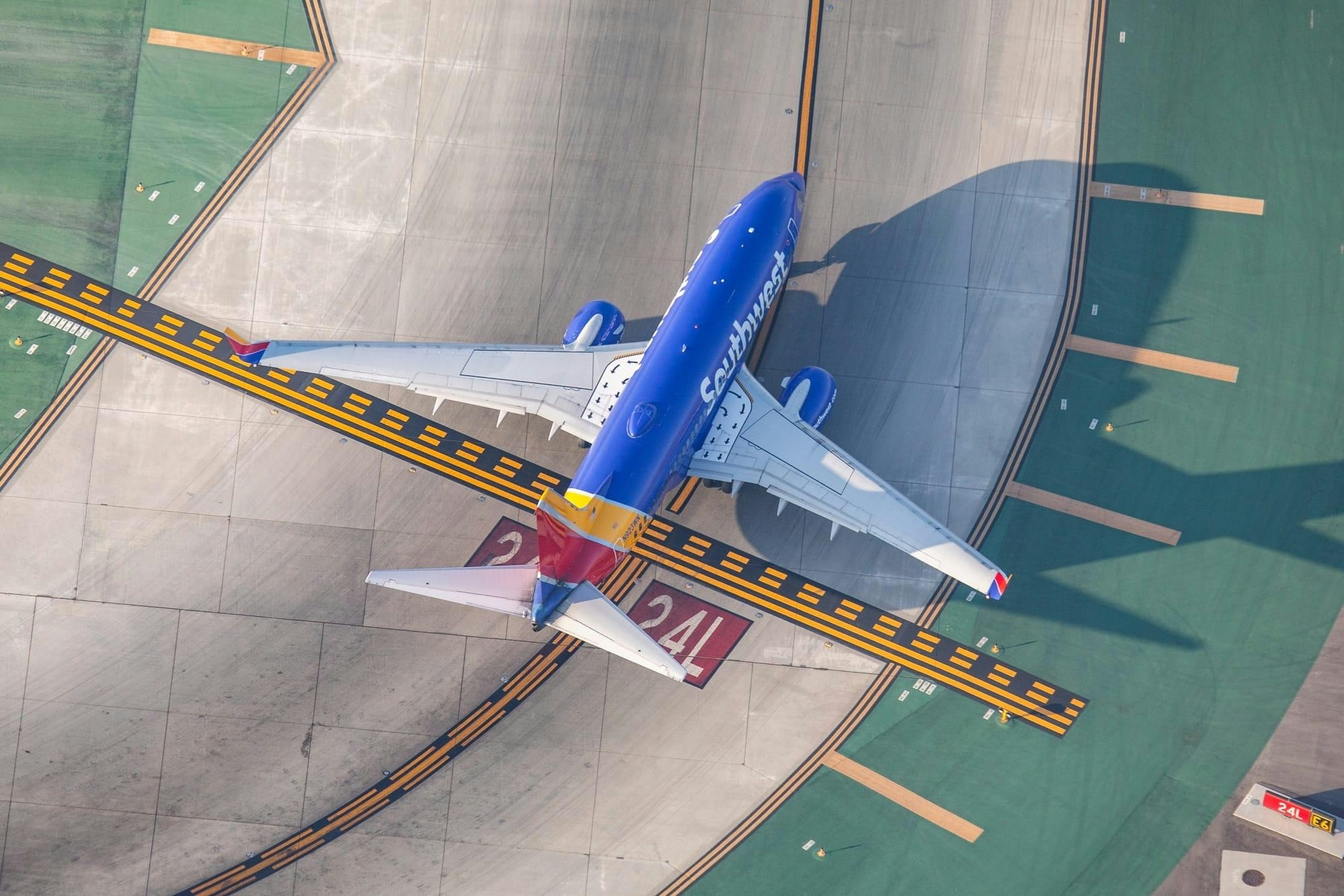
Southwest Airlines Highlights Challenges of AI Integration
Southwest Airlines Highlights Challenges of AI Integration
At Salesforce’s annual Dreamforce event in San Francisco, CEO Marc Benioff emphasized a significant disconnect in the technology sector’s rapid push to integrate artificial intelligence (AI) across various industries. Benioff remarked on the overwhelming pace of technological innovation, noting that the acceleration of new technologies far outstrips the rate at which customers and companies can adopt them. This disparity is particularly pronounced in the airline industry, where the adoption of AI is advancing swiftly but unevenly.
Navigating Complexities in the Airline Sector
Stephen Berkowitz, a technology lead at Southwest Airlines, echoed Benioff’s observations during a breakout session at Dreamforce. He described the process of AI adoption at Southwest as more intricate than the polished marketing narratives often presented by technology firms like Salesforce. Southwest Airlines faces a distinct set of challenges in integrating advanced AI solutions, including stringent regulatory requirements and rigorous safety protocols. These factors, combined with the airline’s strong commitment to customer service, have led to a cautious and deliberate approach to AI implementation.
Unlike some competitors that have rapidly deployed AI-driven tools such as conversational bots and automated customer service agents, Southwest prioritizes responsible adoption over speed. Berkowitz explained that the airline carefully weighs multiple considerations before introducing AI technologies, particularly those that could affect its customer-centric culture. The focus remains on enhancing operational efficiency without compromising safety or service quality.
Balancing Innovation with Operational Realities
Industry analysts have noted that Southwest’s measured approach carries inherent risks. Moody’s has cautioned that slow AI adoption may result in diminished profit margins and loss of market share, as rivals capitalize on new technologies to streamline operations and improve customer experiences. Despite these pressures, Southwest remains steadfast in balancing innovation with the complex regulatory and operational demands of the airline industry.
Southwest’s experience underscores a broader challenge faced by legacy companies: the need to harness AI’s potential while preserving core values and adhering to strict industry standards. The airline’s strategy reflects an understanding that successful AI integration extends beyond technical implementation, requiring a strategic evaluation of both the risks and benefits involved.
Airbus CEO Acknowledges Boeing May Lead in 2025 Orders
Airbus CEO Acknowledges Boeing’s Potential Lead in 2025 Aircraft Orders
European aerospace giant Airbus has conceded that Boeing may surpass it in aircraft orders for 2025, signaling a possible shift in the competitive landscape between the two industry leaders. In an interview with France’s Inter Radio, Airbus CEO Guillaume Faury acknowledged that Boeing is on track to lead in net orders this year. Between January and November, Boeing secured 908 net orders after cancellations, compared to Airbus’s 700. November’s figures further underscored Boeing’s momentum, with the American manufacturer recording 149 firm orders against Airbus’s 75, suggesting Boeing could finish the year ahead in total orders for the first time in six years.
Backlog and Production Challenges
Despite the potential setback in new orders, Airbus retains a significant advantage in its order backlog, which Faury emphasized will sustain production for at least the next five years. He noted that Airbus’s consistent lead in orders over the past five years has resulted in a substantially larger backlog than Boeing’s. Faury also highlighted that Boeing’s recent surge in orders has been partly aided by favorable tariff and trade negotiations.
Airbus has encountered several operational challenges in recent months. A software recall affecting approximately 6,000 A320 family aircraft and a quality issue involving metal panels have negatively impacted the company, contributing to a decline in its share price. Faury is currently evaluating the effects of a fuselage quality concern on certain A320 jets, which led to weak handovers in November and may influence December deliveries. These issues come as Airbus strives to meet its year-end production target of around 820 aircraft.
Market Position and Future Outlook
Despite these hurdles, Airbus continues to lead the industry in aircraft deliveries and remains the world’s largest manufacturer by this measure. The company is actively expanding its global production capacity, having recently doubled output at its Tianjin, China assembly facility and introduced new production lines in the United States to accommodate growing demand. Airbus aims to increase monthly production to 75 aircraft by 2027.
Demand for both manufacturers’ products remains robust. Boeing’s resurgence is largely driven by the enduring popularity of the 787 Dreamliner, which appeals to airlines seeking efficient long-haul widebody aircraft. Meanwhile, Airbus has experienced strong interest in its A321 series, particularly the A321XLR, which is transforming the narrowbody market by enabling airlines to operate longer routes with smaller, more cost-effective planes.
This year, Airbus reached a significant milestone as the A320 surpassed the Boeing 737 to become the world’s most popular commercial airliner. Both companies continue to compete fiercely for market share in China, a critical region where internal order targets remain ambitious.
While Boeing appears poised to lead in orders for 2025, Airbus’s substantial backlog and ongoing expansion efforts position it well for sustained competitiveness in the years ahead.

Sabre Corporation Introduces AI-Powered Revenue Optimizer for Airlines
Sabre Corporation Launches AI-Driven Revenue Optimizer for Airlines
Sabre Corporation (NASDAQ: SABR) has introduced the SabreMosaic Continuous Revenue Optimizer (CRO), an advanced AI-powered revenue management tool designed to revolutionize airline pricing strategies. Officially launched on October 14, the CRO system moves beyond traditional fare class structures by providing continuous, optimized pricing recommendations tailored to each individual shopping request. Sabre projects that this innovation could increase overall airline revenues by up to 3.5% without necessitating additional capacity, by ensuring that the optimal price is offered to the right customer at the right moment.
Advancing Airline Revenue Management with AI
The CRO solution addresses the inherent limitations of legacy revenue management systems that rely heavily on fixed fare classes. Built on the SabreMosaic platform, which debuted last year and has already contributed tens of millions in incremental revenue for over ten airline customers, the optimizer integrates Sabre IQ—an advanced artificial intelligence layer. This AI combines proprietary algorithms with Sabre’s extensive Travel Data Cloud, which aggregates more than 50 petabytes of anonymized travel data. This vast repository enables more precise, dynamic pricing decisions that adapt in real time to market conditions and consumer behavior.
Sabre Corporation operates globally as a leading software and technology provider for the travel industry, with a presence across the United States, Europe, Asia-Pacific, and other international markets. Its business is divided into two primary segments: Travel Solutions and Hospitality Solutions, both of which benefit from the company’s ongoing investment in AI and data-driven technologies.
Challenges and Industry Implications
Despite the promise of CRO as a breakthrough in airline revenue management, the deployment of AI-driven pricing tools faces several challenges. Regulatory scrutiny is expected to intensify as authorities examine how companies collect, manage, and utilize large volumes of consumer data. Privacy concerns among travelers may also arise, particularly as AI systems become more deeply embedded in pricing and personalization processes.
The market response to Sabre’s announcement is likely to be mixed. Established revenue management providers may express skepticism regarding the transparency and effectiveness of AI-based pricing models. Meanwhile, competitors are anticipated to accelerate their own AI initiatives or pursue strategic partnerships to incorporate similar technologies, thereby intensifying competition in the airline revenue management sector.
Sabre’s recent whitepaper underscores the transformative potential of conversational commerce, suggesting that the travel industry is approaching a significant technological shift. However, the pace at which airlines adopt these AI-driven solutions and their tangible impact on revenue and customer experience remain uncertain as stakeholders balance innovation with regulatory and consumer considerations.
As Sabre expands its AI portfolio, investor attention remains focused on the company’s stock performance. While some analysts view SABR as an undervalued technology investment, others recommend alternative AI-focused stocks that may offer higher growth potential with comparatively lower risk.

Delta Air Lines Prohibits Personal AI Smart Glasses for Flight Attendants
Delta Air Lines Bans Personal AI Smart Glasses for Flight Attendants
Delta Air Lines has announced a new policy prohibiting flight attendants from using personal AI-powered smart glasses while on duty. This measure, effective immediately across the airline’s global operations, underscores Delta’s commitment to safeguarding passenger privacy and maintaining operational safety amid the rapid proliferation of wearable technology. The decision reflects mounting concerns within the aviation sector regarding data security and the potential for unauthorized recording devices in the cabin environment.
Privacy and Security Concerns Amid Technological Advances
Smart glasses, including popular models such as Apple Vision Pro and Meta Ray-Ban, as well as emerging devices from companies like TDK and Xiaomi, are increasingly popular for their real-time AI assistance, voice command functionality, facial recognition, and discreet video recording capabilities. While these features offer promising enhancements to workflow and customer service, they also raise significant challenges related to privacy, data protection, and compliance with diverse international regulations. These issues are particularly acute on international flights, where legal standards vary widely.
Delta’s policy emerges as the aviation industry continues to wrestle with integrating new technologies without compromising safety or passenger trust. Although airlines such as Air New Zealand and Virgin Atlantic have experimented with augmented reality wearables to improve crew efficiency, these initiatives have not led to widespread adoption. By formally banning personal smart glasses for frontline staff, Delta positions itself as one of the first major carriers to establish a clear boundary on the use of such devices, setting a precedent for technology governance in aviation.
Balancing Innovation with Passenger Trust
The airline’s stance has sparked debate among technology advocates and industry observers. Proponents argue that smart glasses represent a significant opportunity for inflight service innovation, enabling hands-free translation, instant access to passenger information, and more efficient crew workflows. Conversely, many passengers express unease about the possibility of being recorded without their consent, raising important questions about comfort and privacy during flights. Delta’s policy seeks to navigate these competing interests by prioritizing the safety and trust of both passengers and crew members.
Market reactions to the ban have been mixed. Some industry participants view Delta’s approach as a prudent safeguard against privacy risks, while others caution that it may hinder the adoption of potentially transformative tools. Competitor airlines may respond in varied ways, either by implementing similar restrictions to address privacy concerns or by selectively embracing smart glasses to differentiate their service offerings and appeal to technology-savvy travelers.
Looking forward, Delta has indicated openness to introducing airline-approved wearable technology in the future, contingent upon strict adherence to privacy protections and regulatory requirements. As the market for smart glasses continues to expand, airlines will face the complex task of balancing the benefits of these devices with the imperative to protect passenger rights and ensure safety.
Delta’s cautious and transparent policy highlights the intricate challenges of incorporating cutting-edge technology into aviation. The airline’s decision reinforces the principle that passenger trust, privacy, and safety must remain paramount as the industry evolves.
AI's Impact on Travel Industry Jobs
AI’s Impact on Travel Industry Jobs
Workforce Reductions Amid AI Adoption
Artificial intelligence is rapidly transforming the travel industry, with its disruptive effects becoming increasingly apparent through significant workforce reductions. The swift integration of AI technologies has not only escalated corporate investment but also led to the displacement of thousands of employees. According to data from Challenger, Gray & Christmas, company executives have attributed over 48,000 job cuts in the United States this year directly to AI.
Within the travel sector, the influence of AI on employment manifests in diverse ways. Prominent companies such as Lufthansa Group, United Airlines, and Tripadvisor have explicitly identified AI or automation as the primary reasons behind recent layoffs. Meanwhile, other major players including Booking.com, Expedia, and American Airlines have cited terms like “efficiency,” “streamlining,” and “restructuring” in their announcements—phrases that often imply a strategic shift toward automation and AI-driven processes. These organizations are not only reducing their workforce but are also channeling the resulting cost savings into expanding AI capabilities, including the deployment of conversational bots and intelligent agents.
Industry Implications and Strategic Responses
The ramifications for the travel workforce are profound. Industry analysts forecast that as AI increasingly augments human roles and automates operational tasks, the hospitality sector could experience workforce reductions ranging from 20 to 30 percent in the coming years. This trend has generated skepticism regarding the long-term viability of jobs within the travel industry, as companies prioritize automation to enhance productivity and reduce expenses.
In response, competitors are accelerating their own AI initiatives. Early adopters like Expedia have begun utilizing AI to integrate call-center data and provide more comprehensive traveler insights, resulting in double-digit improvements in first-call resolution rates and upselling performance. These strategic shifts highlight a broader industry movement toward leveraging AI not only to streamline operations but also to elevate customer service and secure a competitive advantage.
The travel industry currently faces a pivotal moment. While AI offers the promise of increased efficiency and innovation, it also necessitates difficult decisions concerning workforce size and organizational structure. The ongoing wave of layoffs—whether explicitly linked to AI or framed as restructuring—signals a fundamental transformation in how travel companies operate and engage with their customers. As automation becomes more deeply embedded in the sector, balancing technological progress with the human element that has traditionally defined travel experiences remains a critical challenge.
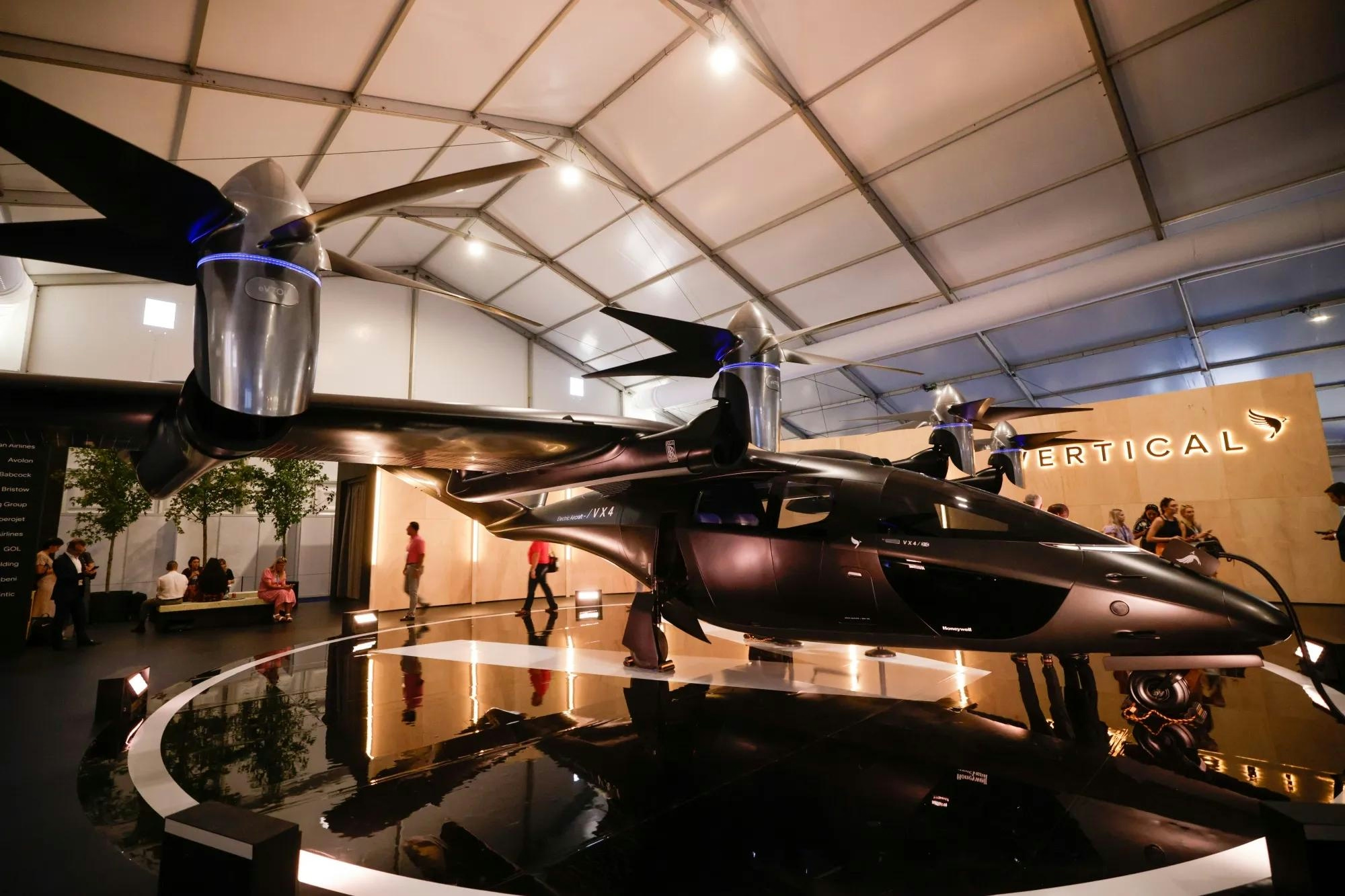
Vertical Aerospace Shares Rise as Company Unveils Valo and Plans UK’s First Electric Air Taxi Network
Vertical Aerospace Shares Surge Following Valo Unveiling and UK Air Taxi Network Announcement
Shares of Vertical Aerospace (EVTL) experienced a notable increase this week after the British aerospace firm revealed its latest commercial electric vertical takeoff and landing (eVTOL) aircraft, Valo, alongside plans to establish the United Kingdom’s first electric air taxi network. The company’s stock rose 8.3% on Tuesday, with an additional 1.9% gain in after-hours trading, extending a rally that has propelled shares up approximately 67% over the past month, despite remaining 42% below their value at the start of the year.
Advancements in eVTOL Technology and Certification Strategy
The Valo aircraft, developed in collaboration with industry leaders including Honeywell International, Syensqo, and Aciturri, marks a significant advancement over Vertical’s earlier VX4 prototype. Incorporating insights from piloted test programs and airline customer feedback, the new design aims to satisfy the stringent requirements necessary for commercial service. Vertical Aerospace intends to manufacture seven certification aircraft in the UK to facilitate final testing with both the UK Civil Aviation Authority (CAA) and the European Union Aviation Safety Agency (EASA). The company is targeting Type Certification by 2028, a critical milestone for launching commercial operations across Europe.
This approach contrasts with the emerging industry trend of “certification tourism,” where some eVTOL manufacturers seek to initiate services in regions such as the Middle East before obtaining regulatory approvals in the US or Europe. Vertical Aerospace has underscored its commitment to adhering to UK and EU regulatory standards prior to commencing operations.
Strategic Partnerships and Market Expansion
In a further indication of growing international interest, Héli Air Monaco, a leading helicopter operator in the French Riviera, has signed a Memorandum of Understanding to pre-order Valo aircraft. Vertical Aerospace’s ambitious plans also include launching the UK’s inaugural electric air taxi network in partnership with Skyports Infrastructure and Bristow Group. This network will utilize key locations such as London Heliport, Bicester Vertiport, and the forthcoming UK Skyport network. Bristow Group will contribute operational expertise and provide Air Operator Certificates. The company aims to commence service in the first quarter of 2029, focusing on high-value mobility corridors where air taxis could significantly reduce travel times compared to conventional ground transportation.
Despite the surge in investor optimism, supported by notable insider buying, Vertical Aerospace faces considerable challenges. The company plans to produce 175 aircraft by 2030, scaling production to over 225 units annually by the end of that year. Achieving these targets will necessitate securing additional capital and successfully navigating the complex certification process.
Wall Street analysts maintain a bullish outlook, with a consensus “Strong Buy” rating based on four unanimous recommendations. The average price target of $10.75 implies a potential upside of approximately 48% from current levels.
As Vertical Aerospace advances its UK-centric strategy, its capacity to fulfill its commitments and obtain regulatory approvals will remain under close scrutiny from investors and industry stakeholders alike.
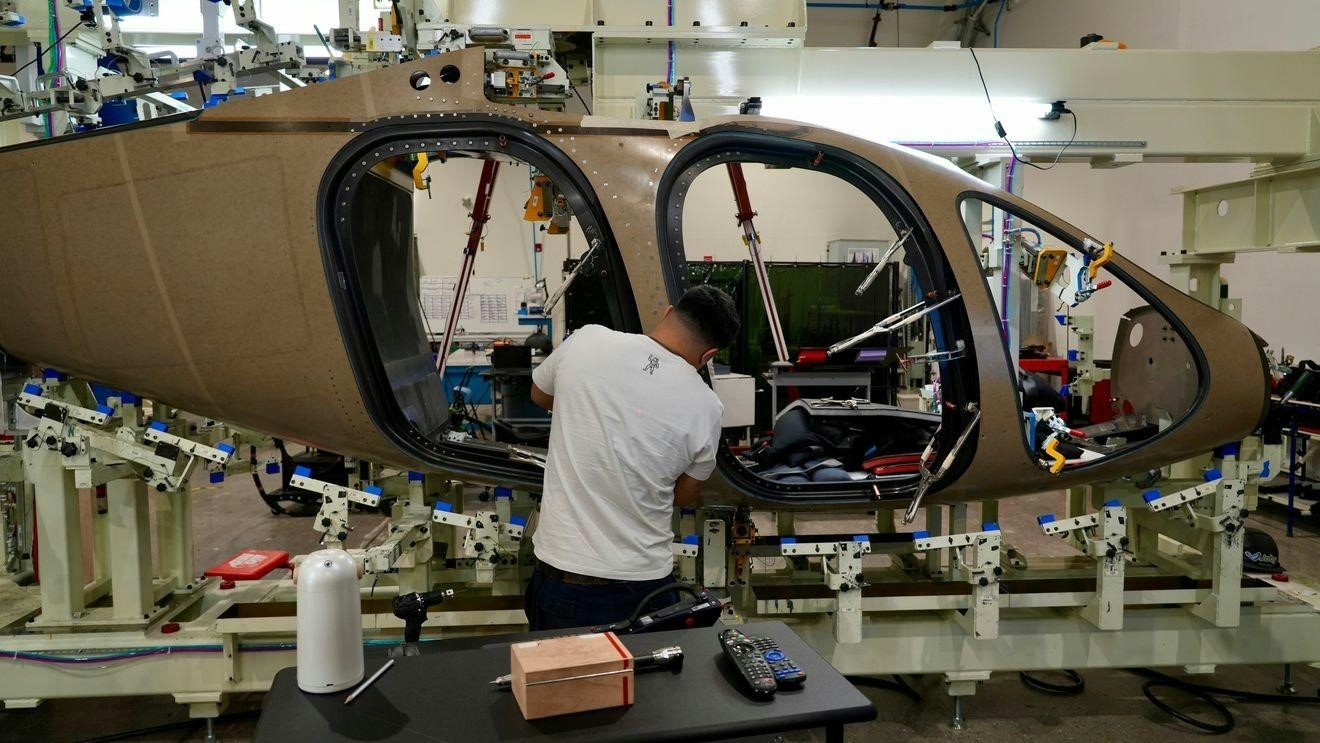
Inside Vertical Aerospace’s New Flying Taxi Featuring F-35 Hover Technology
Inside Vertical Aerospace’s New Flying Taxi Featuring F-35 Hover Technology
Vertical Aerospace has introduced its latest electric vertical takeoff and landing aircraft (eVTOL), the Valo, positioning it as a transformative solution for urban and regional air mobility. Prior to its official unveiling, Business Insider was granted an exclusive tour of the flying taxi, which integrates hover technology inspired by the F-35 fighter jet, underscoring the aircraft’s advanced engineering.
Revolutionizing Urban and Regional Transport
The Valo promises to significantly reduce travel times between city centers and airports. Vertical Aerospace claims the aircraft can complete the journey from Canary Wharf to London Heathrow in just 12 minutes, a trip that currently takes over an hour by car or public transit. Beyond this, the company envisions establishing a broader network connecting major English cities, potentially stimulating regional economic development. The Valo’s design also emphasizes versatility, with plans to deploy the aircraft for emergency medical services and cargo transport. Looking ahead, Vertical Aerospace is developing a hybrid version equipped with autonomous capabilities, targeting regulatory approval from the UK’s Civil Aviation Authority by 2028.
Dómhnal Slattery, chair of Vertical Aerospace, described the Valo as “bigger, safer, and more capable than anything in the sector,” framing it as a breakthrough in aviation and a testament to the UK’s leadership in aerospace innovation.
Navigating Industry Challenges and Regulatory Hurdles
Despite its technological promise, Vertical Aerospace faces considerable challenges in bringing the Valo to market. The eVTOL sector is becoming increasingly competitive, with established companies such as Joby, Archer, and Beta actively pursuing regulatory approvals in regions including the UAE and Saudi Arabia. Vertical Aerospace plans to reveal its certification design on December 10 in London, highlighting its distinctive aircraft design, clear certification pathway, and differentiated business model as competitive advantages.
However, the company’s strategy to launch operations in the Middle East prior to securing certifications in the US and Europe has attracted criticism. Industry executives have expressed concerns about “certification tourism,” a practice involving the pursuit of regulatory approval in jurisdictions perceived as less stringent before addressing more rigorous standards elsewhere. This approach has ignited debate over the optimal path to achieving global acceptance and ensuring operational safety for emerging eVTOL technologies.
Advanced Design and Passenger Experience
The Valo’s cabin design reflects its cutting-edge engineering, drawing inspiration from fighter jets to enhance both safety and passenger comfort. Vertical Aerospace aims to distinguish the Valo through these innovations, coupled with a focus on quieter and cleaner flight operations. As the race to commercialize flying taxis intensifies, the Valo embodies both the technological ambitions and the regulatory and competitive challenges confronting the next generation of urban air mobility.
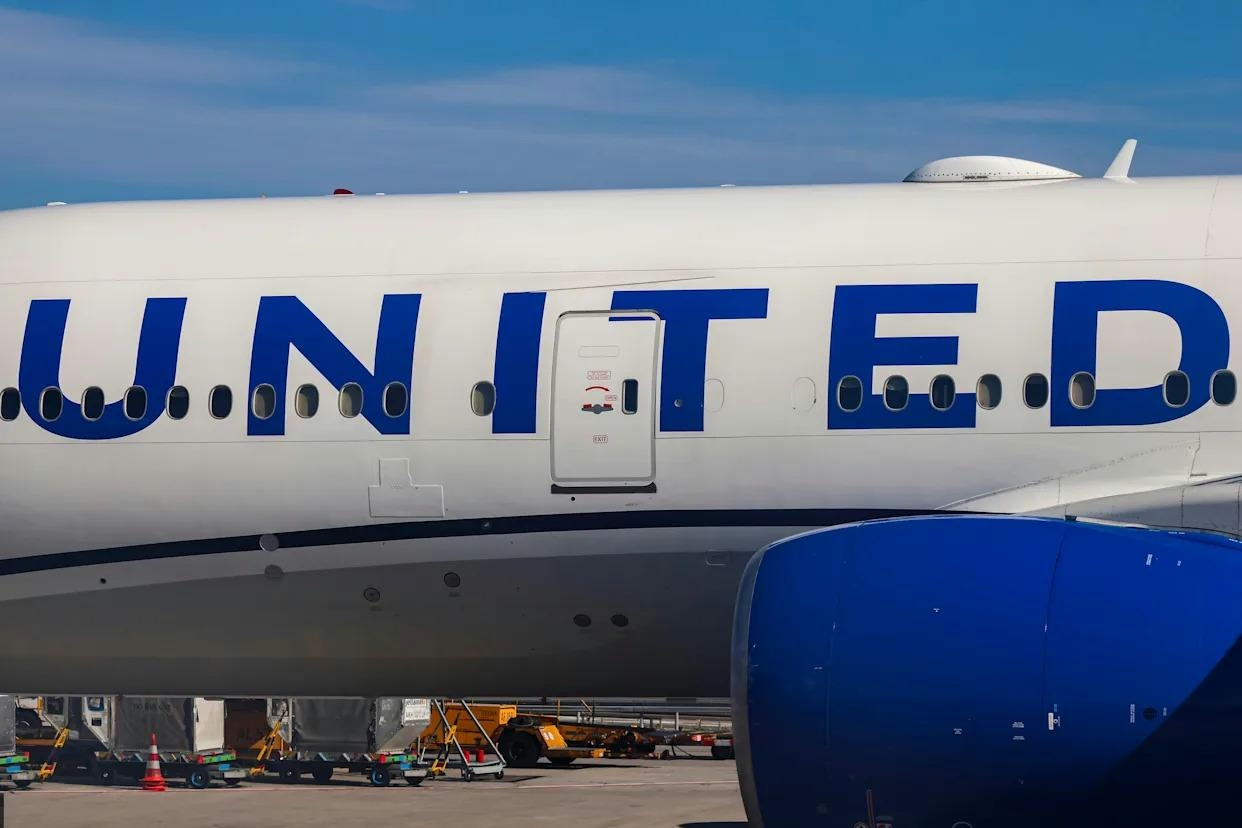
United Airlines Flight Returns to Dulles After Engine Failure on Takeoff
United Airlines Flight Returns to Dulles Following Engine Failure on Takeoff
United Airlines Flight 803 was compelled to return to Washington Dulles International Airport on Thursday after experiencing an engine failure shortly after departure. The Boeing 777, en route to Tokyo, was carrying 275 passengers and 15 crew members at the time of the incident.
Incident and Response
The Federal Aviation Administration (FAA) confirmed the engine failure and has initiated a formal investigation into the circumstances surrounding the event. Following the malfunction, emergency crews responded promptly to reports of smoke and fire near the runway. The fire was swiftly extinguished, and the aircraft was able to land safely back at Dulles without any injuries reported among those on board.
Airline Statement and Next Steps
United Airlines announced that it is arranging for an alternative aircraft to continue the journey to Tokyo later the same day. The airline emphasized that the safety of its passengers and crew remains its highest priority and expressed gratitude to the emergency responders for their rapid and effective action. The FAA will maintain its investigation to determine the cause of the engine failure.
Ask AeroGenie