
Orquesta conocimientos de IA para convertirlos en acción

Tendencias
Categories
China and France Expand Sustainable Aviation Services as Shanghai Boosts Aircraft Maintenance
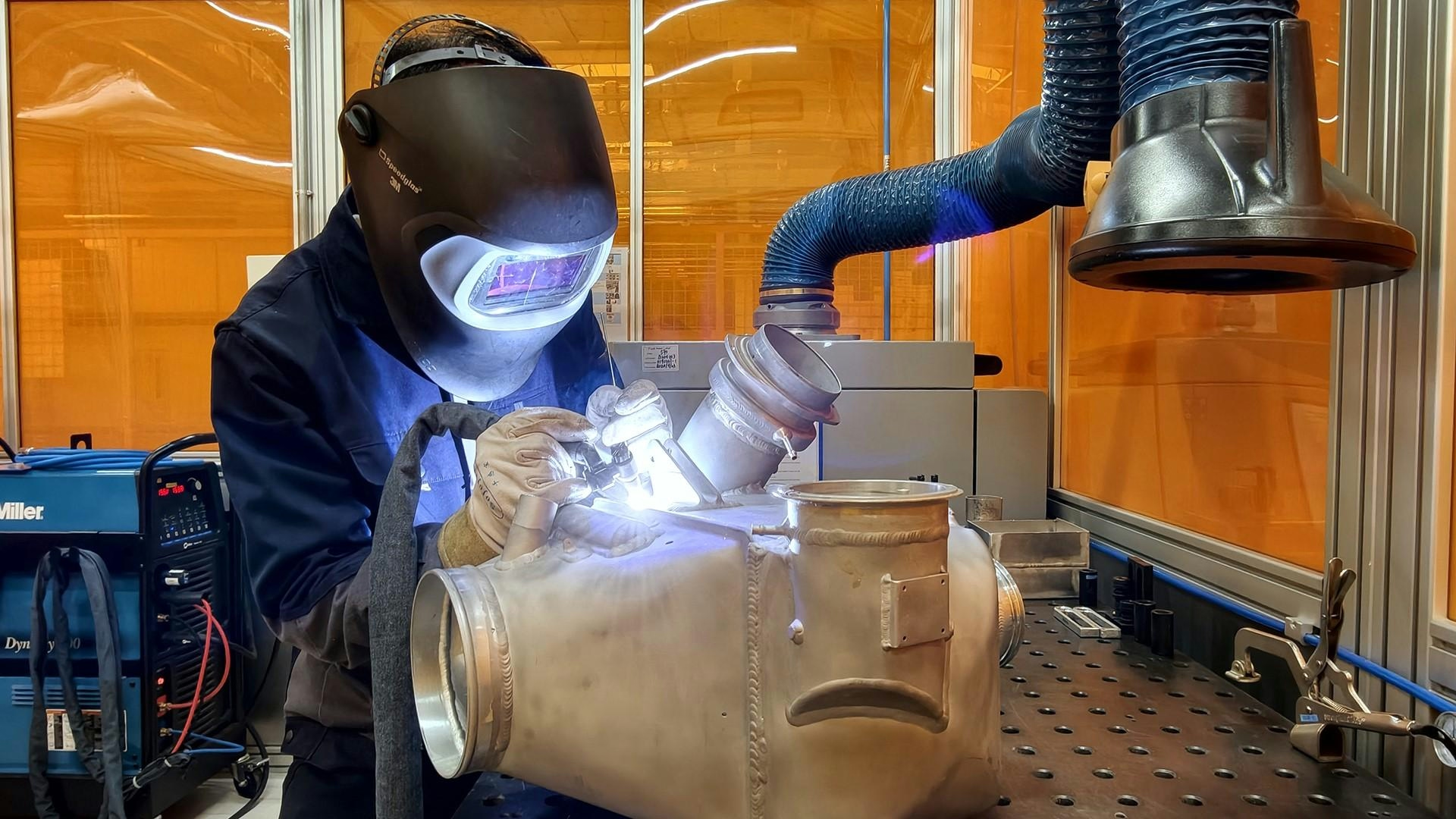
China and France Expand Sustainable Aviation Services as Shanghai Boosts Aircraft Maintenance
Advancing Sustainable Maintenance in China’s Aviation Sector
China’s aviation industry is undergoing a significant transformation as Liebherr-Aerospace, a Franco-German supplier, expands its maintenance and repair operations in Shanghai. This expansion highlights the increasing emphasis on environmental compliance within airline operations across Asia. Liebherr-Aerospace has introduced advanced corrosion-protection processes for aircraft heat transfer equipment at its Chinese maintenance, repair, and overhaul (MRO) facility. This development allows domestic airlines to access sustainability-focused maintenance services locally for the first time, marking a notable advancement in China’s aviation maintenance capabilities.
The move comes amid a backdrop of rapid fleet growth, rising international travel demand, and tightening environmental standards. Chinese airlines, aircraft manufacturers, and global suppliers are adapting to these evolving conditions by integrating European aerospace standards into China’s aviation ecosystem. As international tourism recovers, airlines face mounting pressure to modernize fleets, improve operational efficiency, and reduce environmental risks, making sustainable maintenance solutions increasingly vital.
Shanghai’s Emerging Role as an Aviation Maintenance Hub
Shanghai is solidifying its status as a strategic hub for aviation maintenance and engineering in Asia. Liebherr-Aerospace’s newly validated coating process, approved by its headquarters in Toulouse, France, employs a trivalent chromium system (TCS) combined with a post-application conversion sealer (PACS). This technology enhances corrosion resistance, surface durability, and paint adhesion for aircraft components subjected to demanding operational conditions. Crucially, approval from China’s aviation regulator enables domestic airlines to utilize these advanced treatments without dependence on overseas facilities. This development is particularly significant as China’s commercial aviation market is projected to become one of the largest globally over the next decade.
Despite these advancements, the expansion of sustainable aviation services faces challenges. Elevated fuel prices are affecting airline capacity and maintenance demand, leading carriers to adjust flight schedules and reassess maintenance priorities. These market dynamics may influence the pace at which airlines adopt new maintenance technologies and sustainability initiatives. Furthermore, as China and France deepen their collaboration, competitors in other regions may respond by enhancing their own maintenance capabilities to capture a share of the growing market for sustainable aviation services.
Environmental Compliance and Regulatory Evolution
Environmental compliance is becoming an increasingly critical concern for airlines and the aviation maintenance sector. There is growing pressure to reduce reliance on hazardous chemicals traditionally used in aircraft component protection. While older chromium-based coatings have proven effective against corrosion, many do not comply with Europe’s REACH regulations, which impose stringent standards for environmental and human safety. Although China has yet to fully adopt REACH, its regulatory framework is evolving to align more closely with international sustainability expectations, impacting both domestic and international carriers operating within its borders.
As discussions continue regarding potential Boeing orders from China and the Asia-Pacific region remains the fastest-growing air travel market, the focus on sustainable maintenance, airport infrastructure, and aviation-linked tourism is intensifying. The collaboration between China and France in advancing sustainable aviation services not only reinforces Shanghai’s position as a key maintenance hub but also reflects a broader regional shift toward greener and more resilient aviation practices.

Travel Industry Adapts to AI While Preserving Unique Experiences

Canada Joins UK, Australia, and Japan in Issuing Travel Warnings Amid Middle East Fuel Shortages

Kazakhstan and Luxembourg Strengthen Cooperation in Technology, Aviation, and Logistics

China Opens Low-Altitude Rail Transport Hub at Shenzhen North Station Connecting Air Taxis, High-Speed Rail, and Metro

Cathay United Bank Co-Leads $3.7 Billion Financing for SMBC Aviation Capital
Experts Say Southeast Asia Is Better Suited for Smaller Narrowbody Jets, Benefiting AirBorneo
GE Aerospace’s Korean Crew Supports Japanese Cargo Carrier’s Operations
SR-71 Pilot Recalls Single-Engine Emergency While Flying the U-2 and Blackbird
Nigeria to Host Airbus Aviation Hub and Expedite Apache Helicopter Delivery Amid Security Reforms
Restoring an Etihad Airways Airbus A380 After Six Years in Storage
