
Trasforma le intuizioni dell’IA in azioni concrete

Tendenze
Categories
Kochi Emergency Landing: What Is An Aircraft's 'Engine Reverse Thrust System'?

Kochi Emergency Landing: Understanding the Aircraft Engine Reverse Thrust System
In the early hours of Saturday, an Air Arabia flight (G9 454) en route from Sharjah to Kozhikode was compelled to make an emergency landing at Cochin International Airport following a technical malfunction. The issue was identified as a failure in the aircraft’s engine reverse thrust system, a critical safety mechanism employed during landing. Airport authorities confirmed that all 170 passengers, including nine children, as well as the crew, were unharmed.
The Function and Importance of the Engine Reverse Thrust System
The engine reverse thrust system plays a pivotal role in an aircraft’s ability to decelerate upon touchdown. Under normal flight conditions, jet engines generate thrust by expelling air backward, propelling the aircraft forward. Upon landing, however, the reverse thrust system temporarily redirects this airflow forward, producing a braking force that significantly aids in slowing the aircraft.
Aviation expert Captain Sooraj Jose highlighted the system’s particular importance at airports with shorter runways, such as Kozhikode’s table-top airport. In these environments, a failure of the reverse thrust system can markedly increase the risk of the aircraft overshooting the runway. While wheel brakes are also engaged during landing, exclusive reliance on them can lead to excessive heat buildup and potential brake failure. The reverse thrust system thus allows pilots to reduce dependence on wheel brakes, facilitating a safer and more controlled deceleration.
Industry Implications and Safety Considerations
The incident at Kochi underscores the essential role of the reverse thrust system in managing emergency situations, especially when conventional braking mechanisms are compromised. Comparable events, such as the China Eastern A350 incident, have demonstrated how crews depend on reverse thrust to maintain control following brake failures.
In response to such occurrences, regulatory authorities often intensify scrutiny of reverse thrust system reliability and performance standards. Airlines and manufacturers may accelerate efforts to enhance reverse thrust technology and implement more rigorous safety assessments. The aviation industry as a whole tends to prioritize upgrades to emergency protocols and system redundancies, aiming to prevent similar incidents and reinforce passenger confidence in air travel safety.
Despite its critical function, failures of the reverse thrust system remain infrequent, owing to comprehensive pre-flight inspections conducted by engineers and flight crews. These preventative measures are integral to maintaining the strong safety record of commercial aviation.
The recent emergency landing at Kochi serves as a reminder of the ongoing necessity for robust safety systems, continuous innovation, and vigilant regulatory oversight within the aviation sector.

UAE, Qatar, Saudi Arabia, and Oman Prepare for 2026 Launch of Flying Taxis
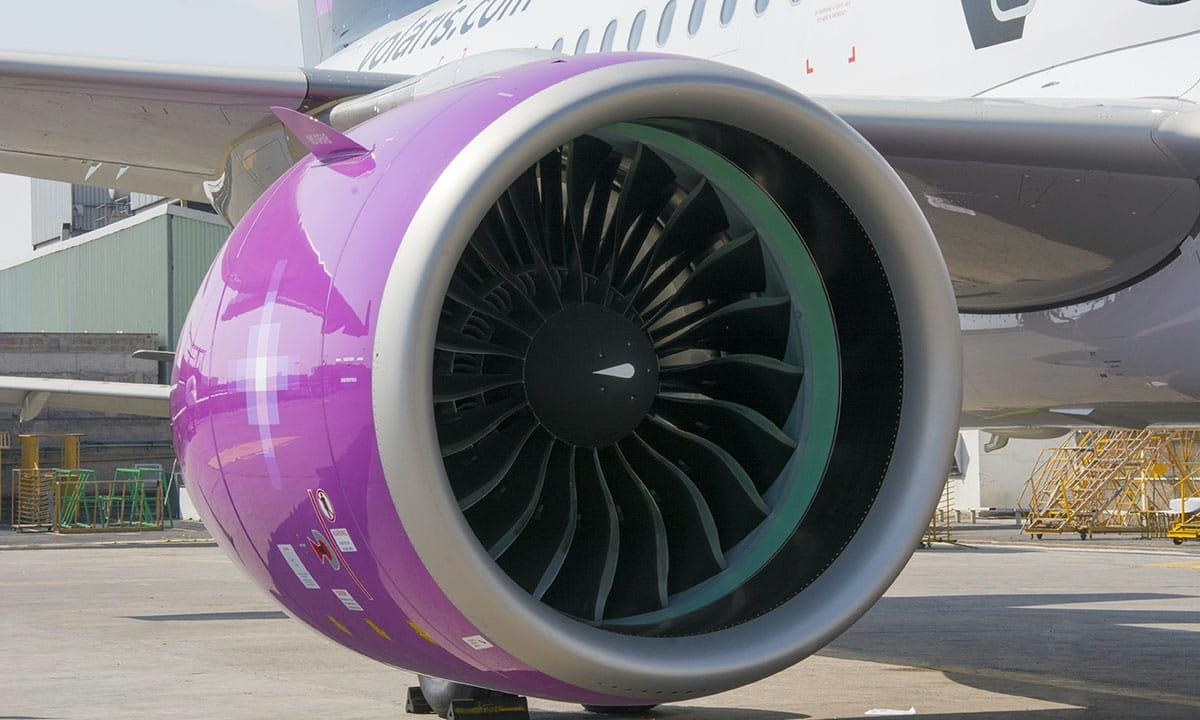
Volaris Sees Long-Term Impact From GTF Engine Issues

New Animated Series Encourages Central Coast Children to Explore Aviation

Boeing Produced Only 16 Widebodies Last Quarter as Airbus Gains Ground with Delta
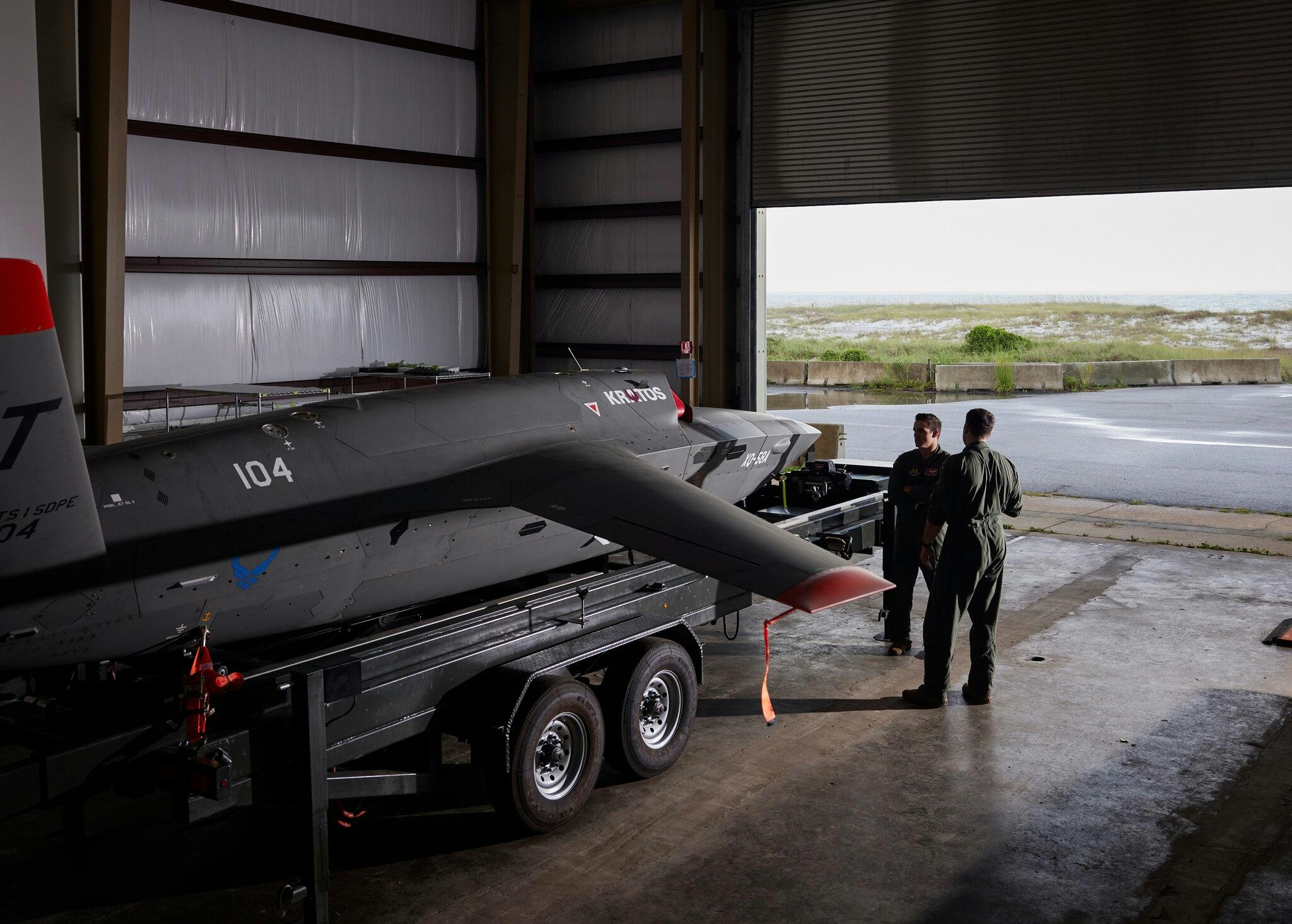
The Role of AI in the Future of Aviation Operations
Nakajima G10N Fugaku: Japan’s Long-Range Bomber Designed to Reach America

Airbus A350-900ULR Extends Range to 9,700 Nautical Miles by Removing Parts, Not Adding Fuel Tanks
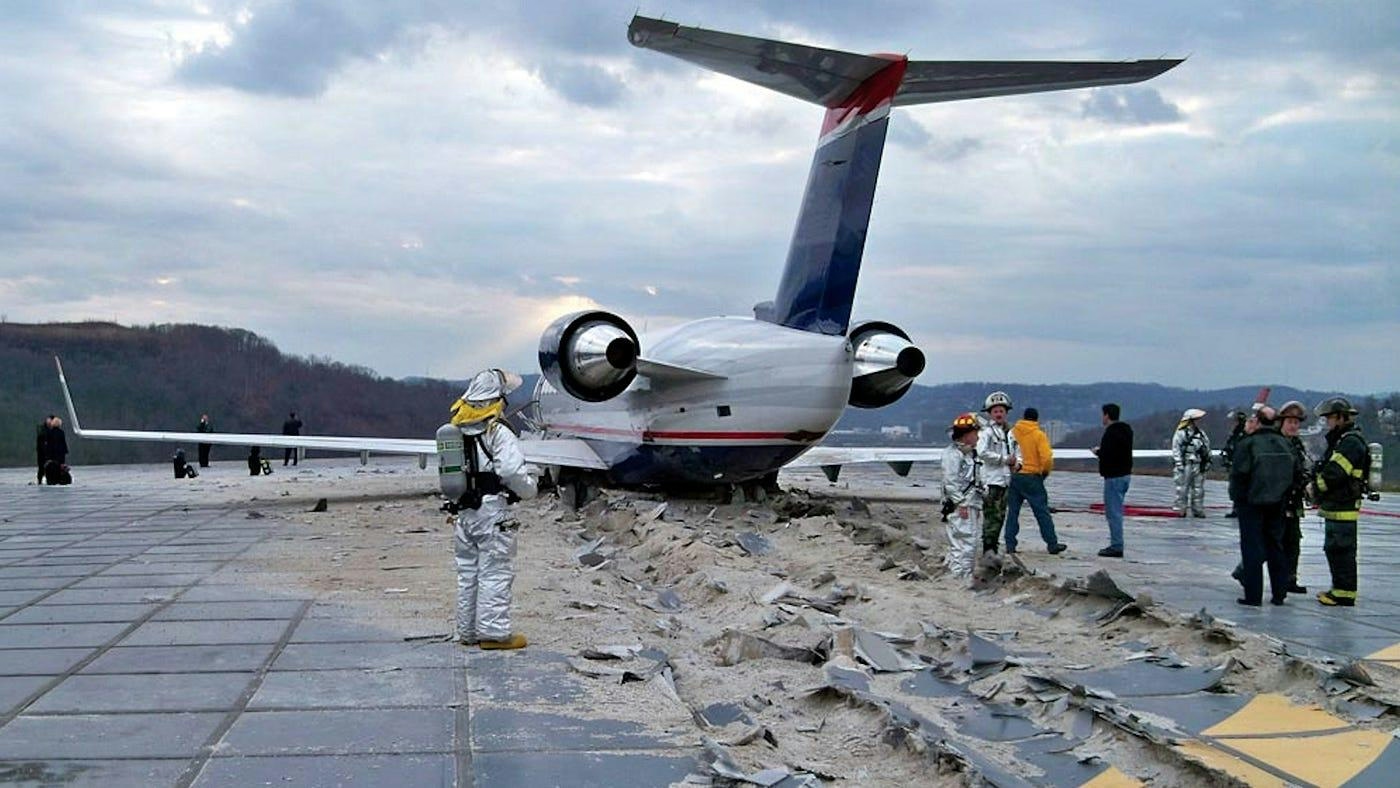
FAA Employs AI to Enhance Runway Safety

New Report Examines AI Travel System’s Impact on Tourism and Airlines

Abu Dhabi Aims to Lead in Next-Generation Aviation
