画像

エアロジニー — あなたのインテリジェントな副操縦士。

何でも尋ねてください。全てを分析してください。即座に行動してください。

現在のトレンド

Categories

ViewTech Borescopes Highlights New 3D Stereo Measurement Video Borescope at MRO Americas

April 27, 2026By ePlane AI
ViewTech Borescopes Highlights New 3D Stereo Measurement Video Borescope at MRO Americas
0
0
ViewTech Borescopes
3D Stereo Measurement
MRO Americas

ViewTech Borescopes Introduces Advanced 3D Stereo Measurement Video Borescope at MRO Americas

ORLANDO, Fla., April 27, 2026 — At its 14th consecutive appearance at MRO Americas, ViewTech Borescopes unveiled its latest innovation: a video borescope featuring advanced 3D stereo measurement capabilities. The new VJ-4 system attracted significant attention from aviation maintenance professionals, who engaged enthusiastically with live demonstrations showcasing the device’s enhanced inspection precision and real-time measurement functionality.

Enhancing Inspection Accuracy and Efficiency

The VJ-4 video borescope is engineered to improve the accuracy and efficiency of inspections by enabling users to capture precise measurements during visual assessments. This capability is designed to facilitate more informed maintenance decisions across a broad spectrum of aviation applications. Evan Miller, Sales Consultant at ViewTech Borescopes, emphasized the importance of the event, stating, “MRO Americas remains a vital platform for building connections with aviation industry professionals, and this year was particularly exciting as we unveiled our latest 3D stereo measurement video borescope to such an enthusiastic and receptive audience.”

Competitive Market Dynamics and Industry Response

ViewTech’s latest offering enters a competitive market where major players such as GE Aerospace and Waygate Technologies also presented advanced inspection solutions, including AI-guided tools. While the VJ-4’s enhanced capabilities garnered considerable interest, some industry observers have raised questions regarding the cost-benefit balance of adopting new technologies. The evolving competitive landscape may prompt accelerated product development and pricing adjustments among key manufacturers, potentially triggering an innovation race or price competition within the remote visual inspection equipment sector.

Despite these challenges, the VJ-4 system stood out for its combination of high-resolution imaging and precise measurement tools integrated into a portable, user-friendly design. ViewTech also promoted its exclusive No-Cost, No-Obligation Demo Program, which allows potential customers to evaluate the borescope on-site before committing to a purchase.

Company Background and Product Portfolio

ViewTech’s product range includes the VJ-3 and VJ-4 mechanical articulating video borescopes, widely used for nondestructive visual testing of machinery, equipment, and components. These systems feature insertion tubes as small as 0.85mm in diameter, enabling inspections in areas that are otherwise difficult or costly to access. Each unit incorporates a distally mounted camera and LED lighting, paired with a base unit that houses a control panel, LCD monitor, and power source.

Founded in 2008 as RF System Lab, ViewTech Borescopes has established itself as a leading supplier of video borescopes in North America. The company’s initial product set new industry standards for portability and ease of use by introducing mechanical, joystick-controlled articulation.

As the aviation maintenance sector continues to evolve, ViewTech remains committed to delivering cutting-edge inspection technology and responsive customer service while navigating the challenges and opportunities of a rapidly advancing competitive environment.

Learn more about ViewTech’s presence at MRO Americas Aviation Week 2026

More news
Republic Airways Appoints Koscal as CEO in Planned Transition
Republic Airways Appoints Koscal as CEO in Planned Transition

Republic Airways Appoints Koscal as CEO in Planned Transition Republic Airways has announced the unanimous appointment of Matthew J. Koscal as its new President and Chief Executive Officer, effective June 15, 2026. Koscal, who has been with the airline since 2014 and has served as President and Chief Commercial Officer prior to the company’s merger with Mesa Air Group in November 2025, will succeed David Grizzle. Grizzle will step down from his CEO position on the same date and assume the role of non-executive Chair of the Board, in line with the company’s previously outlined succession strategy. Leadership Transition and Strategic Continuity This appointment concludes a leadership transition plan first revealed in December 2025, when the Board announced its intention for Koscal to take over as CEO during 2026. Grizzle, who assumed the CEO role in July 2025 following the retirement of Bryan Bedford, has collaborated closely with Koscal to steer Republic through its all-stock merger with Mesa Air Group. The merger has positioned Republic Airways as one of the largest publicly traded regional airlines in the United States and established it as the operator of the world’s largest Embraer jet fleet, thereby reinforcing its standing in the regional aviation market. As Republic Airways advances with this planned leadership change, it confronts challenges typical of the current airline industry environment. Industry analysts have noted a recent trend of high CEO turnover, which can introduce both opportunities and risks, including potential operational disruptions, identity challenges, and workforce reductions. Market responses to executive transitions are often unpredictable, and rival airlines may attempt to exploit any perceived instability to strengthen their own market positions, thereby intensifying competitive pressures on Republic. Challenges Ahead for New Leadership Ensuring operational stability and maintaining stakeholder confidence will be critical priorities for Koscal as he assumes the CEO role. Company leadership has emphasized that this transition is part of a deliberate and strategic plan aimed at preserving continuity and supporting sustained growth following the transformative merger with Mesa Air Group. The Board expressed strong confidence in Koscal’s leadership capabilities and experience, highlighting his instrumental role in the company’s recent expansion and integration efforts. As Republic Airways navigates this leadership change, industry observers will closely monitor how the airline manages both internal dynamics and external pressures within the rapidly evolving regional aviation sector.
National Aero Stands Highlights Engine Stand Logistics at MTB Aviation Asia Amid Market Growth
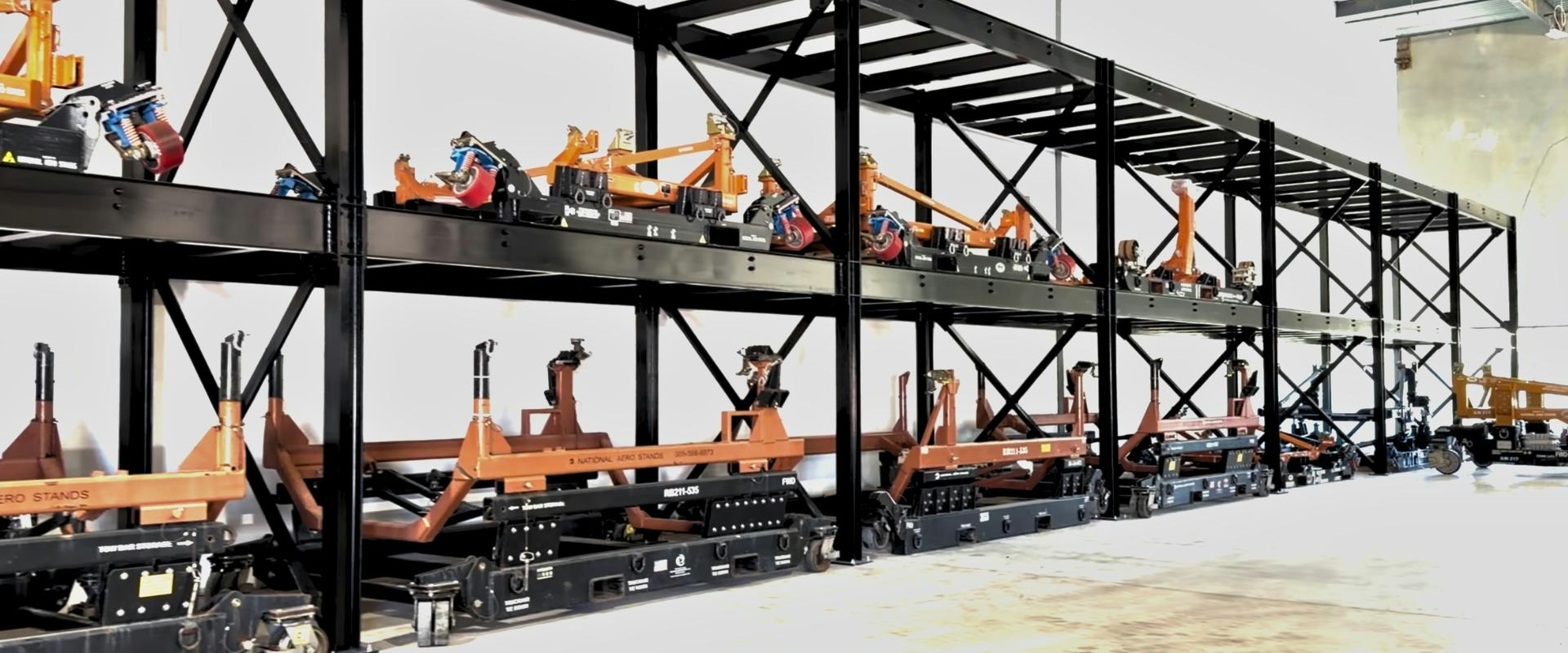
National Aero Stands Highlights Engine Stand Logistics at MTB Aviation Asia Amid Market Growth

National Aero Stands Highlights Engine Stand Logistics at MTB Aviation Asia Amid Market Growth Strategic Focus on Engine Stand Logistics in Asia-Pacific National Aero Stands (NAS) is set to emphasize the importance of strategic engine stand logistics at MTB Aviation Asia, taking place from May 6 to 9 in Osaka, Japan. This event brings together airline procurement leaders and aviation suppliers in a focused environment designed to strengthen supply chain partnerships. The timing is significant, as airlines across the Asia-Pacific region continue to expand their fleets and increase aircraft utilization, intensifying the demand for efficient engine transportation solutions. The movement of aircraft engines between operators, maintenance facilities, and leasing companies has become increasingly frequent and complex. In this context, the availability of certified engine transportation stands is a critical element of aviation logistics. NAS addresses this challenge through a globally distributed network of engine stands, providing rapid access to airlines, maintenance, repair, and overhaul (MRO) providers, and lessors managing engine transportation and storage. Gail Holguin, COO of National Aero Stands, noted, “Asia-Pacific remains one of the most dynamic aviation markets in the world. With engines moving regularly between airlines and major maintenance hubs, access to the correct stand at the right location can significantly reduce logistical delays and support faster turnaround times.” Meeting the Demands of a Growing and Complex Market Engine transportation stands are specialized equipment designed to safely support and secure aircraft engines during shipping and storage. Each engine model requires a specific stand type, making inventory diversity and strategic placement essential for operational efficiency. NAS maintains a broad inventory compatible with over 30 major engine types, enabling operators to manage the logistical demands associated with fleet growth, maintenance cycles, and unplanned aircraft-on-ground (AOG) events. The Asia-Pacific region’s expanding MRO ecosystem, anchored by major hubs in Singapore, Hong Kong, Japan, and mainland China, has heightened the need for reliable transportation infrastructure to support substantial cross-border engine movements. However, the sector continues to face challenges. Recent industry analyses, including the Aviation Week MRO Americas 2026 Wrap Program, highlight ongoing supply chain disruptions that can affect the timely availability of critical equipment such as engine stands. Competition is also intensifying, with companies like AerFin and DTX Aerospace expanding their services. For instance, DTX Aerospace recently partnered with Liebherr-Aerospace to service Embraer ERJ family aircraft, while AerFin continues to broaden its offerings in response to market growth. Despite these obstacles, the MRO sector in Asia-Pacific is experiencing sustained growth. Global supply chain issues and geopolitical tensions, including conflicts in the Middle East, add layers of complexity to logistics planning. NAS aims to address these challenges by engaging with airlines, MRO providers, and supply chain leaders at MTB Aviation Asia to explore how strategic stand positioning and shared access models can improve efficiency across the aviation supply chain. Commitment to Supporting Industry Growth As the aviation industry evolves, National Aero Stands remains committed to ensuring operators have timely access to the equipment necessary to keep engines moving and aircraft flying. With a fleet of more than 300 engine stands positioned in key global hubs—including Austin, Dubai, Miami, the Netherlands, Phoenix, and Singapore—NAS is well-positioned to support the industry’s growth while navigating an increasingly competitive and complex landscape. For further information, visit www.stands.aero.
Ethiopia’s Air Passenger Demand Projected to Triple by 2044

Ethiopia’s Air Passenger Demand Projected to Triple by 2044

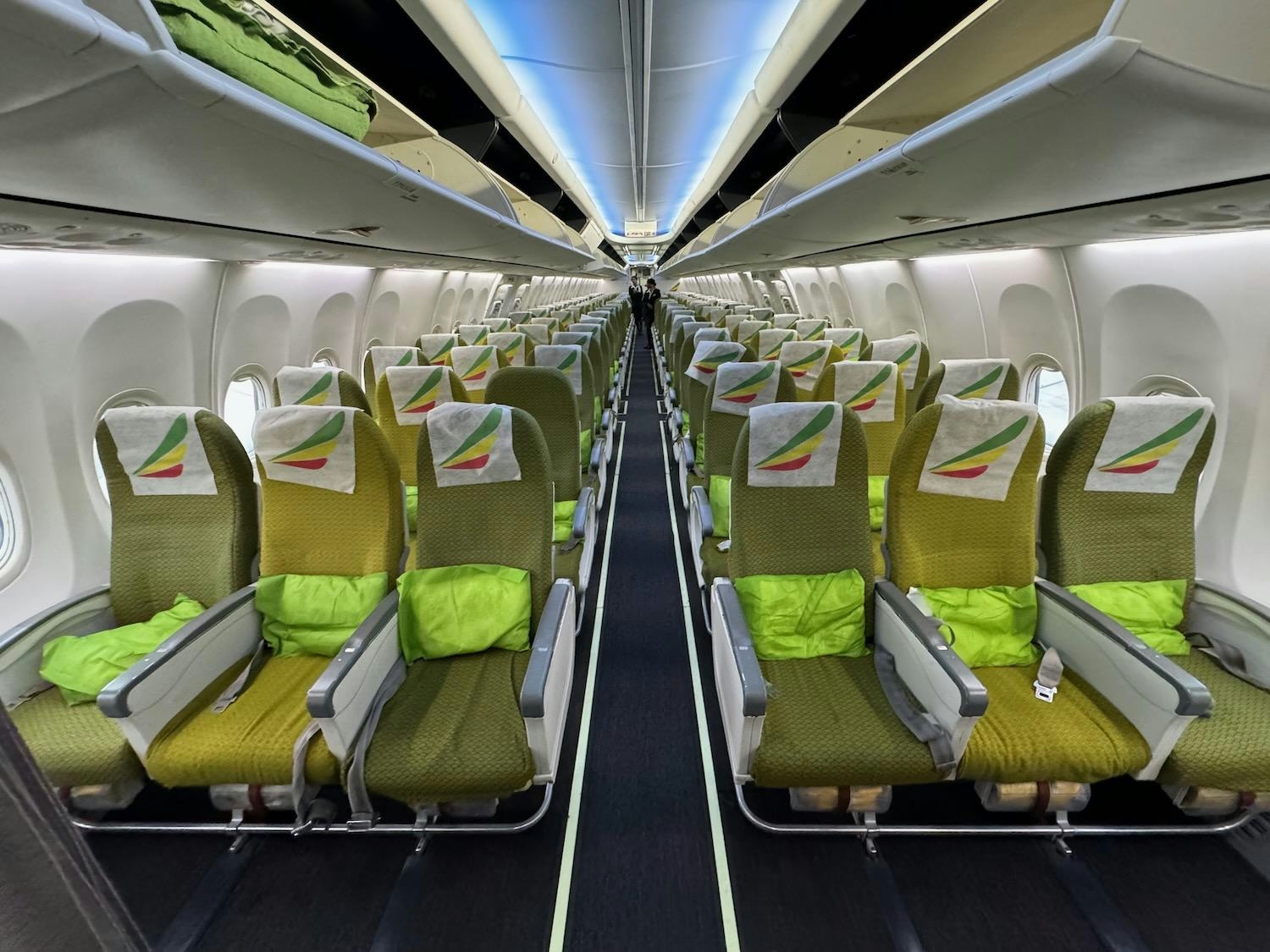
Ethiopia’s Air Passenger Demand Projected to Triple by 2044 Aviation’s Growing Economic Significance Addis Ababa is poised to become a major hub in Africa’s aviation landscape as the International Air Transport Association (IATA) projects that Ethiopia’s air passenger demand will triple over the next two decades. This anticipated surge underscores the critical need for sustained government focus on aviation infrastructure, workforce development, and environmental sustainability to fully harness the sector’s potential contribution to the country’s long-term economic growth. Aviation already constitutes a vital component of Ethiopia’s economy. According to IATA’s 2023 Value of Air Transport report, the sector supports approximately $2 billion in economic activity, representing 1.2% of the nation’s GDP. It also sustains over half a million jobs—527,000 in total—across aviation, supply chains, and tourism. Furthermore, the transport of 248,400 tonnes of air cargo annually plays a significant role in enhancing trade and connectivity within the region. Kamil Alawadhi, IATA’s Regional Vice-President for Africa and the Middle East, emphasized the sector’s importance, noting that “aviation is central to Ethiopia’s economic growth, thanks to deliberate government prioritization.” He highlighted the country’s youthful demographic, with 60% of the population under 25, as a unique opportunity to translate aviation growth into employment, skill development, and broader economic advancement. However, he cautioned that realizing this potential will require ongoing investment in cost-efficient infrastructure, training, and sustainability initiatives. These priorities are currently at the heart of discussions at IATA’s Focus Africa Conference in Addis Ababa, where industry leaders and government officials are collaborating on strategies to strengthen aviation across the continent. Strategic Priorities and Emerging Challenges IATA has identified three critical areas for Ethiopia to focus on in order to sustain aviation growth and maximize its economic impact. First, the development of cost-efficient infrastructure is paramount. As Ethiopia advances the construction of the new Bishoftu airport, IATA stresses the importance of meticulous planning and close coordination with airlines and other stakeholders, in alignment with International Civil Aviation Organization (ICAO) policies. Early engagement on Operational Readiness and Airport Transfer (ORAT) processes is deemed essential to ensure a seamless transition and to accommodate the anticipated rise in passenger and cargo volumes. Second, investment in training and capacity-building remains a cornerstone of Ethiopia’s aviation strategy. Institutions such as the Ethiopian Aviation University, an IATA Authorized Training Center, play a crucial role in cultivating a skilled workforce comprising pilots, engineers, cabin crew, and ground operations specialists. This focus on education and professional development is necessary to meet future demand and to optimize the sector’s economic benefits. Third, sustainability is a growing priority. Ethiopia stands to benefit from an estimated 16.1 million CORSIA-eligible emissions units in the near term, presenting an opportunity to engage with global carbon markets and support international aviation’s climate objectives. IATA encourages the Ethiopian government to expedite the issuance of Letters of Authorization, which would enable the use of these emissions units and align the country’s aviation growth with broader environmental goals. Despite these opportunities, Ethiopia faces significant challenges. Expanding infrastructure to handle increased passenger traffic will require substantial investment and careful management. Additionally, the country must address potential fuel supply risks, as Africa is projected to experience an 86 million tonne fuel deficit by 2040. This looming shortfall highlights the urgent need for enhanced refining and industrial infrastructure to prevent disruptions in fuel availability. Market dynamics are also expected to evolve, with intensified competition among airlines vying to capture Ethiopia’s expanding passenger base. This competitive environment may lead to increased routes and services, further transforming the aviation landscape. As Ethiopia’s aviation sector approaches a period of transformative growth, strategic planning and investment will be essential to ensure that the industry continues to drive economic development and regional connectivity for decades to come.
First Facility Converts Plastics into Jet Fuel Opens
First Facility Converts Plastics into Jet Fuel Opens

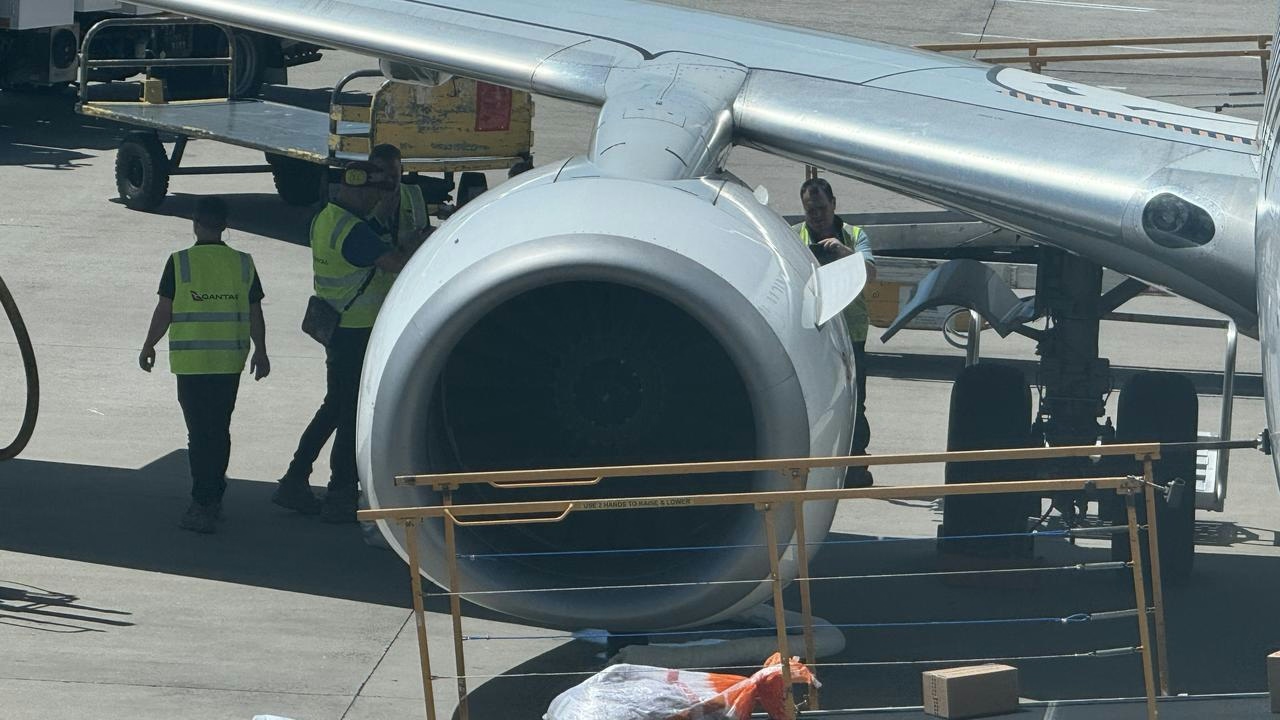
First Facility Converts Plastics into Jet Fuel Opens in Sandwich A groundbreaking facility dedicated to converting waste plastics into sustainable aviation fuel (SAF) has commenced operations at Discovery Park in Sandwich, Kent. The Sustainability Innovation Centre, managed by Clean Planet Technologies, is being recognized as the world’s first commercial-scale plant of its kind. It aims to address the escalating challenge of non-recyclable plastic waste while facilitating the aviation industry’s shift toward greener energy sources. Transforming Plastic Waste into Sustainable Fuel The centre’s initial focus is on processing hard-to-recycle plastics, including carrier bags and food packaging films, converting them into jet fuel. The United Kingdom generates approximately five million tonnes of plastic waste annually, with around 80% currently deemed unsuitable for recycling. In parallel, global commercial aviation consumes between seven and eight million barrels of jet fuel daily, representing up to 8% of worldwide oil demand. Dr Andrew Odjo, CEO of Clean Planet Technologies, described the conversion process: “We heat waste plastic with a chemical reaction to turn it into a liquid, rather than burning it. This liquid is then treated with our patented process to remove impurities, producing SAF that meets strict commercial aviation standards.” He highlighted the environmental urgency, noting that roughly 30,000 tonnes of plastic enter the world’s oceans each day—equivalent to 2,000 garbage trucks being dumped daily. The pilot facility is designed to demonstrate that waste plastics can be transformed into a high-value product with significant commercial demand, while simultaneously reducing the aviation sector’s carbon emissions. According to Dr Odjo, the process reduces lifecycle greenhouse gas emissions by more than 70% compared to conventional fossil-based jet fuel. Given that less than 1% of global aviation fuel is currently sourced sustainably, the launch of this centre marks a pivotal advancement toward the UK’s targets of increasing SAF usage to 2% by 2025, 10% by 2030, and 22% by 2040. Challenges and Industry Context Despite its promise, the initiative faces considerable challenges. High upfront investment costs, technological complexities in scaling the conversion process, and navigating stringent regulatory frameworks may affect the facility’s development. Market reactions have been mixed; while some traditional fuel suppliers and airlines remain skeptical, others are actively exploring sustainable fuel alternatives or investing in similar technologies. The timing of the facility’s inauguration is particularly significant as the aviation industry contends with a severe fuel crisis, marked by a doubling of jet fuel prices. This economic strain could accelerate the adoption of alternative fuels derived from plastics and other sustainable sources. Financial support for the centre is provided by the UK SAF Clearing House, funded by the Department for Transport to promote innovation in sustainable aviation. Dr Katerina Garyfalou, COO of Clean Planet Technologies, stated, “The Sustainability Innovation Centre is set up to demonstrate our patented waste-plastics-to-SAF process at pilot scale, supporting fuel testing, validation, and progression. Our facility will also help others grow, supporting the UK’s SAF mandate.” As the aviation sector seeks to reconcile environmental imperatives with economic realities, the Sandwich facility represents a significant step toward a more sustainable future for air travel.
Qantas 737 Crew Responds Swiftly to Engine Failure During Takeoff
Qantas 737 Crew Responds Swiftly to Engine Failure During Takeoff

Qantas 737 Crew Praised for Swift Response to Engine Failure During Takeoff Australian aviation safety authorities have lauded the prompt and decisive actions of a Qantas Boeing 737-800 flight crew following an engine failure during takeoff at Sydney Airport. The incident, which occurred on 8 November 2024, underscores the vital importance of rigorous crew training and effective decision-making in maintaining aviation safety. Incident Overview and Crew Response Qantas flight VH-VYH was departing Sydney for Brisbane when, as the aircraft reached V1 speed—the critical point beyond which takeoff must continue—the right-hand CFM56 engine suffered a sudden failure accompanied by a loud bang. Despite this unexpected malfunction, the pilots maintained composure, continued the takeoff, declared an emergency, and promptly communicated the situation to air traffic control. The aircraft subsequently landed safely on runway 34L operating on a single engine. Although the crew initially requested to land on runway 30R, it was unavailable due to debris from the failed engine. All six crew members and 175 passengers disembarked without injury. Investigation Findings and Technical Details The Australian Transport Safety Bureau’s (ATSB) final investigation identified the cause of the engine failure as a fatigue crack in the dovetail of one of the 76 high-pressure turbine (HPT) blades. This crack originated at the blade’s thinnest section and propagated through approximately 80% of the blade before it detached from the HPT disc, also damaging an adjacent blade. The defect was not detectable through standard borescope inspections and would have required a complete engine teardown to identify. This particular blade design has a documented history of similar failures across the wider CFM56-7B engine fleet. The affected engine was scheduled for removal just 13 days after the incident, in accordance with a recently issued service bulletin that had lowered the recommended removal threshold from 20,000 to 17,900 cycles to address such risks. Industry Implications and Safety Considerations The ATSB commended the coordinated efforts of the flight crew, cabin crew, air traffic control, and aviation rescue firefighting services, emphasizing their collective role in ensuring the aircraft’s safe return to Sydney Airport. The incident highlights the ongoing operational challenges airlines face in managing technical failures and maintaining safety standards. Furthermore, the event draws attention to broader industry concerns regarding engine reliability. Manufacturers such as GE Aerospace are actively working to enhance the durability of their engines, including the Leap series, by reviewing safety protocols and maintenance procedures. Concurrently, Qantas’ recent network adjustments, influenced by rising jet fuel costs linked to geopolitical tensions in the Middle East, may affect competitive dynamics as airlines strive to balance operational efficiency with service reliability. This episode reaffirms the critical importance of comprehensive crew training and robust emergency protocols in safeguarding passengers during unforeseen technical emergencies.
Aircraft Overcomes Seven-Month Grounding to Lead Widebody Sales in 2025

Aircraft Overcomes Seven-Month Grounding to Lead Widebody Sales in 2025

Aircraft Overcomes Seven-Month Grounding to Lead Widebody Sales in 2025 The Boeing 787 Dreamliner was conceived in the early 2000s as the '7E7,' with the ambition to revolutionize long-haul air travel. Boeing sought to prioritize efficiency, flexibility, and direct city-to-city connections, moving away from the traditional hub-and-spoke model. More than a decade after its introduction, the Dreamliner has become a cornerstone of global long-haul networks, enabling routes previously deemed unfeasible. Its trajectory, however, has been marked by both groundbreaking innovation and significant challenges. Innovation and Early Challenges The Dreamliner’s design was a radical departure from previous widebody aircraft. Approximately half of its primary structure is composed of carbon-fiber-reinforced composites, a substantial increase from the 12% used in earlier models such as the 767. This material choice contributed to a 20% improvement in fuel efficiency. Boeing also implemented a “more-electric” architecture, replacing traditional pneumatic systems with electrically driven ones, and introduced advanced aerodynamic features like raked wingtips. These technological advancements generated strong early demand, with over 800 orders secured before the aircraft entered service. However, Boeing’s ambitious global outsourcing strategy, intended to reduce costs and accelerate development, encountered significant difficulties. Supplier quality issues and delays forced Boeing to reclaim much of the production work internally, resulting in a delay of more than three years. The first delivery, initially scheduled for 2008, was postponed until late 2011. Operational Milestones and Setbacks The 787 entered commercial service with All Nippon Airways in October 2011 and was widely praised for its technological innovations. Passengers benefited from larger windows, improved cabin pressure, and higher humidity levels, all of which enhanced comfort on long-haul flights. Airlines rapidly deployed the Dreamliner on new routes, validating Boeing’s vision of expanded direct city-to-city travel. Despite these successes, the Dreamliner faced significant operational setbacks. Technical issues, most notably battery fires, led to a seven-month global grounding that severely tested Boeing’s resilience and reputation. Nevertheless, the aircraft has since recovered, and in 2025 it is poised to lead worldwide widebody sales. Market Context and Industry Challenges The Dreamliner’s resurgence occurs amid a critical period for the aviation industry. Boeing, emerging from a decade marked by crisis, plays a central role in the global industrial recovery. Yet, the company continues to confront challenges, including geopolitical tensions—particularly with China—that disrupt delivery schedules and complicate the order book in the Asia-Pacific region. The competitive landscape is also evolving. American Airlines risks losing ground to rivals Delta and United, both of which have secured substantial widebody backlogs. American’s limited new orders may constrain its growth in lucrative long-haul markets. In India, the world’s fastest-growing aviation market, a shortage of widebody aircraft has drawn sharp criticism from industry leaders such as incoming IndiGo chief Willie Walsh, who described the situation as a “scandal.” On the supply side, GE Aerospace’s surge in engine deliveries during the first quarter highlights the intense competition among aerospace manufacturers, further influencing market dynamics. Outlook Despite its turbulent history, the Boeing 787 Dreamliner has fundamentally redefined long-haul air travel and remains at the forefront of widebody aircraft sales. As airlines and manufacturers navigate a complex and rapidly evolving global environment, the Dreamliner’s journey underscores both the transformative power of innovation and the persistent challenges of sustaining it in a competitive industry.
China Southern Initiates Construction of Urumqi Cargo and MRO Base

China Southern Initiates Construction of Urumqi Cargo and MRO Base

China Southern Launches Construction of Urumqi Cargo and MRO Base Amid Industry Challenges China Southern Airlines has officially begun construction on a significant maintenance, repair, and overhaul (MRO) and cargo facility in Urumqi, located in the Xinjiang Uygur Autonomous Region. This ambitious project, backed by an investment exceeding CNY 1.6 billion (approximately USD 234 million), aligns with a broader central government strategy aimed at stimulating economic growth in the region. The facility is expected to be completed and operational by 2028. Facility Specifications and Strategic Importance The new base will include a 65,991-square-metre hangar, which is projected to become the largest civil aviation hangar in northwestern China. The initial phase of the cargo area will span roughly 60,000 square metres, with over 20,000 square metres allocated to terminal space designed to handle both domestic and international freight operations. This development is intended to significantly enhance China Southern’s operational capacity and reinforce Urumqi’s position as a key logistics and aviation hub. Industry Context and Challenges The timing of this project coincides with a period of considerable uncertainty within the global aviation sector. Ongoing geopolitical conflicts have disrupted supply chains worldwide, resulting in elevated material and energy costs and complicating procurement processes. These factors present potential risks to the project’s timeline and budget, as well as to China Southern’s broader strategic planning. Market analysts are paying close attention to China Southern’s financial health as it undertakes this major expansion. Currently, China Southern remains the only profitable major Chinese airline, in contrast to competitors such as China Eastern and Air China, which have reported mixed financial outcomes. This relative profitability subjects China Southern to heightened scrutiny regarding its capacity to manage large-scale investments amid volatile market conditions. In response to these challenges, rival carriers may reconsider their strategies, focusing on mitigating supply chain vulnerabilities and revising operational and investment priorities. Such strategic adjustments could reshape the competitive dynamics, particularly in regions targeted for infrastructure development. Despite these headwinds, the Urumqi Cargo and MRO Base represents a critical step forward for China Southern and the broader Chinese aviation industry, highlighting both the opportunities and complexities inherent in navigating a rapidly evolving global environment.
Beehive Introduces Rampart Engine with 1,000-Pound Thrust for Uncrewed Fighters
Beehive Introduces Rampart Engine with 1,000-Pound Thrust for Uncrewed Fighters

Beehive Launches Rampart Engine Delivering 1,000 Pounds of Thrust for Uncrewed Fighters Propulsion start-up Beehive Industries has introduced the Rampart, a turbofan engine generating 1,000 pounds of thrust (4.4 kN), targeting the expanding sector of uncrewed fighter aircraft. Based in Colorado, the company has historically specialized in small turbojets for light drones and missiles. With Rampart, Beehive aims to provide a high-endurance, reliable propulsion solution tailored specifically for Collaborative Combat Aircraft (CCA). Engine Designed for Collaborative Combat Aircraft Beehive positions the Rampart engine as offering “extreme reliability for diverse mission profiles,” addressing the operational demands of CCAs currently under development by the US Air Force (USAF), US Marine Corps, and Royal Australian Air Force. These uncrewed platforms are intended to operate alongside frontline fighters such as the Lockheed Martin F-35A and F-22, necessitating engines that balance aerodynamic performance with affordability and suitability for high-rate production. The CCA market has attracted considerable attention from both established aerospace firms and emerging suppliers. The USAF has already awarded initial development contracts to Honeywell and a joint venture between GE Aerospace and Kratos for engines producing thrust in the 800 to 1,600-pound range. Additionally, major industry players including Pratt & Whitney and Rolls-Royce are actively developing low-cost, lightweight propulsion systems to meet the sector’s evolving requirements. Expanding Capabilities Amidst Intense Competition Rampart represents a strategic expansion for Beehive beyond its existing Frenzy engine line, which focuses on propulsion for long-range missiles and one-way swarm drones. The company is preparing to commence flight testing of its 200-pound-thrust Frenzy 6 engine, supported by a $30 million USAF development contract awarded in April. This funding will also facilitate prototyping of the smaller 100-pound-thrust Frenzy 8. Despite this progress, Beehive faces significant challenges in establishing Rampart within a competitive landscape dominated by well-established industry leaders. Meeting the USAF’s rigorous standards for performance, reliability, and cost-effectiveness will be essential for the engine’s success. Market responses to the Rampart announcement have been mixed; while some analysts recognize the engine as a noteworthy technological advancement, others remain cautious about Beehive’s ability to match or surpass the capabilities of incumbent competitors. In light of Beehive’s entry, rival manufacturers are likely to accelerate their own engine development efforts to maintain their foothold in the rapidly evolving uncrewed fighter propulsion market. As demand for affordable, high-performance engines for CCAs intensifies, competition among suppliers is expected to shape the future trajectory of uncrewed military aviation.
Brasília International Airport Named Brazil’s Best Airport for 2026
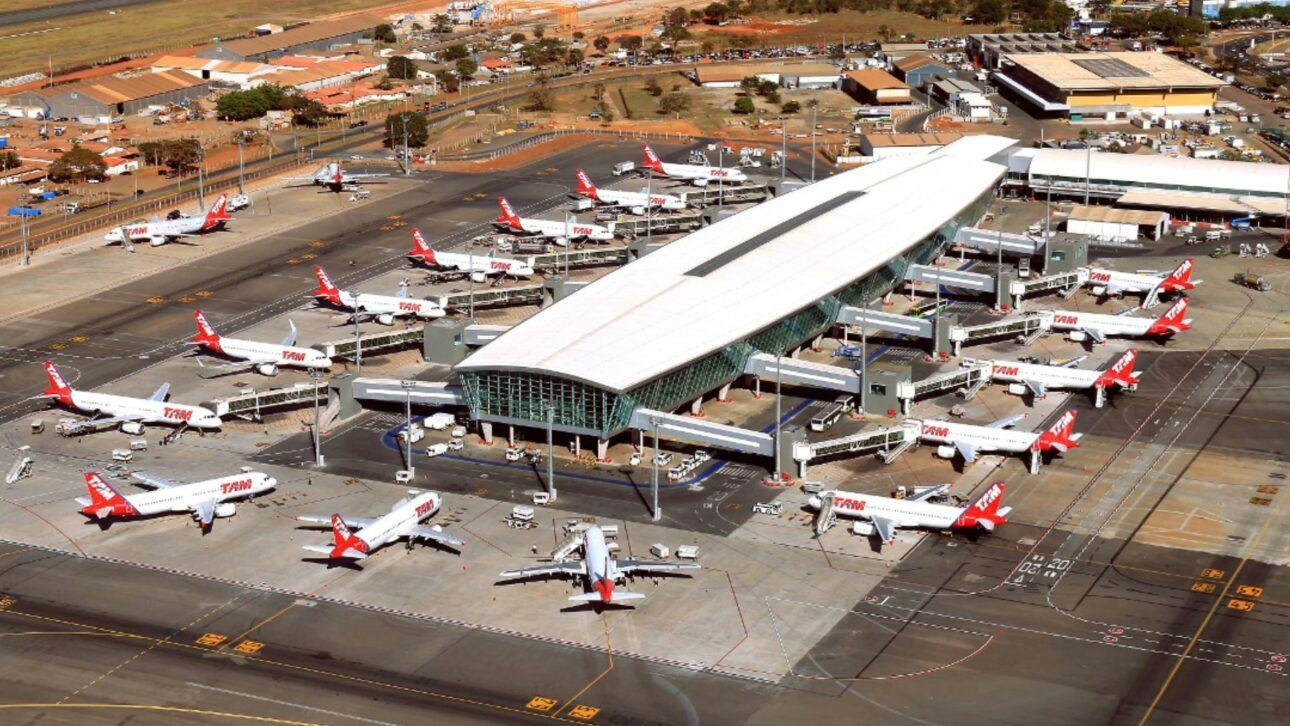
Brasília International Airport Named Brazil’s Best Airport for 2026

Brasília International Airport Named Brazil’s Best Airport for 2026 Brasília International Airport has been officially recognized as Brazil’s Best Airport for 2026, receiving top honors in the esteemed Best of Brazilian Tourism 2026 awards. This accolade follows a comprehensive evaluation process that assessed innovation, sustainability, operational efficiency, and the overall passenger experience. The airport’s achievement positions it as a leading example of service quality and infrastructure within Brazil’s aviation sector. Excellence in Service and Infrastructure The Best of Brazilian Tourism 2026 awards highlight outstanding performance across critical segments of the tourism industry, including aviation, hospitality, and destination management. Brasília International Airport distinguished itself through consistent service excellence, efficient operational management, and progressive infrastructure development. The evaluation placed significant emphasis on passenger satisfaction, technological integration, and environmental responsibility—criteria that reflect the evolving standards of Brazil’s tourism and transportation industries. Recent investments have been instrumental in the airport’s transformation. These include enhancements to terminal facilities, the integration of digital services, improved passenger flow systems, and infrastructure upgrades focused on sustainability. Such initiatives have effectively addressed increasing travel demand while bolstering operational efficiency through advanced logistics and enhanced coordination among airport stakeholders. Consequently, Brasília International Airport has emerged as a benchmark for other aviation hubs throughout the country. Commitment to Sustainability and Innovation Sustainability and innovation were central to the airport’s recognition. The adoption of eco-friendly technologies, comprehensive waste management programs, and energy conservation measures have aligned the airport with global standards for sustainable aviation. Furthermore, the integration of digital services and automated systems has not only improved the passenger experience but also streamlined operational processes. Despite this achievement, maintaining the top ranking presents ongoing challenges. As Brazil intensifies efforts to expand international connectivity, Brasília International Airport faces increasing competition from other major airports domestically and across Latin America. While the award is expected to drive higher passenger traffic and revenue, it also invites greater scrutiny from airlines and travelers alike. Competitors may respond with strategic investments in infrastructure and service enhancements, potentially intensifying price competition and spurring further innovation within the sector. The recognition of Brasília International Airport underscores the critical role of modern infrastructure and sustainable practices in enhancing Brazil’s tourism competitiveness. As the airport sets new standards for excellence, it must continue to innovate and adapt to maintain its leadership position in a rapidly evolving aviation landscape.
Joby Electric Air Taxi Completes Test Flights in New York City

Joby Electric Air Taxi Completes Test Flights in New York City

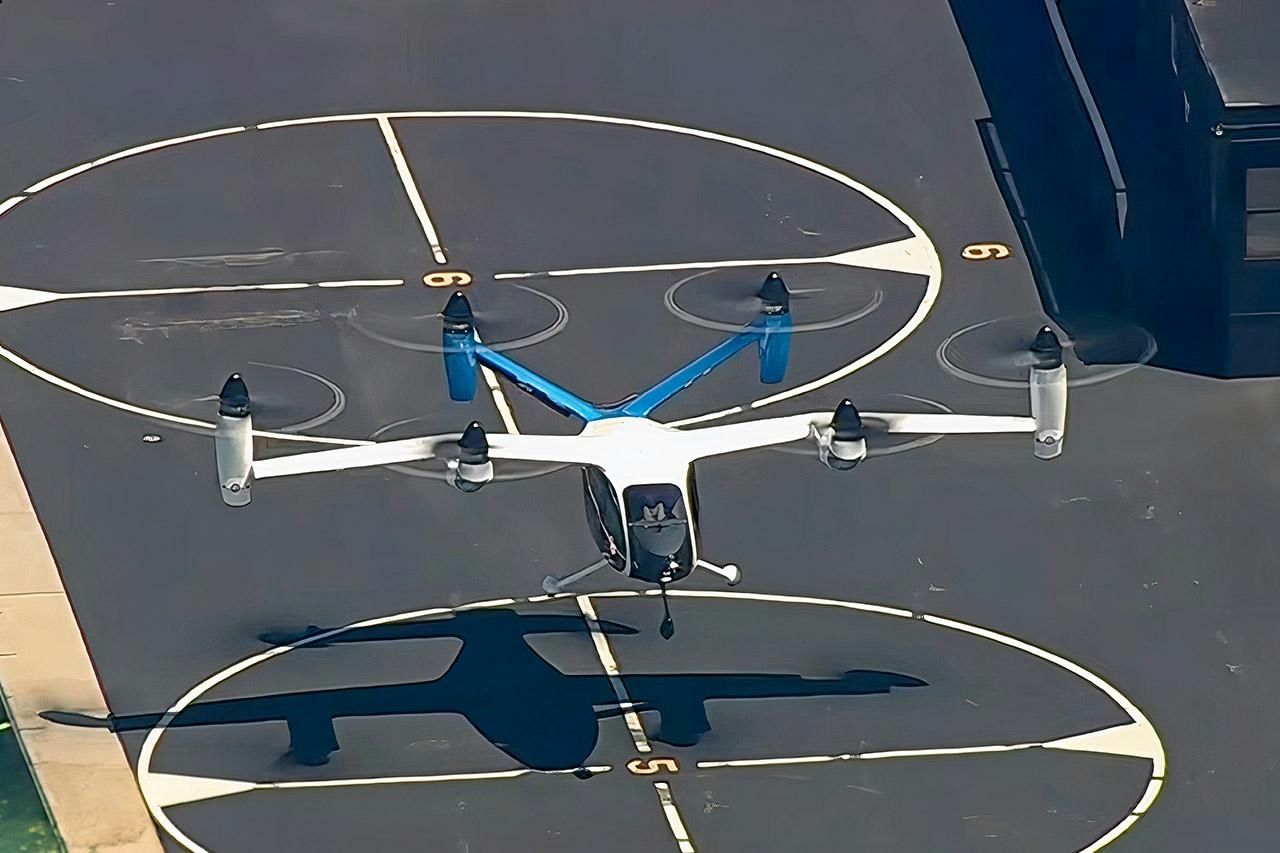
Joby Electric Air Taxi Completes Historic Test Flights in New York City The all-electric Joby Air Taxi recently completed a landmark series of test flights over New York City, marking the first point-to-point electric air taxi demonstration in the city’s history. Unlike conventional airplanes or helicopters, the aircraft approached the city with near silence, gliding smoothly around Governor’s Island and past the Brooklyn Bridge before landing at the NYC Downtown Skyport in Lower Manhattan. This milestone represents a significant advancement for the emerging electric vertical take-off and landing (eVTOL) industry, signaling a potential shift in urban air mobility. Technological Innovation and Flight Demonstration The Joby Air Taxi is designed to carry four passengers and a pilot, employing a “highly augmented fly-by-wire” control system that simplifies operation despite the aircraft’s technical complexity. Pilot Buddy Denham, who has experience developing the F-35 fighter jet’s hover system for the Navy, described the vehicle as “easy to fly.” The aircraft’s six propellers enable vertical takeoff and landing similar to a drone, while the two front propellers tilt forward to transition seamlessly into horizontal flight, combining the capabilities of helicopters and airplanes. This demonstration not only showcased Joby’s technological expertise but also underscored the potential for quieter, zero-emission urban air travel. Implications for Urban Transportation and Industry Challenges The successful flight has been met with enthusiasm from industry leaders and government officials, particularly those involved in initiatives such as the eVTOL Integration Pilot Program, which seeks to expedite the safe adoption of electric air taxis. The promise of a sustainable, quieter alternative to traditional aviation could revolutionize urban transportation, offering new mobility options within congested city environments. Nevertheless, significant challenges remain before electric air taxis become a common feature in urban skies. Regulatory approval from the Federal Aviation Administration (FAA) is still pending, and public acceptance will be essential for widespread adoption. Issues related to safety, infrastructure development, and economic viability must be addressed. The positive market response to Joby’s demonstration is expected to accelerate testing and development efforts among competitors, while cities and private investors will need to commit resources to build the necessary support systems for this emerging mode of transport. Joby’s successful test flight in New York City marks a pivotal moment for the eVTOL sector. As the industry advances toward commercial operations, the vision of quieter, cleaner, and more efficient urban air travel is becoming increasingly tangible, with the potential to transform city life in the near future.
line