
Unlock $500M in Quoting Opportunity with Automation!

Trending
Categories
Delta CEO Ed Bastian Critiques the Term ‘Artificial Intelligence’
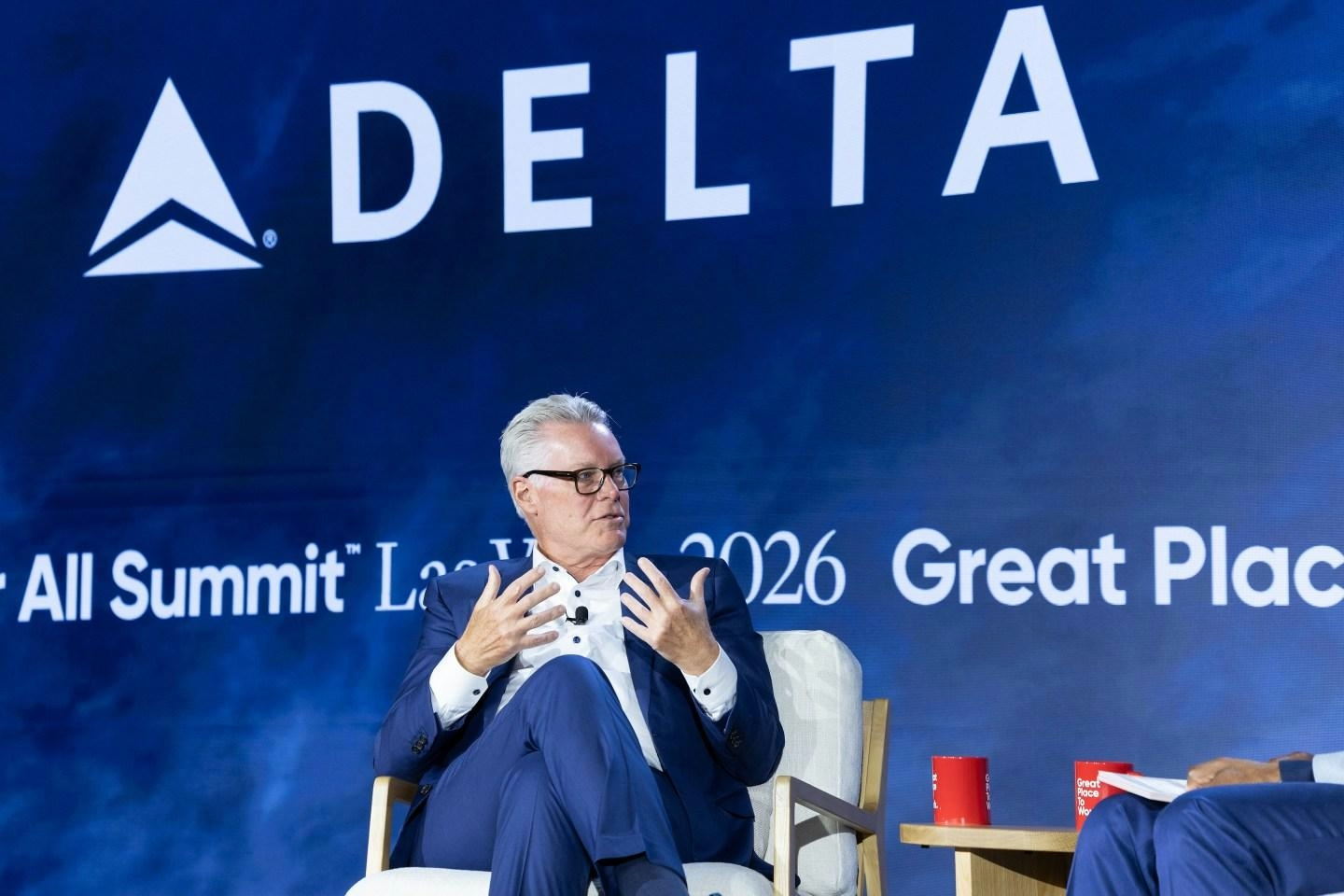
Delta CEO Ed Bastian Critiques the Term ‘Artificial Intelligence’
Delta Air Lines CEO Ed Bastian has expressed significant reservations about the widespread use of the term “artificial intelligence,” arguing that it mischaracterizes the technology’s role in the workplace and risks creating unnecessary fear among employees and the public. Bastian contends that the phrase “augmented intelligence” more accurately reflects the technology’s function as a tool designed to empower rather than replace human workers.
Reframing AI as a Tool for Empowerment
Bastian emphasized that AI should be viewed as an enhancement to employee capabilities rather than a threat to job security. “I want our employees to see it as a tool to enable them to do their jobs better, not to replace them, but to enhance them,” he stated. While acknowledging that AI-driven efficiencies may reduce the demand for certain roles, such as gate agents or call center staff, Bastian assured that Delta’s strategy involves redeploying affected employees to other customer service positions rather than eliminating jobs outright. “To the extent there’s less need for more people at a gate or more people on a phone, we’ll redeploy those people to better serve customers even more,” he explained.
Industry Challenges and Strategic Adaptation
Bastian’s remarks come amid a period of rapid technological transformation and intensifying competition within the airline industry. He highlighted the necessity for carriers to reorganize in order to survive, underscoring the importance of maintaining a robust financial position—a “fortress balance sheet”—to navigate ongoing industry shifts. His critique of AI terminology has sparked broader debate within the sector, with some analysts suggesting that his cautious stance may fuel skepticism regarding the actual impact of AI on operational efficiency and customer service enhancements.
This uncertainty could have immediate market repercussions, including potential downward pressure on Delta’s stock price as investors reassess the company’s technology strategy. Meanwhile, competitors may view this as an opportunity to accelerate their own AI investments, seeking to capture greater market share and intensify competition across the industry.
Commitment to Safety and Human Oversight
Despite the push toward innovation, Bastian reassured customers that certain core aspects of air travel will remain unchanged. “I’m never getting on an airplane without two Delta pilots on it commercially, and I don’t think that’s going to change anytime soon,” he affirmed, underscoring the airline’s commitment to safety and human oversight.
As the airline industry continues to navigate the evolving landscape of AI and automation, Bastian’s comments highlight the delicate balance between embracing technological advancements and maintaining trust among employees, customers, and investors.

ViewTech Borescopes Highlights New 3D Stereo Measurement Video Borescope at MRO Americas
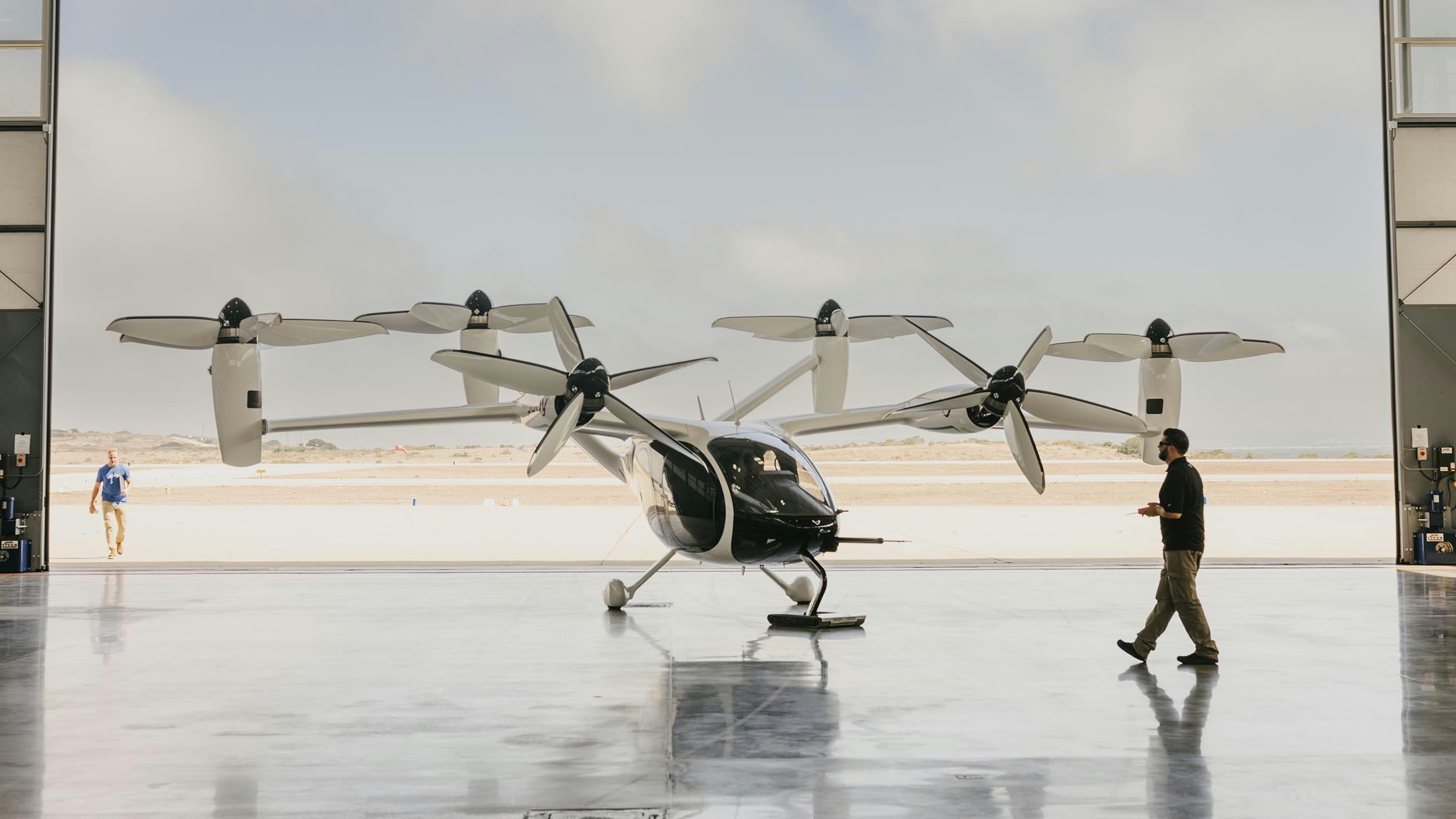
New York Launches First Point-to-Point Electric Air Taxi Flights
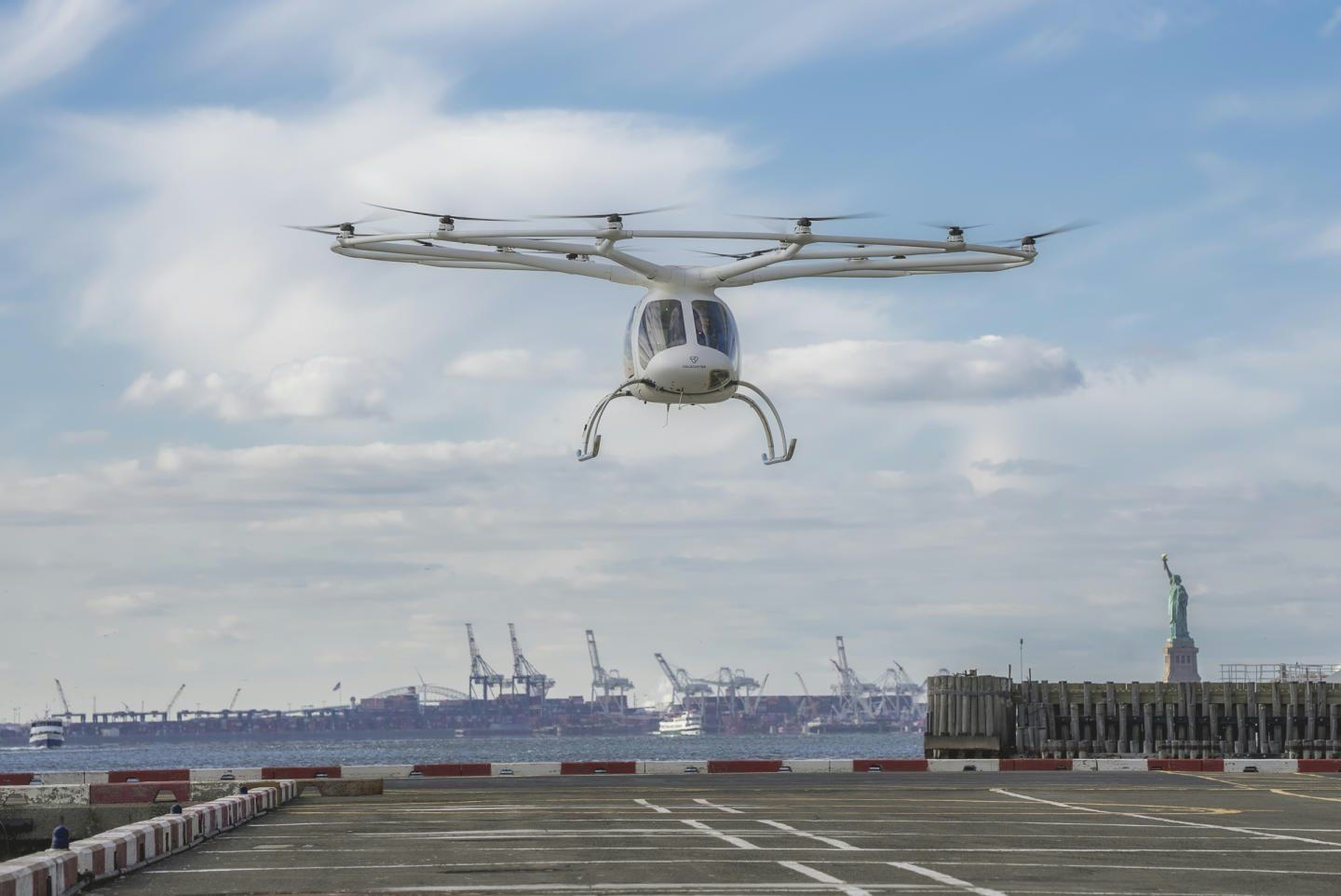
Cargo Drones to Operate Over East River in Yearlong New York Trial

India’s Jio-bp and VJaitra to Launch Nationwide eVTOL Charging Network
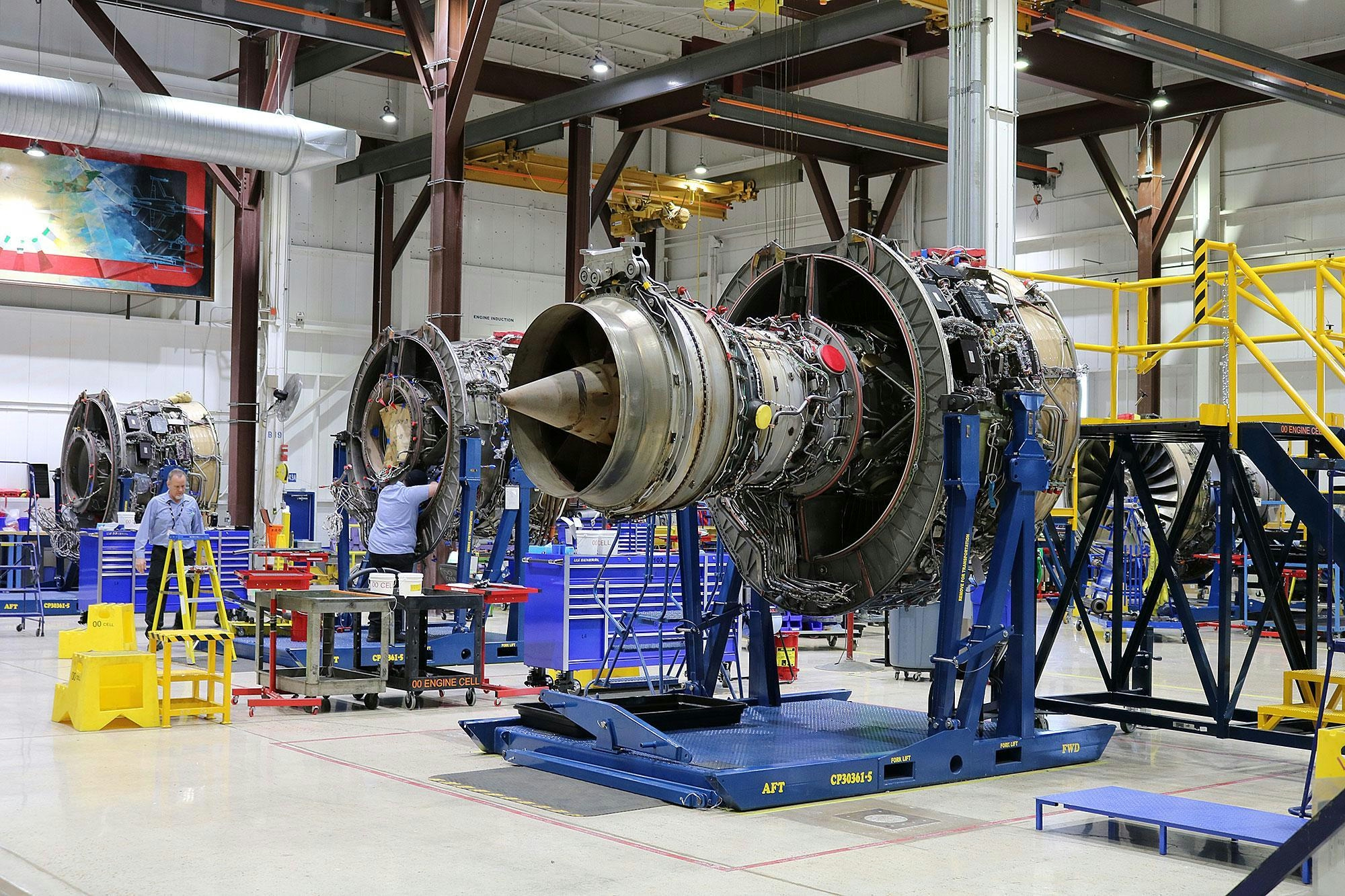
Avora Aviation Sells CFM56 Engines to Setna iO
Air Nostrum E&M Renews ATR Maintenance Agreement
The Role of Independent Technical Oversight in Business Aviation
Engine Fire on Swiss Flight During Delhi Takeoff, Passengers Unharmed
Safran Launches Helicopter Engine Maintenance Hub in Germany

ESBU Seeks to Tax Transport Leasing as Royalties, Overlooking Judicial Precedent
