Image

Orchestrate AI insights into action

Join the AeroGenie waitlist today!

Trending

Categories

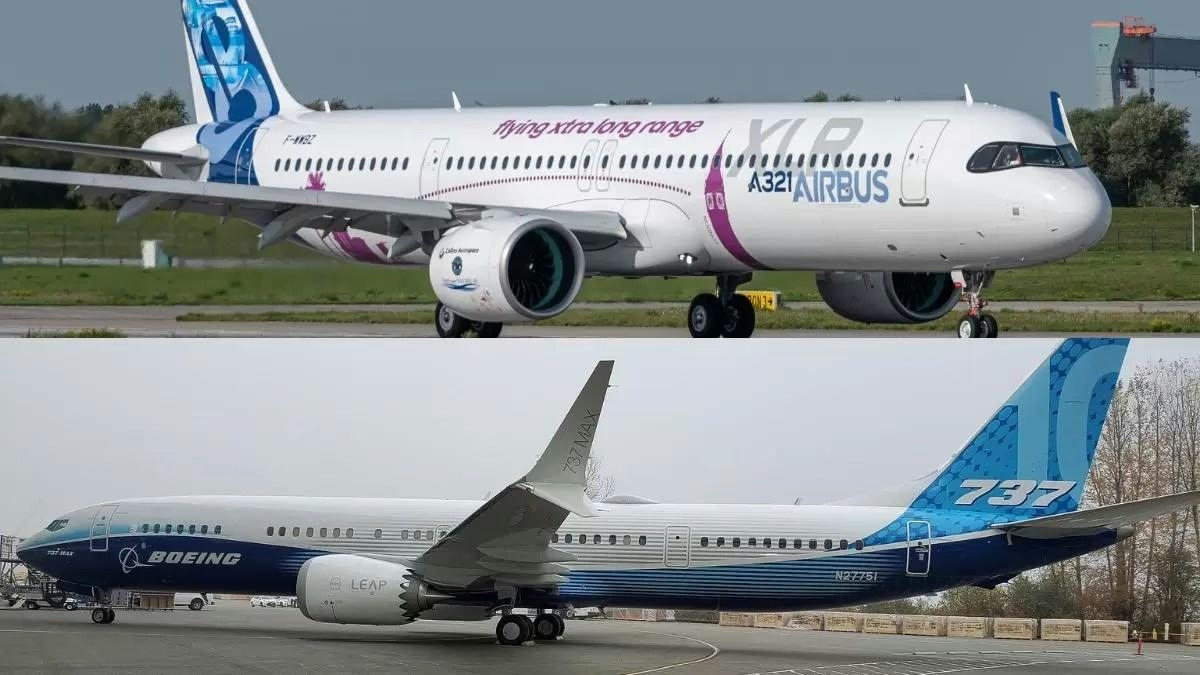
Fuel Efficiency Comparison: Boeing 737 MAX and Airbus A320neo
July 22, 2025By ePlane AI
Fuel Efficiency Comparison: Boeing 737 MAX and Airbus A320neo
0
0
Boeing 737 MAX
Airbus A320neo
Fuel Efficiency

Fuel Efficiency Comparison: Boeing 737 MAX and Airbus A320neo

The Boeing 737 MAX and Airbus A320neo families continue to dominate the narrowbody commercial airliner market, with airlines paying close attention to their fuel efficiency and operational costs. Among these two, the Airbus A320neo is generally regarded as having a modest advantage in fuel efficiency, a factor that has bolstered its widespread adoption by carriers around the globe.

Engine Technologies and Performance

Both aircraft families are equipped with advanced turbofan engines, though their configurations differ. The Boeing 737 MAX exclusively utilizes the CFM International LEAP-1B engine, whereas the Airbus A320neo offers operators a choice between the CFM International LEAP-1A and the Pratt & Whitney PW1100G-JM. While the LEAP-1A and LEAP-1B share core technological features, they exhibit notable distinctions. The LEAP-1A, powering the A320neo, delivers thrust up to 35,000 pounds-force, compared to the LEAP-1B’s 28,000 pounds-force. It also boasts a higher bypass ratio of 11:1 versus 8.6:1 and slightly different pressure ratios, factors that contribute to its marginally superior fuel efficiency.

The physical design of these engines reflects the airframe constraints of their respective aircraft. The 737 MAX, derived from a 1960s airframe with a lower ground clearance, requires the LEAP-1B to have a flattened underside to maintain adequate clearance. In contrast, the A320neo’s LEAP-1A is larger, measuring 11 feet in length and weighing approximately 6,631 pounds, compared to the LEAP-1B’s 10.3 feet and 6,128 pounds.

Industry experts, including MTU Aero Engines, generally consider the LEAP-1A to be more efficient and potentially less costly to maintain than the PW1100G-JM. However, the differences remain marginal, and both engines enjoy strong popularity among airlines. The slight edge in efficiency and operational costs has made the LEAP-1A the preferred choice for many A320neo operators, although the PW1100G-JM continues to maintain significant market share.

Certification Status and Market Developments

As of mid-2025, only the Boeing 737 MAX 8 and MAX 9 variants have received FAA type certification, with the MAX 7 and MAX 10 still pending approval. Meanwhile, Airbus is reportedly progressing on the development of a next-generation single-aisle aircraft intended to eventually succeed the A320 family, underscoring ongoing innovation within the sector.

Both manufacturers face emerging challenges from new entrants and evolving market dynamics. Innovative designs such as the Natilus Horizon blended-wing-body airliner could introduce alternative configurations that reshape the competitive landscape. Airlines are also increasingly factoring in maintenance costs and exploring new engine leasing models, exemplified by recent partnerships like that between Air France Industries KLM Engineering & Maintenance and AerCap. Additionally, China’s Comac C919 offers a comparable product, though its market penetration remains limited.

External influences may also affect the competitive balance. Boeing’s involvement in high-profile projects such as NASA’s Artemis program could impact its corporate focus and stock performance, indirectly influencing its position relative to Airbus.

While the Airbus A320neo’s LEAP-1A engine currently holds a slight advantage in fuel efficiency, the competition between these narrowbody aircraft remains close. Ongoing technological advancements and strategic market developments will continue to shape the future trajectory of this critical segment in commercial aviation.

More news
NetJets Opens New Maintenance Hub at Reading Regional Airport in Pennsylvania
NetJets Opens New Maintenance Hub at Reading Regional Airport in Pennsylvania

NetJets Expands Maintenance Operations with New Hub at Reading Regional Airport NetJets, the fractional jet operator owned by Berkshire Hathaway, has inaugurated a new maintenance facility at Reading Regional Airport (RDG) in Pennsylvania. This development represents a strategic expansion of NetJets’ in-house maintenance, repair, and overhaul (MRO) capabilities, aligning with the company’s response to one of the fastest-growing private aviation fleets globally. Strengthening In-House Maintenance Amid Industry Growth The Reading facility complements NetJets’ growing network of company-operated maintenance centers across the United States, including its primary base in Columbus, Ohio. By internalizing more technical maintenance work, NetJets seeks to reduce dependence on third-party providers and enhance operational efficiency. This initiative coincides with a robust surge in private aviation demand, with global private jet flight segments increasing by 3.9% this year compared to 2025, according to industry data. Strategically located in the busy northeastern corridor, the new MRO hub is well-positioned to service a substantial portion of NetJets’ fleet, which frequently operates in one of North America’s most active business aviation regions. The proximity to key flight routes is expected to reduce ferry times and aircraft downtime, thereby improving aircraft availability and dispatch reliability for NetJets’ shareowners. Addressing Demand and Navigating Competitive Pressures The expansion of NetJets’ in-house maintenance capabilities is a direct response to sustained growth in demand since the pandemic, which has resulted in longer waitlists for new shares and increased flight hours per owner. To meet these challenges, NetJets has invested significantly in recruiting and training technicians, collaborating with technical schools and offering apprenticeship programs to mitigate the industry-wide shortage of certified mechanics. This expansion occurs amid intensifying competition within the MRO sector. Competitors such as Haven ASG and ExecuJet MRO Services are also broadening their maintenance operations and geographic reach to capture a larger share of the growing business aviation market. As NetJets deepens its vertical integration, rival providers may enhance their service offerings or expand their presence in key regions to maintain competitiveness. Supporting a Rapidly Growing Fleet NetJets operates one of the world’s largest private jet fleets, bolstered by recent orders from manufacturers including Textron Aviation, Embraer, and Bombardier. The Reading facility is equipped to service the mid-size and large-cabin jets that dominate the NetJets fleet, such as the Cessna Citation Latitude and Longitude, Embraer Praetor 500, Bombardier Challenger 350 and 3500, and Bombardier Global 6500. With each new aircraft added to the fleet, maintenance demands increase, encompassing scheduled inspections, component overhauls, avionics updates, and unscheduled repairs. By expanding its in-house MRO network, NetJets aims to exercise tighter control over scheduling, parts inventory, and technician availability, thereby reducing turnaround times and enhancing service reliability for its clients. NetJets’ investment in the Reading Regional Airport facility underscores its commitment to operational excellence and customer satisfaction amid a rapidly evolving and competitive business aviation landscape.
EHang Sales Decline Amid Delays in eVTOL Commercial Launch
EHang Sales Decline Amid Delays in eVTOL Commercial Launch

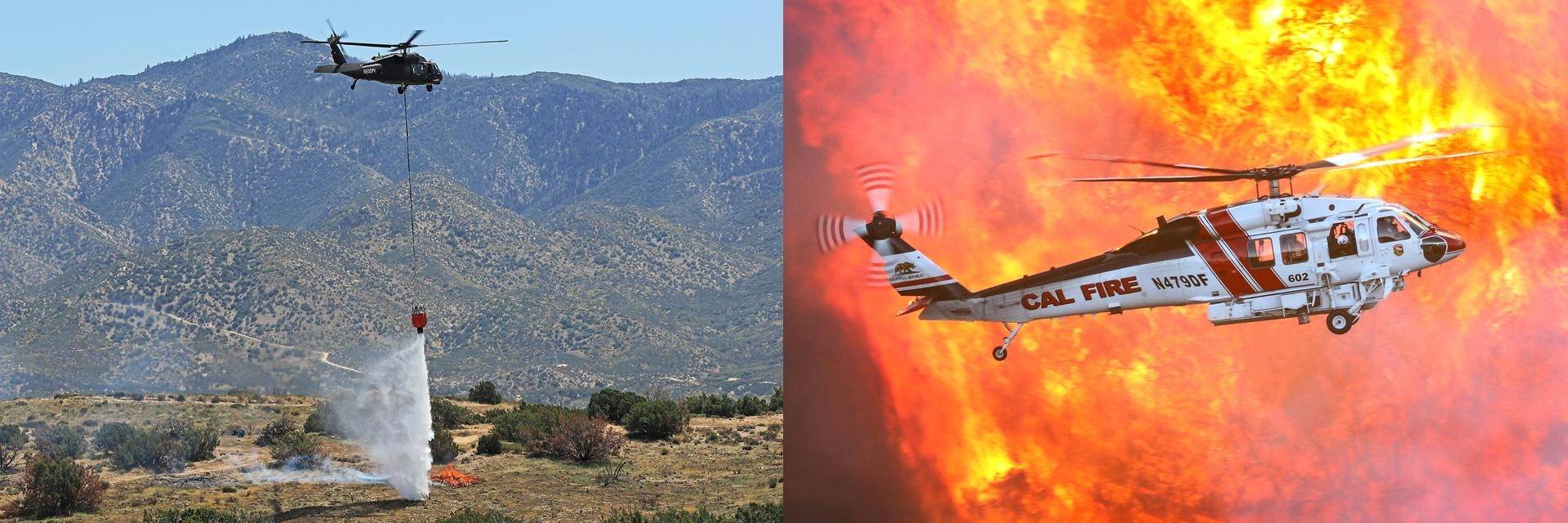
EHang Sales Decline Amid Delays in eVTOL Commercial Launch Shares of Chinese flying car pioneer EHang Holdings Ltd. have plunged following a sharp drop in first-quarter aircraft sales and widening financial losses. The company is increasingly relying on its established drone-show business to sustain operations as delays continue to hamper the commercial rollout of its electric vertical takeoff and landing (eVTOL) aircraft. This financial setback has contributed to a more than 50 percent decline in EHang’s stock value this year, highlighting the significant challenges facing the emerging global air-taxi industry despite some regulatory progress. Regulatory Uncertainty and Industry Challenges EHang’s difficulties are exacerbated by persistent regulatory uncertainty. A recent U.S. government report underscored the lack of clarity regarding the timeline for electric aircraft to receive clearance for commercial service, reflecting broader obstacles confronting the sector. Although EHang has achieved certain approvals within China, the schedule for widespread commercial deployment remains unclear. In contrast, some competitors are making notable strides. U.S.-based Joby Aviation has obtained Federal Aviation Administration (FAA) approval to operate in multiple states and recently secured an exclusive agreement to provide air taxi services in Dubai. Nevertheless, the industry is also contending with legal disputes among key players—including Joby, Archer Aviation, and Vertical Aerospace—that threaten to delay certification processes and undermine investor confidence. Industry Outlook and EHang’s Strategic Shift Despite these hurdles, optimism persists among some companies. Archer Aviation, for instance, aims for a 2026 commercial launch, supported by the White House’s eVTOL Integration Pilot Program and its designation as the official air taxi provider for the 2028 Los Angeles Olympics. EHang’s renewed focus on its drone-show business underscores the financial pressures confronting eVTOL manufacturers as they navigate regulatory, legal, and competitive challenges. The company’s recent performance serves as a stark reminder that, despite high-profile technological advancements and government support, the path to commercializing flying taxis remains uncertain for industry leaders and investors alike.
Advances in Aerial Firefighting Technology

Advances in Aerial Firefighting Technology

Advances in Aerial Firefighting Technology Innovation Driven by Urgent Need The aerial firefighting sector has witnessed a notable surge in innovation this year, as new technologies and products emerge with the potential to transform wildfire response strategies. The increasing frequency and severity of wildfires worldwide—highlighted by last year’s catastrophic fires in southern California—have intensified the search for more effective and efficient firefighting methods. Industry leaders are now focusing on forward-looking solutions that could redefine how aerial resources are deployed in combating these disasters. One pioneering concept originated in 2021 when Jacob Haram, an offshore support helicopter pilot, was inspired by media coverage of firefighters battling intense wildfires with limited equipment. Observing the challenges faced on the ground, Haram envisioned the deployment of water cannons fed directly from nearby water sources, operating autonomously to suppress flames. This approach would allow firefighters and resources to be redirected to more critical areas of the fire. Haram’s subsequent research revealed that while compact water cannons already existed, their deployment was constrained by the need for ground personnel and manual handling, limiting their operational flexibility. Toward Air-Portable Firefighting Systems Building on these insights, Haram, now CEO of the aviation start-up Vest Aero Tech, developed the concept of an air-portable or mobile firefighting cannon. This system is designed for rapid aerial deployment, minimizing the reliance on ground crews in hazardous environments. Although the equipment’s official trade name remains undecided, the innovation has been submitted for patent protection, signaling a significant step toward practical application. Despite the promise of such advancements, the path to widespread adoption remains challenging. Regulatory frameworks impose rigorous safety and operational standards that new technologies must satisfy before integration into existing firefighting protocols. Additionally, there is some resistance from traditional firefighting advocates who question the reliability and effectiveness of automated or remotely operated systems, underscoring the need for broader public acceptance. A Competitive and Collaborative Future The competitive landscape in aerial firefighting technology is intensifying on a global scale. Companies such as Volatus Aerospace are making strides under initiatives like the U.S. Drone Dominance Program, while European firm Metrea has recently showcased its Fireswift system, exemplifying the international race to develop cutting-edge aerial firefighting solutions. These advancements have prompted established industry players to enhance their own capabilities and, in some cases, to engage in lobbying efforts aimed at influencing regulatory policies and market conditions. As innovators like Vest Aero Tech continue to push technological boundaries, the aerial firefighting industry is entering a period of significant transition. The successful integration of new technologies will depend not only on technical innovation but also on effective collaboration among regulators, emergency services, and the public. Such cooperation is essential to ensure that these emerging solutions can be deployed safely and effectively in the ongoing battle against increasingly severe wildfires.
RTX Expands Global Aerospace Service Capabilities
RTX Expands Global Aerospace Service Capabilities

RTX Expands Global Aerospace Service Capabilities Major Investment in Malaysia Facility RTX Corporation, through its Collins Aerospace division, is significantly enhancing its global aerospace support infrastructure to address increasing demand from commercial aviation clients. On June 9, 2026, Collins Aerospace announced a $63 million expansion of its maintenance, repair, and overhaul (MRO) facility located at Subang Aerotech Park in Malaysia. This investment will nearly quadruple the facility’s size, expanding it from approximately 46,000 square feet to 164,000 square feet. The enlarged Subang site is set to become a pivotal regional hub, offering advanced component support and technical services to a growing customer base. This strategic expansion aligns with RTX’s broader objective to strengthen its foothold in the rapidly expanding Asia-Pacific aviation market, where airlines are actively increasing their fleets and flight operations. The upgraded facility will provide enhanced MRO capabilities for critical aircraft components such as air cycle machines, heat exchangers, valves, and next-generation starters. By incorporating cutting-edge technologies—including digital tier boards, eAndon systems, autonomous mobile robots, and real-time location tracking—the Subang facility aims to improve productivity and reduce turnaround times, thereby elevating service efficiency. Competitive Landscape and Technological Innovation RTX’s expansion occurs amid intensifying competition from major aerospace and defense firms like Boeing and Lockheed Martin, which are also vying for a larger share of the burgeoning MRO market. Industry analysts have responded positively to RTX’s strategy, emphasizing the importance of expanding service and radar production capabilities to meet modernization requirements, including those mandated by the Federal Aviation Administration (FAA). In response, competitors may pursue similar facility enhancements or technological innovations to maintain their market positions. Beyond its MRO initiatives, RTX is advancing its technological leadership with projects such as the PACE4ACE self-healing military communications system. This innovation has the potential to bolster RTX’s standing in advanced defense technologies, potentially attracting additional defense contracts and further consolidating its market presence. Industry-Wide Trends and Market Outlook The expansion of MRO capabilities is a widespread trend within the aerospace sector. Companies such as GE Aerospace and AAR Corp. are also investing heavily in their global MRO networks to support the growth of aircraft fleets and improve operational efficiency. GE Aerospace offers comprehensive engine overhaul, repair, and lifecycle support services worldwide, while AAR Corp. provides maintenance, component repair, and aviation support services to commercial airlines, cargo operators, and government clients. Looking forward, RTX’s ongoing investments in global service infrastructure are expected to strengthen customer relationships and enhance operational support capabilities. Market forecasts, including the Zacks Consensus Estimate, project RTX’s earnings per share to grow by 9.86% in 2026 and 8.98% in 2027, reflecting positive investor sentiment as the company expands its international aviation footprint.
WTI Events Drive Marine Aviation Transformation at MAWTS-1

WTI Events Drive Marine Aviation Transformation at MAWTS-1

WTI Events Drive Marine Aviation Transformation at MAWTS-1 At the heart of Marine aviation’s quest for combat excellence lies a semi-annual event that remains largely obscure outside military circles: the Weapons and Tactics Instructor (WTI) Course. As a former commanding officer of Marine Aviation Weapons and Tactics Squadron One (MAWTS-1) has noted, WTI is where the United States Marine Corps unites to train for war. This characterization highlights the course’s significance as more than a routine training exercise; it serves as the primary catalyst for transformation, tactical refinement, and innovation within Marine aviation. The Scale and Scope of WTI MAWTS-1, headquartered at Marine Corps Air Station Yuma, Arizona, conducts two WTI courses annually, each spanning approximately seven weeks. These events represent the most substantial recurring training and innovation exercises within Marine Corps aviation, attracting hundreds of students, thousands of maintenance personnel, and dozens of aircraft from across the service and allied units. The scale of these exercises is immense. For instance, a recent course involved 236 students, 92 additional aircraft, and over 4,000 maintenance personnel, generating roughly 2,350 sorties. This concentration of aviation assets—comparable to the air power of a Marine Expeditionary Brigade—enables integrated, multi-platform tactical training on a scale unattainable during routine operations. The WTI curriculum encompasses the full spectrum of Marine aviation missions, including offensive air support, control of aircraft and missiles, assault support, aerial reconnaissance, anti-air warfare, electronic warfare, and aviation ground support. Crucially, ground combat element personnel train alongside aviators, ensuring that lessons learned from recent operational deployments are swiftly incorporated into evolving tactics and procedures. Broader Context: Economic and Technological Challenges The transformative impact of WTI does not occur in isolation. Broader economic and industry trends increasingly influence the operational environment of Marine aviation. Recent fluctuations in global oil prices, such as the declines in Brent and WTI crude between May and June driven by demand concerns and economic uncertainty, underscore the volatility of fuel costs. Although temporary price rebounds have occurred due to supply disruptions, ongoing apprehensions about demand destruction continue to affect operational planning and resource allocation. In response to these challenges, both military and civilian aviation sectors are exploring alternatives, including a transition to sustainable aviation fuels. This shift carries significant implications for agricultural feedstocks and supply chains, potentially affecting the logistics that support large-scale training events like WTI. Simultaneously, the retirement of legacy platforms such as the AV-8B Harrier II marks a pivotal transition for Marine aviation. This change not only alters tactical capabilities but also impacts pilot retention and compensation strategies, as the Marine Corps competes with commercial and private aerospace sectors for skilled aviators. Ultimately, the WTI course remains the cornerstone of Marine aviation’s capacity to adapt and innovate. By assembling personnel, platforms, and the latest operational insights, MAWTS-1 ensures that the Marine Corps maintains agility amid evolving threats and the shifting economic and technological landscape that defines modern warfare.
AMARG Holds 3,200 Aircraft and Over 340,000 Parts, Potentially Second Largest Air Force
AMARG Holds 3,200 Aircraft and Over 340,000 Parts, Potentially Second Largest Air Force

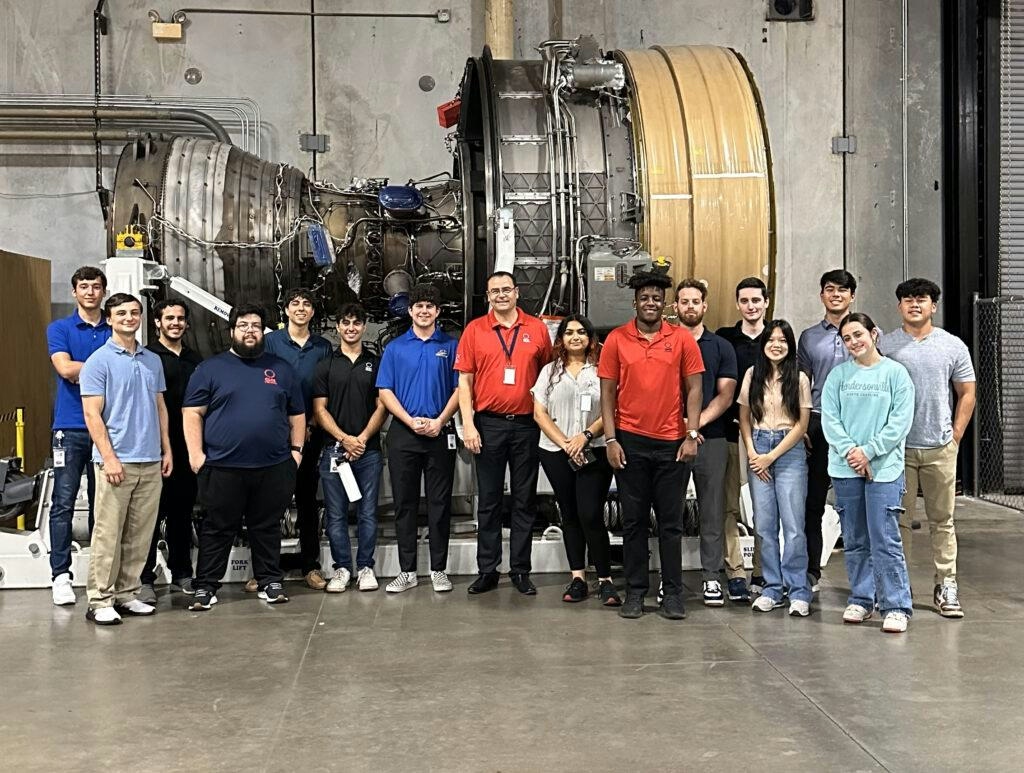
AMARG Holds 3,200 Aircraft and Over 340,000 Parts, Potentially Second Largest Air Force At the 309th Aerospace Maintenance and Regeneration Group (AMARG) in Tucson, Arizona, an extraordinary collection of more than 3,200 aircraft and over 340,000 parts is stored across 2,600 acres. This vast repository, often described as the world’s largest aircraft boneyard, is so extensive that if its inventory were considered an air force, it would rank as the second largest globally, surpassed only by the United States Air Force itself. Strategic Location and Operational Practices AMARG operates as a subordinate unit of the Ogden Air Logistics Complex at Hill Air Force Base, under the Air Force Sustainment Center within the Air Force Materiel Command. Its location at Davis-Monthan Air Force Base in the Arizona desert provides ideal conditions for long-term aircraft storage. The region’s hard-packed caliche soil, low humidity, minimal rainfall, and temperate climate significantly reduce corrosion, preserving aircraft far more effectively than coastal environments. The facility employs a distinctive method known as “storage on the wing,” whereby parts and components remain attached to the aircraft rather than being removed and stored separately. This approach lowers overhead costs, streamlines maintenance processes, and facilitates rapid identification and reclamation of needed parts. Over time, AMARG’s industrial workspace has expanded to 540,000 square feet, including a high-bay hangar and specialized paint facilities, enhancing its capacity to maintain and refurbish stored assets. Inventory and Institutional Significance AMARG’s inventory has fluctuated over the decades, peaking at 6,080 aircraft in 1973. Today, the facility manages not only aircraft but also approximately 5,900 engines and extensive production tooling. These assets belong to more than 80 organizations, encompassing various branches of the U.S. Department of Defense, the Department of Homeland Security, NASA, the Department of Agriculture, and the Smithsonian Institution. The scale and complexity of AMARG’s operations present significant logistical and preservation challenges. Maintaining such a diverse and expansive collection requires meticulous care and sophisticated tracking systems to manage both historical and operational aircraft. Beyond storage, AMARG plays a vital role in supporting active military and civilian aviation by providing parts and components to sustain current fleets. Influence on Defense Technology and Preservation AMARG’s prominence has influenced broader trends in defense technology and historical preservation. Institutions such as the Air Mobility Command Museum at Dover Air Force Base have adopted similar strategies to manage and display their aircraft collections, highlighting technological advancements and preserving aviation heritage. This has generated increased interest from the public and industry alike, prompting military museums and defense contractors to explore innovative ways to showcase and utilize their assets. Furthermore, advancements in additive manufacturing and shifting defense market dynamics are transforming how stored assets are reclaimed, restored, or repurposed. As these technologies evolve, facilities like AMARG are poised to play an increasingly important role in preserving aviation history while supporting future innovation in aerospace and defense. AMARG stands as a testament to the United States’ commitment to airpower readiness, historical preservation, and technological progress, its vast desert fleet quietly underpinning both the nation’s aviation legacy and its future capabilities.
easyJet Receives 100th Airbus A320neo in Hamburg
easyJet Receives 100th Airbus A320neo in Hamburg

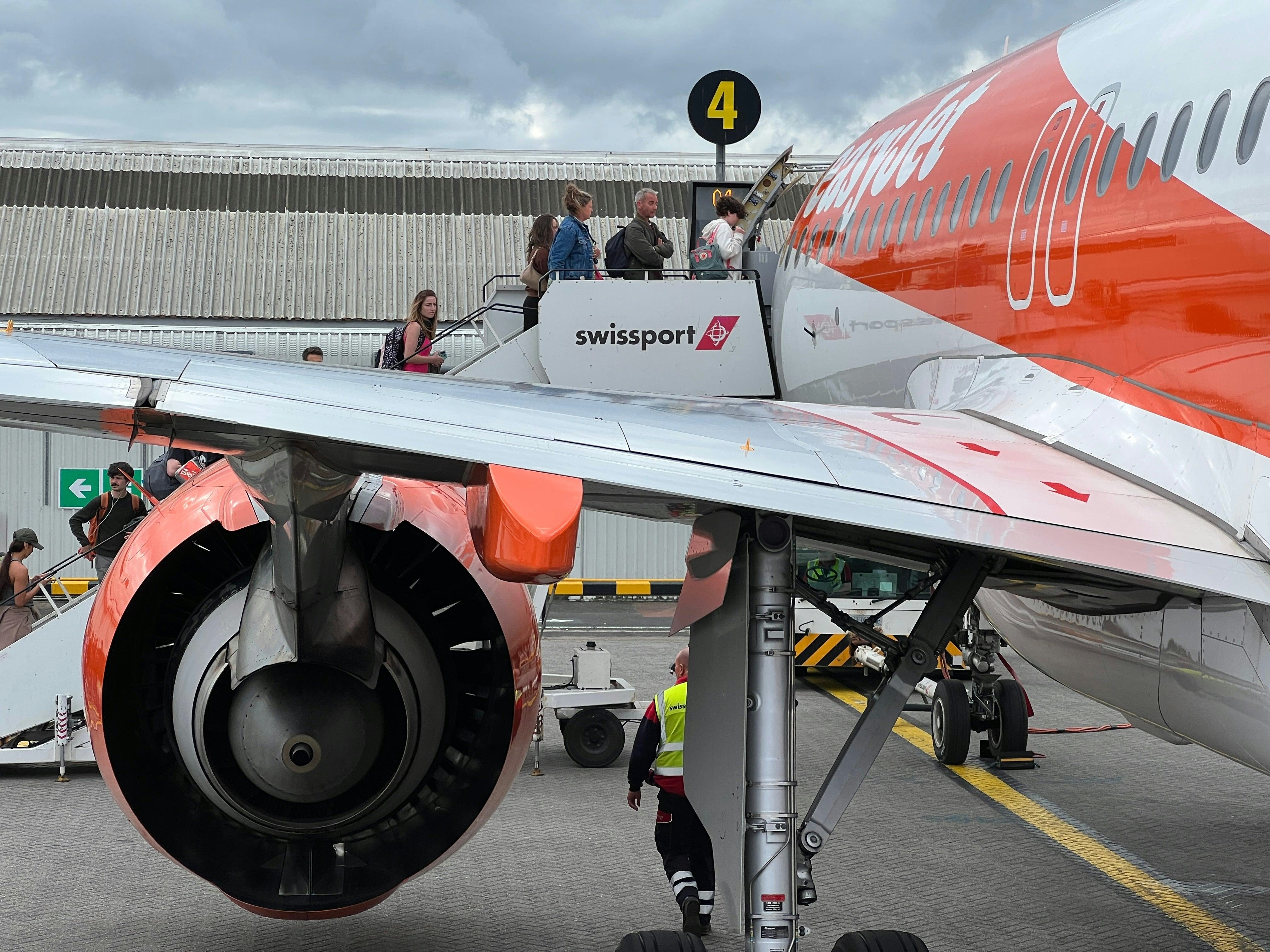
easyJet Receives 100th Airbus A320neo in Hamburg, Advancing Fleet Modernisation easyJet has marked a significant milestone with the delivery of its 100th Airbus A320neo Family aircraft at Airbus’s Hamburg facility. This addition represents a crucial step in the airline’s ongoing fleet renewal and decarbonisation efforts. With over a quarter of its 359-aircraft, all-Airbus fleet now composed of the latest A320neo narrowbodies, easyJet reinforces its commitment to operational efficiency and environmental responsibility. Enhanced Passenger Experience and Operational Efficiency The newly delivered aircraft features Airbus’s advanced ‘Airspace cabin’, designed to elevate passenger comfort through improved lighting, a sophisticated colour scheme, and upgraded furnishings. Accessibility enhancements include braille indicators on seat row placards to assist visually impaired travellers. The cabin also benefits from increased shoulder room, touchless and redesigned lavatories aimed at improving hygiene, and a greater incorporation of repairable and recycled materials. Cabin crew will experience improved working conditions with redesigned galleys offering enhanced storage and, notably, the introduction of dual ovens at both the front and rear of the aircraft—a first for the A320 and A321neo models. Future easyJet A320neo deliveries will be equipped with non-retractable LED Multi-Functional Runway Lights, a modification that reduces drag and weight while enhancing reliability and optical performance. These aircraft are powered by CFM LEAP-1A engines, which currently support operations with up to 50% Sustainable Aviation Fuel (SAF), with a target to achieve 100% SAF usage by 2030. Additionally, Skywise-enabled digital systems will facilitate data-driven operational efficiency. The A320neo Family offers up to 20% lower fuel consumption and CO₂ emissions per seat compared to previous-generation aircraft, alongside a 50% reduction in noise footprint. These advancements are integral to easyJet’s strategy to reduce carbon intensity, lower operating costs, and improve the overall customer experience. Strategic Fleet Renewal Amid Industry Challenges This delivery aligns with easyJet’s broader plan to retire its older A319 aircraft by September 2029, aiming to increase fleet capacity and achieve unit cost savings. However, the airline faces potential challenges as Airbus has recently announced further delays in A320neo deliveries scheduled for 2027 and 2028, which may affect easyJet’s expansion timeline. Despite ongoing fleet modernisation and operational improvements, easyJet continues to grapple with market pressures in the post-pandemic environment, including difficulties in enhancing its market capitalisation. These challenges have attracted takeover interest, notably from the U.S. investment firm Castlelake. David Morgan, easyJet’s Chief Operating Officer, emphasized the significance of this milestone, stating, “The arrival of our 100th A320neo Family aircraft is a significant milestone for easyJet. These aircraft are at the heart of our strategy to operate a more efficient fleet and reduce our environmental impact, while continuing to enhance the travel experience for our customers and crews alike.” Johan Pelissier, President of Region Europe and Head of Commercial Europe for Commercial Aircraft at Airbus, highlighted the partnership’s innovative spirit: “The delivery of the 100th A320neo reflects the shared DNA of innovation between Airbus and easyJet. By integrating the world’s most efficient single-aisle aircraft at this scale, we are actively redefining the future of sustainable aviation.” As easyJet advances its transition to a modern and sustainable fleet, its ability to manage supply chain disruptions and market dynamics will be critical to sustaining its competitive position within the European aviation sector.
Aerius Leasing Finalizes Purchase and Leaseback of Leonardo AW139 Helicopter

Aerius Leasing Finalizes Purchase and Leaseback of Leonardo AW139 Helicopter

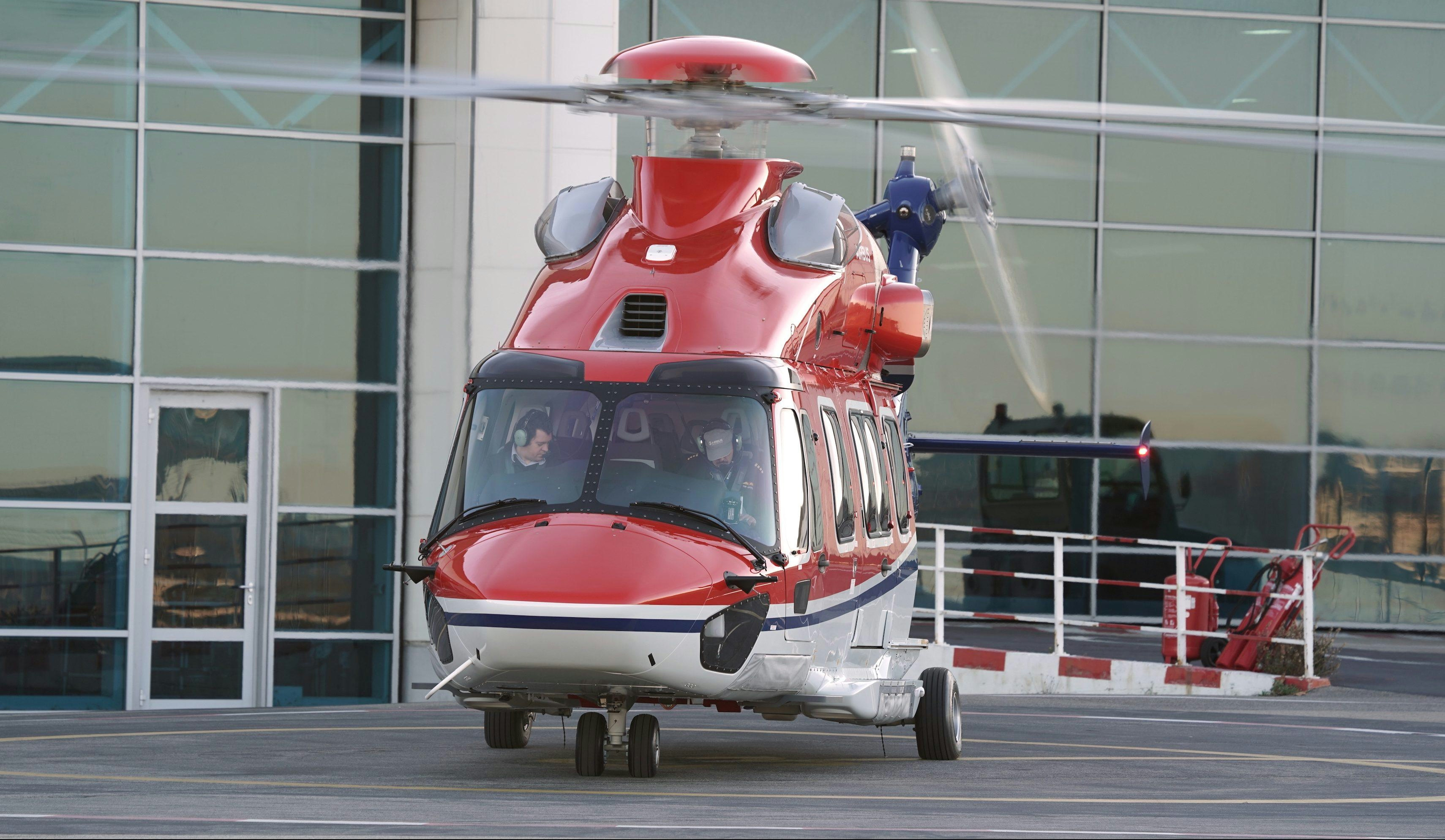
Aerius Leasing Completes Purchase and Leaseback of Leonardo AW139 Helicopter Aerius Leasing has finalized its inaugural purchase and leaseback agreement involving a Leonardo AW139 helicopter, marking a strategic advancement in supporting offshore energy operations in Indonesia. The helicopter was acquired from Malaysia-based Weststar Aviation Services and will be operated by PT Weststar Aviation Indonesia to facilitate ENI’s offshore oil and gas activities. Supporting Offshore Energy Operations Amid Industry Challenges This transaction underscores the sustained demand for modern, medium twin-engine helicopters capable of executing complex offshore transportation missions throughout the Asia-Pacific region. However, the deal occurs against a backdrop of increased industry scrutiny following recent safety incidents involving comparable helicopter models. A fatal crash involving a UK Royal Navy AW101 and a serious tail rotor malfunction with an AW139 have prompted aviation regulators to implement additional safety measures. These developments have raised concerns among operators and may affect market perceptions, with some competitors highlighting their safety records and offering competitive terms to attract clients seeking assurance. Despite these challenges, Weststar Aviation Services reaffirmed its confidence in the AW139 platform. Syed Azni, Executive Director of Weststar Aviation Services, emphasized the helicopter’s reliability and operational value, stating, “We are pleased to partner with Aerius Leasing on this important transaction supporting ENI’s operations in Indonesia. The AW139 continues to demonstrate its value as one of the most capable and reliable platforms in the offshore sector, and we look forward to continuing to support our customers with safe and dependable operations across the region.” Strategic Significance for Aerius Leasing The leadership at Aerius Leasing also highlighted the importance of the transaction. Managing Partners Sameer Rehman and Chris Lloyd remarked, “This transaction represents another important milestone for Aerius Leasing as we continue to expand our presence in the global helicopter leasing market. Indonesia remains a crucially important offshore market, and we are proud to support critical energy infrastructure through the placement of high-quality assets with strong operating partners.” They further noted that the successful execution of this purchase and leaseback exemplifies the creative and relationship-driven transactions that Aerius Leasing aims to deliver worldwide. The partners expressed particular appreciation for the collaboration with Weststar Aviation Services and the support provided by Investec Bank in completing the deal. As Aerius Leasing navigates the evolving helicopter leasing landscape, the company confronts the dual challenge of fulfilling operational demands while addressing heightened safety expectations. The outcome of this transaction may influence broader market sentiment and competitive dynamics as operators and regulators continue to scrutinize the performance and safety of the AW139 and similar aircraft in offshore roles.
First Responder Reflects on AI 171 Crash: 'Wish We Could Save More Lives'
First Responder Reflects on AI 171 Crash: 'Wish We Could Save More Lives'

First Responder Reflects on AI 171 Crash: ‘Wish We Could Save More Lives’ A Tragedy That Haunts Ahmedabad Ahmedabad continues to grapple with the aftermath of one of the deadliest aviation disasters in recent history. On June 12, 2025, Air India flight AI-171 crashed moments after takeoff from Sardar Vallabhbhai Patel International Airport, claiming 260 lives. Satinder Singh Sandhu, a supervisor with 108 Emergency Services, remains deeply affected by the tragedy. Stationed just 200 metres from the crash site at Ahmedabad Civil Hospital’s Gate No. 8, Sandhu vividly recalls the harrowing moments when the routine afternoon was shattered by a deafening explosion. “I saw a thick cloud of smoke rising from the hostel complex. At first, I thought it was a bomb blast,” Sandhu recounts. Upon learning that an aircraft had collided with the BJ Medical College hostel building, he immediately dispatched ambulances and rushed to the scene. The scale of devastation was overwhelming—bodies and injured individuals were scattered both inside the complex and on the surrounding roads. Within minutes, Sandhu and his team arrived with four ambulances, soon joined by the airport fire brigade, all focused on the urgent task of saving lives. The Rescue Effort and Its Lingering Impact Sandhu supervised the deployment of 35 ambulances throughout the night, coordinating the transport of the injured and deceased to nearby hospitals. Among the survivors was Vishwas Kumar Ramesh, the sole individual to survive the crash. The grim recovery operation extended over a week, as rescuers painstakingly retrieved charred victims and body parts from the wreckage. For Sandhu and his colleagues, the experience left an indelible mark. “Whenever I pass through the area, the memories return—the smell of burnt flesh and aviation fuel,” he reflects. “Our biggest regret is that we couldn’t save more lives.” Broader Implications: AI, Ethics, and Market Reactions The AI-171 disaster also intensified ongoing debates about the role of artificial intelligence in aviation safety. The crash occurred during a period of heightened scrutiny over AI technologies, coinciding with the introduction of Anthropic’s Mythos model and the emergence of what has been termed the “restricted-AI era.” Ethical concerns regarding AI’s reliability and decision-making capabilities in critical systems have grown, prompting calls from regulators and industry leaders for stricter oversight. The repercussions extended beyond the tragedy itself, affecting financial markets and corporate strategies. Technology stocks experienced volatility as investors reassessed the costs and regulatory risks associated with advanced AI systems. Analysts observed a strategic pivot among major tech firms, with some shifting focus from consumer-facing AI products to enterprise solutions, a trend highlighted in Elliott’s analysis of OpenAI’s IPO filing. The Nasdaq index reflected this uncertainty, declining amid concerns over interest rate hikes and escalating expenses related to AI development. As Ahmedabad marks the anniversary of the AI-171 crash, the event remains a poignant reminder of the complex interplay between technological advancement, ethical responsibility, and human resilience.
GA Telesis Expands GE90 Engine Repair Services

GA Telesis Expands GE90 Engine Repair Services

GA Telesis Enhances GE90 Engine Fuel Pump Repair Capabilities GA Telesis has completed a major upgrade to its fuel pump test bench infrastructure, significantly expanding its maintenance, repair, and overhaul (MRO) services to include full overhaul, testing, and certification of GE90 jet engine fuel pumps. This development introduces advanced testing equipment and updated procedures designed to meet the stringent performance requirements of GE90 engine fuel systems, thereby broadening the company’s component repair offerings. Advancing Technical Expertise and Service Quality The enhanced test platform allows GA Telesis to provide comprehensive support for fuel pumps integral to one of the aviation industry’s leading wide-body engine programs. Airlines and engine MRO providers now have access to an independent repair option that prioritizes quality, responsiveness, and cost efficiency. Pastor Lopez, President of GA Telesis’ MRO Services Group, emphasized that this investment reflects the company’s commitment to deepening its technical expertise and delivering reliable component repair services. He further noted that the new capability strengthens GA Telesis’ standing as a prominent independent MRO provider. The upgraded test bench is capable of verifying fuel pump performance across the full operating range of the GE90 engine, ensuring strict compliance with original equipment manufacturer (OEM) specifications and industry standards. Customers are expected to benefit from reduced turnaround times, enhanced component reliability, and diminished operational risks, supported by GA Telesis’ established technical proficiency. Competitive Landscape and Operational Challenges GA Telesis’ expansion into GE90 engine repair services occurs amid a competitive environment dominated by established players such as StandardAero and Héroux-Devtek, both of which possess extensive experience and market presence in engine component repair. The company’s strategic move necessitates significant investment in infrastructure and technology, heightening the importance of effective execution. Furthermore, ongoing supply chain disruptions pose potential risks to the timely delivery of parts and services, which could impact customer satisfaction. Market reception may include skepticism from airlines assessing the reliability and cost-effectiveness of GA Telesis’ new offerings, particularly as operators consider transitioning from incumbent providers. In response, competitors are likely to enhance their repair capabilities or pursue strategic partnerships to safeguard their market positions. Despite these challenges, GA Telesis aims to distinguish itself through its upgraded technical capabilities and customer-centric approach. This latest investment aligns with a broader industry trend favoring independent MRO solutions, as airlines and operators increasingly seek greater flexibility and cost control in the maintenance of critical engine components.
line