Image

Orchestrate AI insights into action

Join the AeroGenie waitlist today!

Trending

Categories

Russia Starts Modifying Be-200 Amphibious Aircraft with Domestic PD-8 Engine
August 3, 2025By ePlane AI
Russia Starts Modifying Be-200 Amphibious Aircraft with Domestic PD-8 Engine
0
0
Be-200 Amphibious Aircraft
PD-8 Engine
United Engine Corporation

Russia Advances Modification of Be-200 Amphibious Aircraft with Indigenous PD-8 Engine

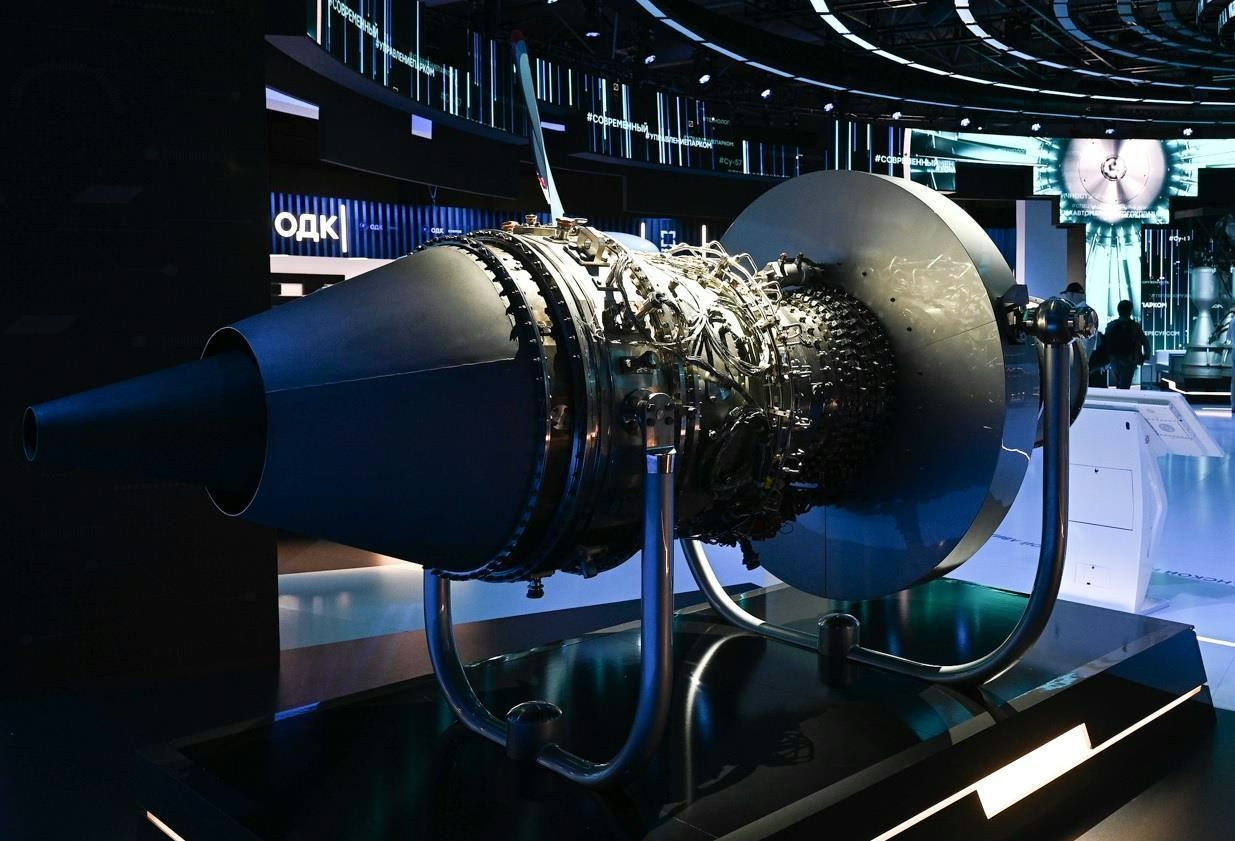
Russia has initiated the process of adapting its domestically developed PD-8 turbofan engine for use in the Be-200 amphibious aircraft, a critical asset for the Ministry of Emergency Situations, particularly in aerial firefighting missions. This development reflects Moscow’s strategic effort to replace Western-made components amid ongoing international sanctions and increasing geopolitical isolation.

Development and Adaptation of the PD-8 Engine

The PD-8 engine, produced by the United Engine Corporation (UEC), was originally designed for the SJ-100 regional airliner—a fully Russian iteration of the SuperJet—created to substitute Western systems. Currently, the engine is being modified for integration into the Be-200 at the Beriev Aviation Complex in Taganrog, as confirmed by Yuri Slyusar, former head of United Aircraft Corporation and acting governor of the Rostov region.

Since entering service in 2003, the Be-200 has proven to be a reliable platform for firefighting, especially in remote and mountainous regions. Its amphibious design allows it to scoop up to 12 tons of water in just 15 seconds during low-level passes over water bodies, while also enabling both runway and water takeoffs and landings.

Originally, the Be-200 ‘Altair’ was powered by two Progress D-436 engines manufactured in Ukraine. However, the destruction of the Ukrainian engine factory in May 2022 amid the Russian military invasion has compelled Russia to accelerate the development and integration of the PD-8 as a replacement. The PD-8, currently undergoing certification testing on both the SJ-100 and Be-200 platforms, delivers approximately eight tons of thrust and incorporates core technologies derived from the larger PD-14 engine used in the MC-21 airliner.

Challenges and Market Implications

Despite these advancements, the transition to the PD-8 engine presents considerable technical and commercial challenges. As a relatively new design still in the certification phase, the PD-8’s development may encounter unforeseen technical difficulties. Furthermore, Russia’s geopolitical isolation and the persistence of international sanctions could foster skepticism among potential foreign buyers, thereby limiting export prospects for the modified Be-200.

In addition, global competitors in the amphibious aircraft sector are likely to respond by accelerating their own technological innovations and adopting more aggressive pricing strategies. This competitive environment may further complicate Russia’s efforts to establish the PD-8-equipped Be-200 in the international market.

As Russia proceeds with the PD-8 integration, the outcome will be closely monitored for its implications on the domestic aviation industry and the broader global market for specialized firefighting and amphibious aircraft.
More news
Fuji Dream Airlines Expands Embraer Fleet in Japan

Fuji Dream Airlines Expands Embraer Fleet in Japan

Fuji Dream Airlines Expands Embraer Fleet Amid Rising Competition in Japan Embraer has confirmed that Fuji Dream Airlines (FDA) has placed a firm order for two additional E175 aircraft, reinforcing its position in Japan’s regional aviation market. These new jets, configured in a single-class layout accommodating 84 seats, are slated for delivery in 2027 and 2028 and are already included in Embraer’s current order backlog. Strengthening Regional Connectivity Since its inception in 2009, Fuji Dream Airlines has established itself as a significant player in Japan’s regional aviation sector, currently operating a fleet of 15 Embraer jets, comprising two E170s and thirteen E175s. The airline is noted for its exceptional operational performance, maintaining a 12-month average schedule reliability exceeding 99.8 percent. This high standard reflects FDA’s commitment to aircraft quality and rigorous maintenance practices. Shunsuke Honda, President of Fuji Dream Airlines, emphasized the strategic importance of the new aircraft, stating that their introduction will enhance the airline’s capacity and further strengthen its network connecting communities across Japan. He also highlighted the order as an opportunity to deepen the longstanding partnership with Embraer. Embraer’s Role in Japan’s Regional Aviation The E175 model is widely recognized for its reliability and efficiency on high-frequency, short-haul routes, making it a preferred choice among regional carriers such as FDA. Arjan Meijer, President and CEO of Embraer Commercial Aviation, praised Fuji Dream Airlines for its outstanding operations and dedication to excellence, noting the airline’s significant contribution to Japan’s regional aviation sector. He reaffirmed Embraer’s commitment to supporting FDA’s growth by delivering exceptional value. FDA’s fleet expansion occurs amid intensifying competition among regional airlines in Japan. As other carriers seek to grow their fleets and enhance service offerings, the market is expected to experience shifts that could benefit passengers through increased options and potentially lower fares. This competitive environment underscores the critical importance of fleet modernization and network expansion for airlines aiming to maintain or improve their market positions. Broader Market Implications and Embraer’s Strategic Moves The timing of FDA’s order aligns with Embraer’s robust delivery schedule, particularly following a strong second quarter in 2026, which is anticipated to further solidify the manufacturer’s standing in the regional aviation market. Embraer’s continued success in securing orders from established carriers like FDA highlights its competitive edge and influence within the sector. In a related development, Embraer and Azorra have entered into an agreement for up to 30 E-Jet freighter conversions, including 20 firm orders and 10 purchase rights. This initiative follows the successful introduction of the E190F freighter and responds to growing global demand for efficient, right-sized cargo aircraft. John Evans, CEO of Azorra, remarked that the E-Freighter presents a compelling alternative to older 737 freighters, offering reliable performance alongside lower operating costs and compliance with noise regulations. As Fuji Dream Airlines and its competitors continue to expand and modernize their fleets, the regional aviation landscape in Japan is set for further transformation, with Embraer playing a pivotal role in shaping the future of the market.
International Partners Express Confidence in Vietnam’s Aviation Sector

International Partners Express Confidence in Vietnam’s Aviation Sector

International Partners Express Confidence in Vietnam’s Aviation Sector Strong Growth Prospects Highlighted at Farnborough Airshow International aviation leaders have expressed robust confidence in Vietnam’s aviation sector, emphasizing the country’s rapid expansion and investment potential during the Farnborough International Airshow in the United Kingdom. The event, which hosts over 1,600 exhibitors across a sprawling 500,000-square-meter venue, serves as a critical platform for major industry announcements and the forging of strategic partnerships. Barry Flannery, Chief Commercial Officer of SMBC Aviation Capital, identified Vietnam as one of the fastest-growing aviation markets in the Asia-Pacific region over the next two decades. He attributed this growth to Vietnam’s youthful and increasingly affluent population, alongside a government dedicated to enhancing airport infrastructure, hospitality, tourism services, and related facilities. Paul Geaney, President and Chief Commercial Officer of Avolon, reinforced this outlook by noting that Asia-Pacific remains the world’s largest and fastest-growing aviation market. He highlighted Vietnam’s extraordinary 121% growth over the past decade, positioning it as a leading market within the region. Mathew Adamo, Managing Partner at AIP Capital, underscored Vietnam’s appeal to foreign investors, pointing to the country’s strong economic growth and population exceeding 100 million. He emphasized that air transport is poised to play a pivotal role in Vietnam’s future development, presenting significant opportunities for international investment. Challenges and Strategic Responses Despite the optimistic outlook, industry experts acknowledge several challenges that Vietnam’s aviation sector must navigate. Sustaining growth amid macroeconomic pressures such as inflation, elevated oil prices, and high interest rates remains a key concern. Although the tourism sector has demonstrated resilience—evidenced by an 11% increase in international air arrivals in March 2026—airlines continue to grapple with rising operating costs and subdued demand. The transport sector is expected to drive earnings growth; however, competition is intensifying as neighboring Southeast Asian countries invest heavily in their aviation infrastructure and services to attract international travelers. Global constraints on aircraft supply and extended delivery schedules from manufacturers have prompted airlines to turn to leasing as an effective means of rapidly expanding capacity. At Farnborough, Vietnam Airlines signed agreements to lease a total of 19 aircraft from leading lessors: 10 from SMBC Aviation Capital, four from Avolon Aerospace Leasing Limited, and five from Phoenix Aviation Capital, managed by AIP Capital. These agreements increase the number of Boeing 737 MAX 8 aircraft in Vietnam Airlines’ fleet development plan to 69, comprising 50 purchased and 19 leased units. The Boeing 737 MAX 8, a new-generation narrow-body aircraft, offers approximately 20% reductions in fuel consumption and carbon emissions compared to earlier models, making it well-suited for both domestic and regional routes. Vietnam Airlines’ Fleet Modernization and Expansion Dang Ngoc Hoa, Chairman of the Board of Directors of Vietnam Airlines, highlighted the airline’s rapid expansion of its route network and fleet in recent years. He emphasized the company’s commitment to modernization through the acquisition of fuel-efficient and environmentally friendly aircraft such as the Boeing 737 MAX. The agreements signed at Farnborough represent the next phase of Vietnam Airlines’ fleet investment strategy, positioning the carrier to meet future growth demands and enhance its competitiveness in both regional and global markets.
The Urgent Need to Evolve the Airspace Ecosystem

The Urgent Need to Evolve the Airspace Ecosystem

The Urgent Need to Evolve the Airspace Ecosystem Imagine a near future where urban skies are shared seamlessly by a variety of aerial vehicles: drones transporting life-saving organs for urgent transplants, delivery drones ferrying parcels across cities, and air taxis carrying passengers to airports. These diverse aircraft operate in close proximity, yet their safe coexistence depends not on a single technology but on the comprehensive evolution of the airspace ecosystem. This system must enable both manned and unmanned aircraft to navigate the increasingly crowded skies without conflict. The Rise of the Low-Altitude Economy The emergence of the low-altitude economy is accelerating rapidly. Delivery drones are already operational in multiple countries, and large-scale drone operations are expanding globally. Meanwhile, electric vertical take-off and landing (eVTOL) aircraft, commonly referred to as air taxis, are approaching commercial deployment. The vehicles themselves are no longer a distant prospect; demand is tangible, and much of the enabling technology has been proven. However, the primary challenge lies not in the aircraft but in adapting the existing airspace infrastructure to safely integrate these new operations alongside traditional aviation. The potential benefits of a well-developed low-altitude ecosystem are substantial. These aircraft can alleviate congestion on city roads, expedite the delivery of critical medical supplies, and provide access to remote communities. Yet, these advantages depend fundamentally on achieving safety at scale—a complex challenge that extends beyond individual vehicles to encompass the entire airspace system. Modernizing Airspace Management Current airspace frameworks were designed for a different era, relying heavily on decades-old flight rules and direct communication between air traffic controllers and pilots. This system has maintained safety for a relatively limited number of crewed aircraft following predictable routes. In contrast, low-altitude operations introduce thousands of daily flights involving drones and air taxis that vary widely in speed, size, and levels of automation. Managing this unprecedented scale and complexity demands a transformation of the traditional framework through advanced digital tools and automated oversight. Three critical shifts are essential to this transformation. First, the transition from voice and radar-based communication to shared, real-time digital information will provide all operators with a trusted, comprehensive picture of the sky. This will facilitate coordination and enable greater automation, allowing controllers to oversee the system holistically and intervene only when necessary. Second, airspace management must become more flexible. Whereas fixed rules and boundaries have governed airspace for decades, digital systems can now adapt dynamically to each aircraft’s capabilities, traffic density, and changing conditions. Third, rigorous testing and certification of new eVTOL aircraft are imperative to ensure safety. This includes addressing logistical challenges such as identifying appropriate landing and takeoff zones beyond traditional airports. External Challenges and Technological Advances The evolution of the airspace ecosystem is further complicated by external factors. Geopolitical tensions and increased military activity can result in sudden airspace restrictions or closures, disrupting both commercial and emergency operations. At the same time, competitors are advancing technologies such as quantum navigation systems and next-generation avionics, which promise to enhance safety and efficiency in this rapidly evolving environment. The low-altitude economy holds transformative potential, but its realization depends on a holistic approach that integrates technological innovation, regulatory adaptation, and stringent safety oversight. Only through the comprehensive evolution of the airspace ecosystem can the skies of tomorrow remain safe, efficient, and open to new possibilities.
Airbus to Begin Open Fan Engine Testing on A380

Airbus to Begin Open Fan Engine Testing on A380

Airbus to Begin Open Fan Engine Testing on A380 Airbus is preparing to repurpose the world’s largest passenger aircraft, the A380, as a flying testbed for pioneering propulsion technology. In collaboration with CFM International, the company will equip the first-ever A380 with an innovative open-fan engine design. This initiative aims to advance sustainable aviation by significantly improving fuel efficiency and reducing emissions. The A380 as a Test Platform The choice of the A380 for this project is strategic. Its four-engine configuration and spacious cabin provide both operational redundancy and ample space for sophisticated test instrumentation. Airbus highlights these attributes as essential for conducting rigorous engine trials without compromising safety. The aircraft’s size and design make it an ideal platform to evaluate next-generation propulsion systems under real flight conditions. This effort forms part of the Revolutionary Innovation for Sustainable Engines (RISE) program, a joint venture between Airbus and CFM International. The open-fan demonstrator is funded through the European Open Fan for Environmental Low Impact of Aviation (OFELIA) project, which targets a 20% reduction in CO2 emissions compared to current narrowbody engines. Airbus anticipates the first test flights to take place by the end of the decade. The SWITCH Engine Concept and Technological Innovations Central to the program is the SWITCH (Sustainable Water Injecting Turbofan Comprising Hybrid-Electrics) engine concept. This novel design integrates hybrid-electric and heat-recovery turbofan technologies, aiming to reduce fuel consumption by up to 25%. The SWITCH project is part of the European Union’s Clean Aviation Joint Undertaking and is led by MTU Aero Engines AG, with key partners including Airbus, Collins Aerospace, GKN Aerospace, and Pratt & Whitney. The SWITCH engine explores the use of hydrogen fuel cells alongside hybrid-electric propulsion systems, employing batteries or fuel cells to meet the energy demands of commercial aircraft. This approach seeks to optimize efficiency while minimizing fuel consumption. Currently, Airbus aircraft can operate safely with up to a 50% blend of sustainable aviation fuel (SAF), and some single-aisle models have achieved certification for 100% SAF use. Challenges and Industry Context Despite the promise of these technological advancements, Airbus and its partners face considerable challenges. Ensuring the durability and reliability of the open-fan engine remains a top priority, with CFM International emphasizing the importance of robust design within the RISE program. Market skepticism also persists, as airlines weigh the benefits of adopting new engine technologies against established alternatives, particularly given the A380’s limited commercial success over the past two decades. In response to evolving market dynamics, competitors are accelerating their own propulsion developments. Pratt & Whitney, for instance, is addressing supply chain challenges, prompting Airbus to diversify its engine sourcing by engaging both Pratt & Whitney and CFM. As the aviation industry moves toward more efficient and sustainable propulsion systems, rival manufacturers are expected to intensify their technological efforts to maintain competitiveness. While many airlines continue to retire A380s in favor of more efficient twin-engine long-haul aircraft, Airbus’s open-fan engine testing represents a significant step toward cleaner, more sustainable aviation. The results of these tests could have far-reaching implications for the future of aircraft propulsion and the design of next-generation commercial jets.
India's Growing Role in Airbus and Boeing's Global Supply Chains

India's Growing Role in Airbus and Boeing's Global Supply Chains

India's Growing Role in Airbus and Boeing's Global Supply Chains India’s aviation sector is undergoing a significant transformation as global aerospace leaders Airbus and Boeing increasingly integrate Indian suppliers into their production networks and expand their local design and technology centers. This strategic shift is driving job creation, fostering innovation, and enhancing India’s stature within the global aerospace supply chain. Expanding Industrial Footprint and Fleet Modernization With the anticipated certification of Boeing’s 777X and 737-10 MAX aircraft, Indian carriers such as Air India, Air India Express, and Akasa are preparing to modernize their fleets, thereby improving regional connectivity. While major aircraft orders often capture media attention at international events like the Farnborough Airshow, the more consequential development lies in India’s transition from a predominantly buyer-oriented market to a critical contributor within the aerospace manufacturing ecosystem. Over the past decade, India has quietly emerged as a vital hub for aerospace production. Indian factories now supply thousands of aircraft components, ranging from structural assemblies and composite parts to avionics, software, and precision-machined elements. This integration extends beyond domestic companies, with Boeing operating a significant technology center in India and actively recruiting local talent to spearhead future innovation. Airbus’s Aggressive Expansion and Local Manufacturing Milestones Among the two aerospace giants, Airbus has pursued a particularly assertive strategy to expand its industrial presence in India. The company currently sources approximately $1.5 billion in goods and services annually from Indian suppliers, a figure that has tripled since 2019. Airbus executives highlight that this growth reflects not only increased volume but also the rising complexity and sophistication of work undertaken by Indian firms. These suppliers now manufacture a broad spectrum of components, including fuselage sections, passenger doors, floor beams, metallic structures, electrical harnesses, and composite assemblies for aircraft delivered worldwide. Notably, while Hindustan Aeronautics Limited (HAL) has long produced doors for the A320, all doors for the A220 are now manufactured by private-sector companies in India. A landmark achievement in India’s aerospace ambitions is the Tata-Airbus C295 military transport aircraft program based in Vadodara. This initiative represents the country’s first private-sector military aircraft final assembly line, localizing thousands of aircraft parts and cultivating a supplier ecosystem that holds potential to support civil aerospace manufacturing in the future. Challenges and Competitive Dynamics Despite these advances, India’s expanding role in the global supply chains of Airbus and Boeing presents challenges. The increased involvement of Indian suppliers introduces logistical complexities due to geographical distances and varying regulatory frameworks. These factors can influence market sentiment, occasionally causing fluctuations in the stock prices of Airbus and Boeing as investors assess the risks and opportunities associated with evolving supply chains. Competitors are also adjusting their strategies in response to India’s growing aerospace capabilities. Manufacturers such as Bombardier and Embraer may recalibrate their sourcing approaches to maintain competitiveness. Meanwhile, Airbus’s recent efforts to secure additional Pratt & Whitney jet engines by 2027, amid ongoing supply constraints, underscore the intensifying competition for critical components among global aerospace firms. For Airbus and Boeing, India has evolved beyond a lucrative market for aircraft sales to become an indispensable industrial base, fundamentally reshaping the global aerospace landscape.
The History Behind Boeing's Folding Wingtip and Its Debut on the 777X

The History Behind Boeing's Folding Wingtip and Its Debut on the 777X

The History Behind Boeing's Folding Wingtip and Its Debut on the 777X The Boeing 777X marks a significant advancement in the evolution of the renowned 777 family, which has long been a benchmark for long-range commercial aircraft. While the original 777 established industry standards for range and efficiency, subsequent models such as the Airbus A350 and Boeing 787 have surpassed it in fuel economy. This competitive landscape prompted Boeing to develop the 777X as a next-generation successor, featuring state-of-the-art engines, updated avionics, and a pioneering carbon-composite wing engineered for optimal cruise performance at heavy weights. A defining characteristic of the 777X is its unprecedented wingspan of 235 feet, 5 inches (71.8 meters), the widest ever produced by Boeing. This expanded wingspan enhances aerodynamic efficiency, contributing to improved fuel performance and range. However, it also presents a significant logistical challenge: most airport gates designed for the current 777 accommodate wingspans up to approximately 213 feet (65 meters). To reconcile this disparity, Boeing introduced innovative folding wingtips that allow the 777X to fit within existing gate infrastructure without necessitating costly airport modifications. This is not Boeing’s first consideration of folding wingtips for the 777. The concept had been explored previously but was never implemented until the pressing need to balance enhanced performance with airport compatibility became unavoidable. How Airport Gates Shape Aircraft Design Airport gates are categorized by the International Civil Aviation Organization (ICAO) into six classes based on wingspan dimensions. The majority of widebody jets—including the legacy 777, 787, A330, A350, and earlier variants of the 747—are designed to operate at Code E gates, which accommodate wingspans up to roughly 213 feet (65 meters). Larger aircraft such as the Airbus A380 and Boeing 747-8 require Code F gates, capable of handling wingspans up to 262 feet (80 meters). However, Code F gates are relatively rare worldwide, limiting the operational flexibility of these larger aircraft. This limitation has had tangible commercial consequences. The Airbus A380, for example, faced challenges due to the scarcity of Code F gates, compelling airports to invest heavily in infrastructure upgrades to accommodate the aircraft. By contrast, the Boeing 747’s introduction in the 1960s and 1970s demanded less extensive and less costly airport modifications, facilitating broader adoption. For the 777X, the folding wingtip represents a strategic engineering solution. It enables the aircraft to benefit from the aerodynamic advantages of a larger wing while maintaining compatibility with the more prevalent Code E gates. This innovation is critical for airlines aiming to maximize route flexibility and operational efficiency without incurring additional airport infrastructure expenses. Challenges and Industry Impact Despite its technological promise, the 777X program has encountered significant challenges. Boeing has faced design revisions and delays, including the scrapping of the first aircraft produced due to necessary adjustments. These setbacks underscore broader difficulties within Boeing, reflecting a need to address lessons from previous development missteps. Consequently, the 777X’s debut has become emblematic of a crisis that has unfolded over several years. Nonetheless, Boeing remains optimistic, targeting a first delivery in 2027. The industry is closely monitoring the program’s progress, especially as competitors such as Bombardier and Dassault Aviation advance their own technological developments. As the 777X approaches its anticipated entry into service, its folding wingtip stands as both a symbol of innovation and a reminder of the complexities inherent in modern aircraft design.
Embraer and Mubadala Announce Aerospace and MRO Partnership

Embraer and Mubadala Announce Aerospace and MRO Partnership

Embraer and Mubadala Announce Strategic Aerospace and MRO Partnership Embraer, the prominent Brazilian aerospace manufacturer, and Mubadala Investment Company of Abu Dhabi have formalized a significant agreement to pursue long-term collaboration in aerospace manufacturing, maintenance, research, and workforce development. The partnership, unveiled at the Farnborough International Airshow by Embraer’s Chief Strategy and Innovation Officer Dimas Douglas Tomelin and Mubadala’s Executive Director Amer Siddiqui, seeks to capitalize on the UAE’s integrated aerospace ecosystem while enhancing the global market presence of both entities. Scope and Objectives of the Partnership The collaboration will concentrate on several critical areas. In aircraft supply and maintenance, repair, and overhaul (MRO), Mubadala’s Abu Dhabi-based Sanad, which currently serves over 40 airlines worldwide, is set to expand its regional services across the Gulf Cooperation Council (GCC) and Samena markets in response to growing demand. In aerostructures and advanced materials, Strata Manufacturing, located in Al Ain, aims to achieve tier-one supplier status on Embraer platforms and actively participate in Embraer’s aircraft programs, further integrating advanced materials and components into production. Workforce development forms a central pillar of the partnership. With Strata’s workforce already comprising 68% Emirati nationals, the agreement will deepen national capabilities through technical training, knowledge transfer, and placements for Emirati engineers and aerospace professionals at Embraer facilities. On the research and innovation front, the two companies plan to jointly develop next-generation aerostructure technologies, including composites, additive manufacturing, and high-temperature alloys. A co-located innovation hub is also planned to accelerate prototyping and facilitate industrial-scale adoption of new technologies. Strategic Significance and Challenges Francisco Gomes Neto, President and CEO of Embraer, underscored the strategic value of the partnership, stating that it offers substantial opportunities to advance industrial and technological capabilities within the UAE while strengthening Embraer’s foothold in the Middle East for future business prospects. Dr. Bakheet Al Katheeri, CEO of Mubadala’s UAE Investments Platform, emphasized the alignment of the agreement with the UAE’s long-term economic vision, highlighting the integration of Mubadala’s aerospace assets with one of the industry’s leading manufacturers as a testament to their commitment to building a resilient and globally competitive economy. Despite its promise, the partnership faces potential challenges, including navigating complex regulatory and compliance frameworks across diverse markets, managing intricate supply chains, and ensuring seamless technological integration between the two organizations. Market analysts suggest that the agreement could enhance investor confidence in Embraer by bolstering its market position. It may also prompt competitors such as Boeing and Airbus to pursue similar strategic alliances or expand their MRO capabilities in response. Context and Industry Impact The announcement coincides with Embraer’s strong delivery performance in the first half of 2026, marked by increased production plans for its KC-390 military aircraft and a new commitment from Azorra for 20 Embraer 190F freighter conversions. These developments highlight Embraer’s current momentum and underscore the strategic importance of its partnership with Mubadala as both companies aim to influence the future trajectory of aerospace in the Middle East and beyond.
Farnborough Air Show: Aircraft Order Commitments Overview

Farnborough Air Show: Aircraft Order Commitments Overview

Farnborough Air Show: Aircraft Order Commitments Overview The Farnborough Air Show witnessed a surge in commercial aircraft order commitments, with nearly 400 aircraft pledged within the first two days. This robust activity highlights sustained market confidence despite ongoing challenges such as supply chain disruptions, rising fuel costs, and evolving regulatory frameworks affecting the aviation industry. Major Manufacturer Announcements On the second day of the event, Airbus, Boeing, and Embraer collectively revealed commitments for approximately 140 additional aircraft, encompassing preliminary deals, options, and converted freighters. Boeing secured several prominent agreements, notably with AerCap, Luxair, MSC Air Cargo, and Uganda Airlines. AerCap, a leading aircraft lessor, expanded its widebody portfolio by ordering 15 Boeing 787-9s, retaining the option to upgrade to the larger 787-10 variant. Switzerland-based MSC Air Cargo emerged as the customer behind a previously undisclosed order for five Boeing 777-8 freighters, marking its inaugural acquisition of this model. MSC, which commenced air cargo operations in December 2022, currently operates 777-200Fs. Uganda Airlines confirmed its first direct purchase from Boeing, ordering four 737 Max 8s and four 787-9s, following an earlier announcement involving eight passenger jets and two converted freighters. Luxair exercised options for two additional 737-10s and secured new options for two more, further reinforcing its Boeing fleet. Airbus also reported significant order activity. Philippine Airlines, which had announced a deal for up to 20 Boeing 787-10s on the first day, nearly doubled its Airbus A350-1000 commitment by ordering nine additional aircraft and securing purchase rights for five more. Tajikistan’s Shohin Airlines finalized an order for four A320neo-family jets, confirming a tentative agreement from April for two A321neos and two A320neos. This order had previously been listed by Airbus as undisclosed. Embraer experienced notable momentum, led by Latin American holding company Abra Group’s inaugural order for E-Jets: 20 E195-E2s, with options for 10 additional aircraft and purchase rights for 15 more. Abra, which owns Brazil’s Gol, Colombia’s Avianca, and Spain’s Wamos Air, anticipates deliveries beginning in late 2027 but has not specified how the aircraft will be allocated among its subsidiaries. Other Embraer commitments included Spanish carrier Binter’s order for five additional E195-E2s with purchase rights for four more, Luxair’s conversion of three E190-E2 purchase rights into firm orders, and Fuji Dream Airlines’ order for two more Embraer 175s, with deliveries scheduled for 2027 and 2028. Strategic Trends and Industry Implications The show underscored a strategic trend toward fleet diversification, exemplified by Philippine Airlines’ decision to split its widebody orders between Airbus and Boeing. This approach reflects airlines’ efforts to mitigate risks amid supply chain uncertainties and tightening regulatory pressures. Additionally, BOC Aviation’s substantial engine orders from Pratt & Whitney and CFM International highlight strong demand for advanced propulsion systems, emphasizing the industry’s focus on efficiency and sustainability. Despite persistent headwinds, the positive market response and significant commitments from major industry players at Farnborough demonstrate the aviation sector’s resilience and adaptability in a rapidly evolving environment.
US and Europe Accelerate Development of Urban Air Mobility Infrastructure

US and Europe Accelerate Development of Urban Air Mobility Infrastructure

US and Europe Accelerate Development of Urban Air Mobility Infrastructure Electric air taxis are transitioning swiftly from experimental prototypes to operational trials as governments in the United States and Europe intensify efforts to integrate these innovative aircraft into existing aviation frameworks. These electric vertical take-off and landing (eVTOL) vehicles, often referred to as “flying taxis,” utilize electric propulsion combined with vertical flight capabilities, enabling short-distance passenger and cargo transport without the need for conventional runways. Proponents view eVTOLs as a promising solution to urban congestion, emissions reduction, and the establishment of new transport corridors within and between cities. Advancing Connected Infrastructure and Regulatory Frameworks The widespread adoption of eVTOLs presents a complex challenge, primarily due to the necessity for safe and efficient operations. This depends on continuous, seamless data exchange among vehicles, operators, airports, vertiports, and air traffic management systems. In response, authorities are accelerating the development of connected infrastructure and regulatory frameworks designed to accommodate this new generation of electric and autonomous aircraft alongside traditional aviation. In Europe, the EU-backed SESAR Joint Undertaking has initiated VERTI-GO, a €6.8 million industrial research project led by Honeywell Aerospace. This initiative unites 12 partners, including UK-based Vertical Aerospace, NATS, EUROCONTROL, ENAIRE, and AENA, to develop and validate technologies for digital flight planning, vertiport reservation management, complex airspace operations, and automation in air traffic management. Demonstrations using Vertical Aerospace’s Valo aircraft are scheduled in southern Spain, with aviation authorities closely monitoring these operations to build confidence in future deployments. Jolana Dvorská, senior technical manager at Honeywell Aerospace, emphasized the evolving nature of airspace integration: “Integrating new aircraft types into already busy airspace requires new procedures, new levels of automation, and new ways of managing traffic. The question is no longer whether these aircraft can fly and perform, but how they can operate safely at large scale within Europe’s existing airspace.” VERTI-GO will also explore remotely operated cargo drone operations, with Odys Aviation conducting demonstrations in Germany. The project aims to inform future standards and regulations for advanced air mobility across Europe. Parallel Developments in the United States and Global Competition Across the Atlantic, the United States is pursuing a comparable approach. The Federal Aviation Administration (FAA) recently marked a significant milestone in its Electric Vertical Takeoff and Landing (eVTOL) Integration Pilot Program (eIPP). In a demonstration involving BETA Technologies and United Therapeutics Corporation, an electric aircraft successfully transported an animal organ from Virginia to Maryland, testing the reliability of eVTOLs for critical medical deliveries. The FAA described the eIPP as providing “a real-world environment to safely test and integrate the next generation of aircraft into our airspace system.” Despite this momentum, substantial challenges remain. Infrastructure capacity, regulatory approval processes, and the establishment of new landing and takeoff zones outside existing airports are pressing concerns. Market anticipation is high, with executives from companies such as Joby Aviation and Electra Aero highlighting the vast potential for air taxis. In response, competitors are forging strategic partnerships, exemplified by Eve Air Mobility’s collaboration with Hitachi Energy to develop electric infrastructure tailored for eVTOLs. Meanwhile, global competition is intensifying, with Chinese cities like Shenzhen and Shanghai emerging as major hubs in urban air mobility, underscoring the worldwide race to establish leadership in this transformative sector.
GE Aerospace's GEnx-1B Engine Surpasses 50 Million Flight Hours

GE Aerospace's GEnx-1B Engine Surpasses 50 Million Flight Hours

GE Aerospace's GEnx-1B Engine Surpasses 50 Million Flight Hours AerCap Expands Fleet Powered by GEnx-1B GE Aerospace has announced that AerCap Holdings N.V., the world’s largest owner of Boeing 787 aircraft, has selected the GEnx-1B engine to power an additional 15 Boeing 787 Dreamliners. This announcement coincides with the GEnx-1B engine reaching a significant milestone of over 50 million flight hours in just 14 years, marking the fastest accumulation of flight hours ever achieved by a GE Aerospace commercial widebody engine. AerCap, headquartered in Dublin, Ireland, currently owns and has on order approximately 200 GEnx engines. Mohamed Ali, President and CEO of GE Aerospace Commercial Engines & Services, expressed pride in AerCap’s continued confidence in the GEnx engine. He emphasized the engine’s proven reliability and extended time on wing, highlighting its consistent value delivery to customers. Ali also reaffirmed GE Aerospace’s commitment to supporting AerCap with the performance and service necessary for sustained success. Aengus Kelly, Chief Executive Officer of AerCap, underscored the importance of reliable performance, economic efficiency, and long-term value for their customers. He noted the GEnx engine’s established service record and expressed satisfaction in selecting it for the new Boeing 787 aircraft, aligning with AerCap’s strategy to invest in assets that meet evolving fleet requirements. Engine Performance and Industry Impact The GEnx engine currently maintains an impressive 99.98% dispatch reliability rate and achieves on-wing durations three times longer than competing engines. Over the past decade, GE Aerospace has implemented enhancements to the engine’s high-pressure turbine blades and combustor coating technology, effectively more than doubling its time on wing under demanding operational conditions. These technological advancements have reinforced the engine’s reputation for durability and reliability, critical factors in the competitive aviation market. Reaching 50 million flight hours is expected to strengthen market confidence in the GEnx-1B engine, potentially driving increased demand and fostering positive investor sentiment. This milestone may prompt competitors such as Pratt & Whitney and CFM International to accelerate improvements in their own engine durability and reliability, while intensifying their marketing efforts. Furthermore, the achievement highlights the growing focus on innovation in propulsion technology. GE Aerospace’s ongoing collaborations with NASA and Boeing in hybrid-electric and electric propulsion represent the next phase of advancement in the aerospace sector. Investment in Manufacturing and Supply Chain To accommodate rising demand, GE Aerospace is investing more than €110 million (approximately $127 million USD) in its European manufacturing facilities in 2026, alongside a $1 billion investment across its U.S. sites and supply chain. Over $100 million of this funding is dedicated to enhancing supplier capabilities for programs such as the GEnx engine. These investments aim to increase production capacity, modernize facilities, and strengthen the supply chain infrastructure. Company Profiles AerCap is a global leader in aviation leasing, serving approximately 300 customers worldwide with comprehensive fleet solutions. The company is listed on the New York Stock Exchange (AER) and operates from its headquarters in Dublin, with offices in key cities around the world. GE Aerospace is a leading provider of aerospace propulsion, services, and systems, with an installed base of approximately 50,000 commercial and 30,000 military aircraft engines. Employing a global workforce of 57,000, GE Aerospace draws on over a century of innovation to advance the future of flight.
line