
AeroGenie — Your Intelligent Copilot.

Trending
Categories
Students Create AI Tool to Assist Airlines
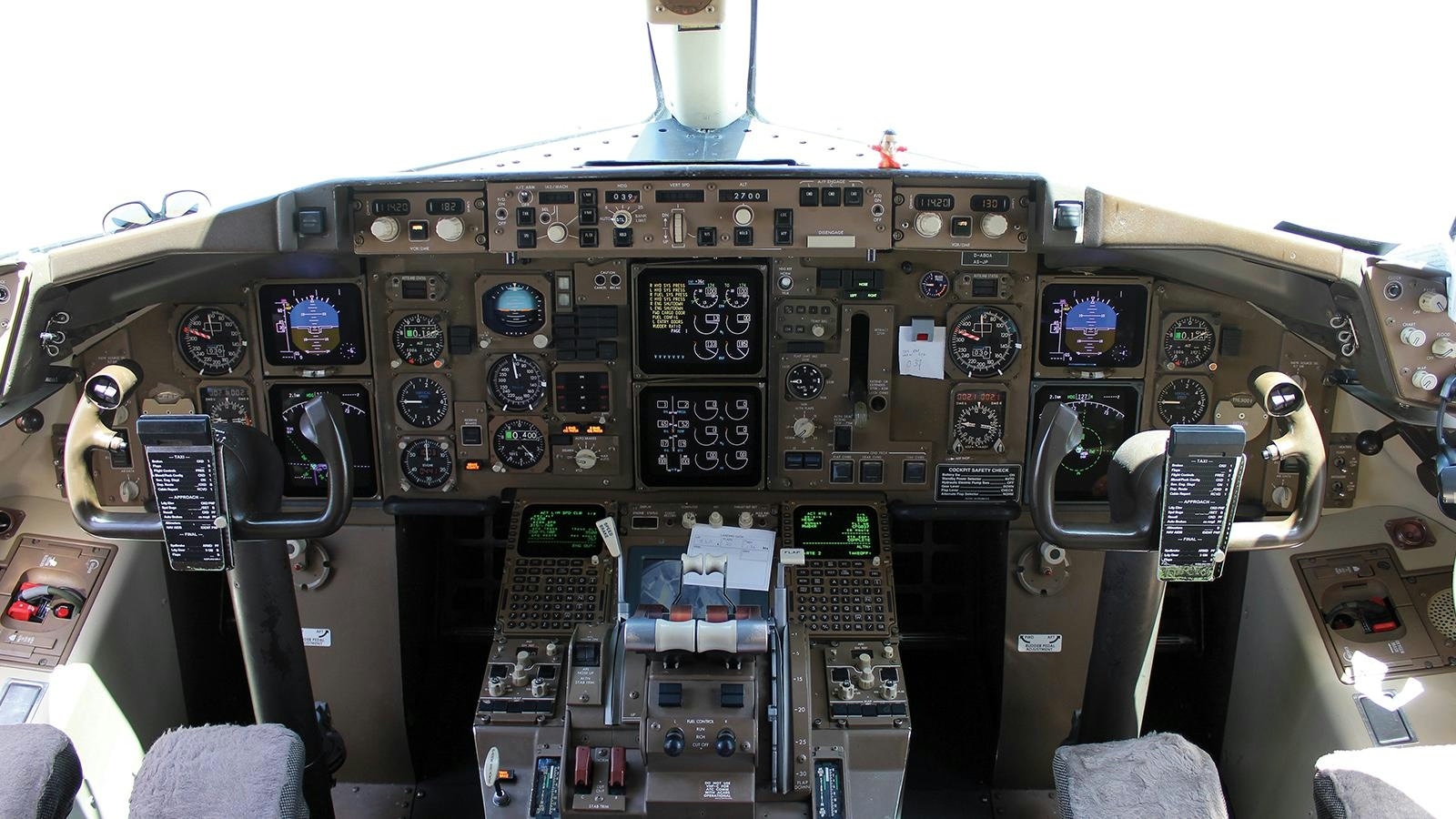
Students Develop AI Tool to Streamline Airline Onboarding
Innovating Airline Operations Through AI
In Hyderabad, a management student has pioneered an artificial intelligence tool aimed at transforming the onboarding process for new airline employees. The tool, named Onboardly, was developed by Sneha Khowala with assistance from Jash Lodhavia as part of the “AI in Business” course led by Dr. Daniel Ringel, assistant professor of Marketing for Data Science and AI at UNC Kenan-Flagler and Visiting Faculty at BITSoM. Drawing on her personal experience in airline operations, Sneha identified significant inefficiencies in the onboarding process, where fragmented information access often hampers new hires and places a repetitive burden on managers and human resources teams.
Sneha explained that airline onboarding is “highly fragmented and time intensive,” with new employees frequently struggling to locate the right information at the right time. This results in diminished productivity for both new hires and their supervisors. Routine coordination tasks, such as determining shift schedules or managing last-minute operational changes, often cause delays and confusion. Sneha recounted the challenges she faced, noting that she “often had to make multiple phone calls just to figure out who was on shift or who to contact for last minute operational changes like cargo loading.”
Consolidating Resources into a Conversational Platform
Within a span of two weeks, the team consolidated Air India’s dispersed onboarding materials—including standard operating procedures, safety manuals, HR policies, and internal documentation—into a unified conversational platform. Onboardly functions as a digital onboarding assistant, allowing new employees to pose role-specific questions and receive immediate, structured responses. This innovation is designed to reduce confusion and accelerate productivity by enabling employees to focus on their responsibilities rather than navigating complex systems or awaiting managerial input.
The tool incorporates advanced technologies such as retrieval augmented generation, role-based access controls, and a simulated enterprise knowledge base. It features login-based access, chat history, workflow explanations, and automated safety alerts. According to the developers, Onboardly has successfully reduced repetitive queries to HR and managers by 35 to 60 percent, shortened the time required for new hires to reach full productivity by nearly three weeks, and enhanced operational readiness by standardizing information access across teams.
Navigating Challenges and Market Dynamics
Developing an AI tool tailored for the aviation sector presents considerable challenges. Sneha and Jash have had to address the complexities of AI deployment while ensuring strict adherence to data privacy, security, and regulatory compliance—critical factors given the safety-sensitive nature of the industry. Sneha emphasized that compliance was integral to the tool’s design. Although the current academic prototype uses fabricated airline data, real-world implementation would rely exclusively on approved company manuals and policies, with role-based access controls restricting access to sensitive information.
The broader market environment introduces additional uncertainties. While some investors recognize the potential for AI-driven efficiencies in aviation, others remain cautious amid concerns about an AI bubble and the inflationary risks associated with widespread AI adoption. Competitors may respond by developing similar tools or proprietary solutions to maintain their competitive advantage. Furthermore, the technology sector in 2026 faces headwinds from geopolitical tensions affecting supply chains and fluctuating demand for AI technologies.
Despite these challenges, Onboardly exemplifies how targeted AI applications can address operational inefficiencies, offering a promising glimpse into the future of airline management.

Indonesia’s Danantara and Mandiri Partner with SMBC to Launch $800 Million Aviation Leasing Fund

Lagos Summit Brings Airlines, Lessors, and Banks Together to Redefine Industry

Iberia Introduces Aircraft Seats Made from Ocean Waste by RECARO
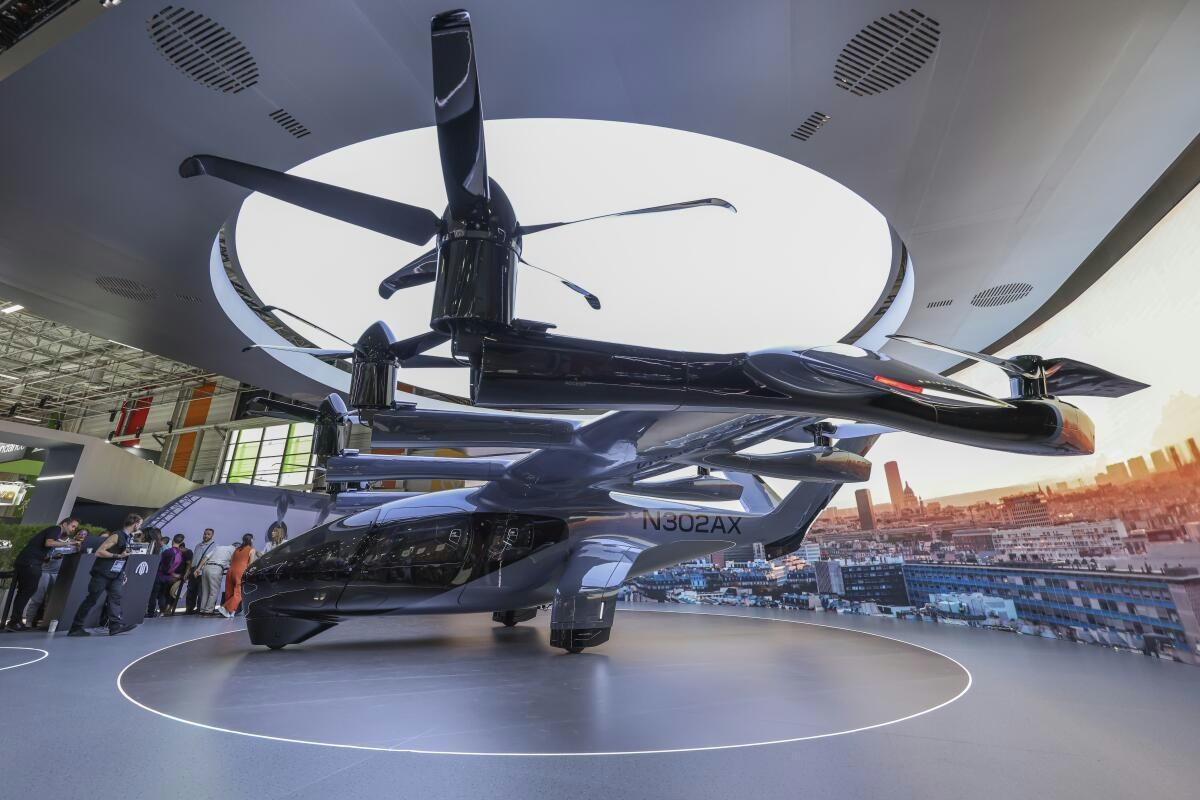
Archer Aviation’s Hopscotch Air Partnership and Its Impact on the Air Taxi Market
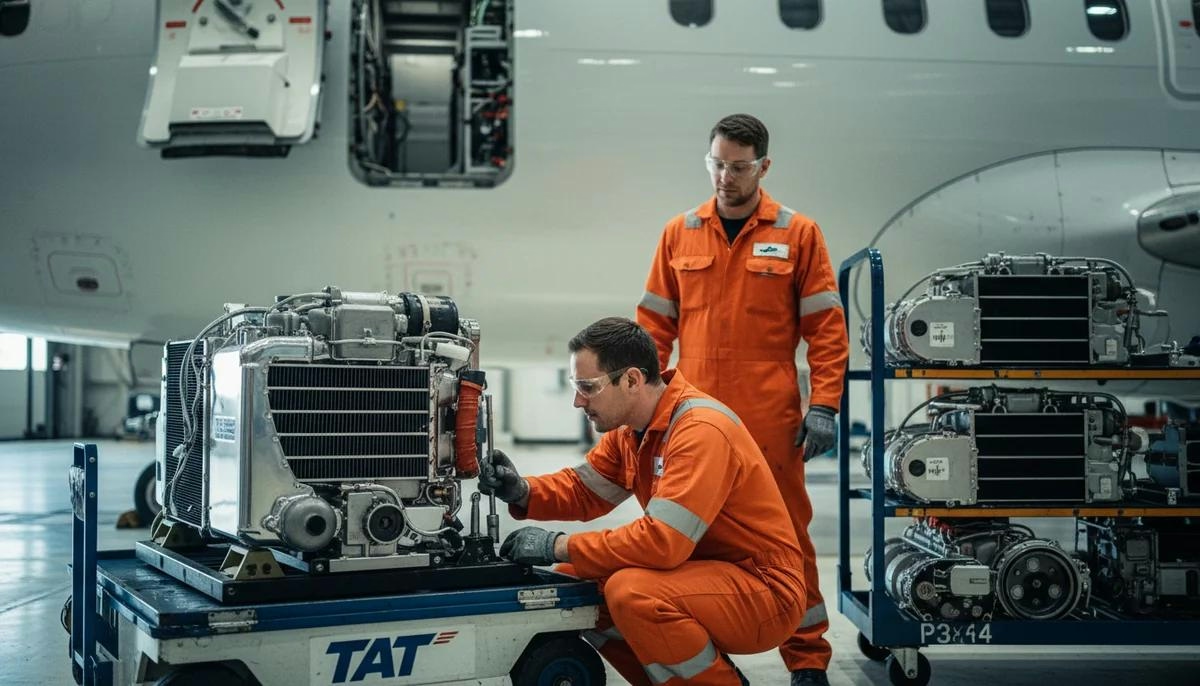
TAT Technologies’ Role in Aerospace and Defense Maintenance
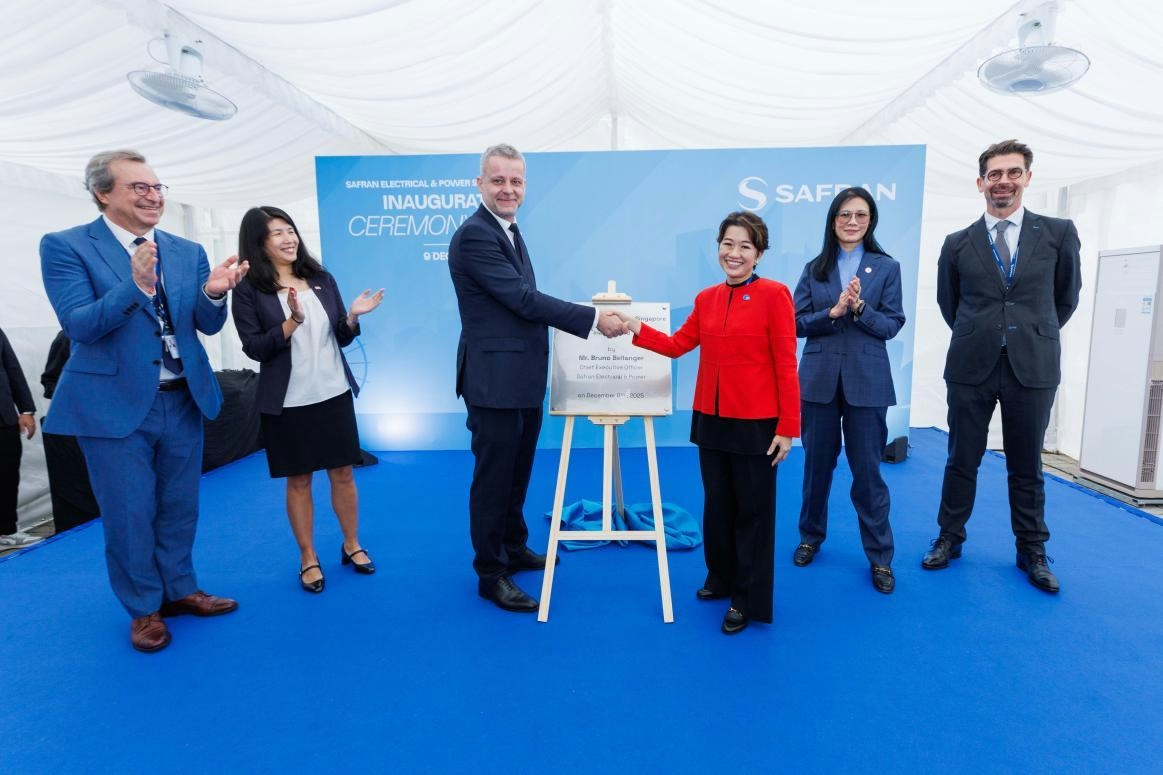
Precision Aviation Group Expands Safran Electrical & Power Repair Network to Five Facilities
ZeroAvia’s Electric Aircraft Engine Progresses Toward FAA Certification
Croatia Airlines Reports Strongest First Quarter Amid Rising Fuel Costs
Fidelity and AFG Collaborate on Aircraft Leasing and Acquisition for Nigerian Airlines
Air Côte d’Ivoire Obtains $62 Million Loan for MRO Center
