
Orchestrate AI insights into action

Trending
Categories
The Original Purpose of the Boeing 747 Beyond Passenger Travel
The Original Purpose of the Boeing 747 Beyond Passenger Travel
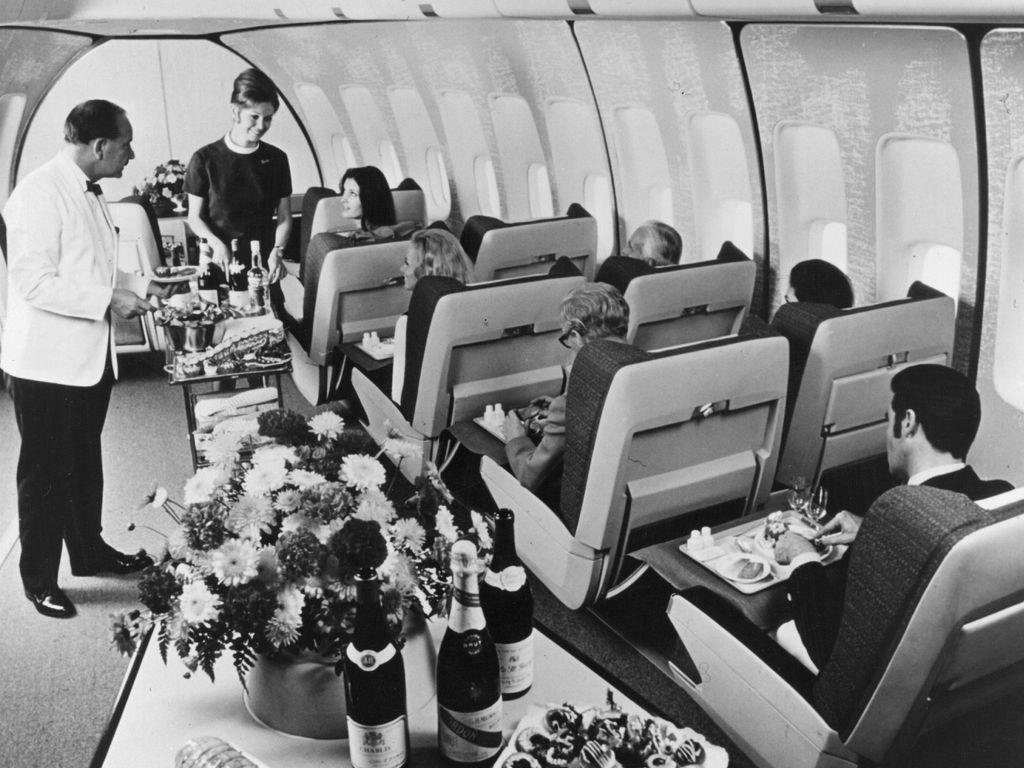
Before the Boeing 747 became an emblem of long-haul passenger travel and airborne luxury, its design was rooted in a fundamentally different mission. In the early 1960s, the United States Air Force initiated the CX-Heavy Logistics System (CX-HLS) competition, seeking a large strategic transport aircraft capable of moving oversized military cargo over great distances. Boeing, alongside Douglas, Lockheed, General Dynamics, and Martin Marietta, submitted proposals for this demanding requirement. Although Lockheed ultimately won the contract with what would become the C-5 Galaxy, Boeing’s work on the CX-HLS project was instrumental in shaping the 747’s distinctive features.
Military Origins and Design Innovations
One of the most iconic elements of the 747—the raised upper deck, commonly referred to as the “hump”—originated from these military specifications rather than passenger comfort considerations. By elevating the cockpit above the main deck, Boeing engineers created space for a front cargo door, enabling freight to be loaded directly through the nose of the aircraft. This design was a practical response to anticipated industry trends at the time, which suggested that supersonic jets would soon dominate passenger travel, potentially relegating subsonic aircraft like the 747 to cargo operations.
Boeing’s decision to retain these cargo-friendly features proved to be remarkably forward-looking. As airlines have gradually phased out the 747 in favor of more fuel-efficient twin-engine jets, the aircraft has maintained a significant presence in the global cargo market. Its versatility has also allowed it to serve in alternative roles beyond commercial aviation. Notably, the U.S. Air Force plans to deploy a Boeing 747 gifted by Qatar as Air Force One by July 4, 2026, using it as a temporary presidential aircraft until new replacements are introduced in 2028.
Legacy and Economic Challenges
The 747’s legacy is closely linked to Pan Am, the pioneering airline that played a pivotal role in its development and popularization. Today, there are ongoing efforts to revive the Pan Am brand, both as a cultural icon and as a potential full-service carrier, underscoring the enduring impact of the aircraft on aviation history.
However, operating such a large aircraft has become increasingly challenging from an economic standpoint. With oil prices exceeding $100 per barrel, the cost of fueling a Boeing 747 now surpasses $250,000 per flight. This steep expense has compelled airlines to reevaluate ticket pricing and operational strategies.
The transformation of the 747 from a military transport concept to a commercial and cargo aviation icon was guided by chief engineer Joe Sutter, often hailed as the “father of the 747.” Drawing on his extensive experience with earlier Boeing models such as the 707, 727, and 737, Sutter led one of the most ambitious aircraft programs in history, ensuring the 747’s adaptability and longevity.
Today, while its role as a passenger aircraft is diminishing, the Boeing 747 continues to serve vital functions worldwide, a testament to its innovative origins and versatile design.

Saudia Plans to Add 12 New Aircraft to Fleet in 2026

Floating Fleet AI Unveils Aviation Scheduling Platform at Aviation Festival Americas 2026

APATS 2026 to Address AI, Pilot Shortages, and Training Standards in Bangkok
Norse Atlantic Airways Offers Low-Cost Tickets with Conditions

Textron Expands Flight Test Capabilities
Titan Aviation Leasing Sells Boeing 767-300ERF to CAM
Saudi Arabia Explores Advanced Airspace and Operational Feasibility to Support Future Aviation

Egypt Invests in Aviation Modernization Through AI and IoT
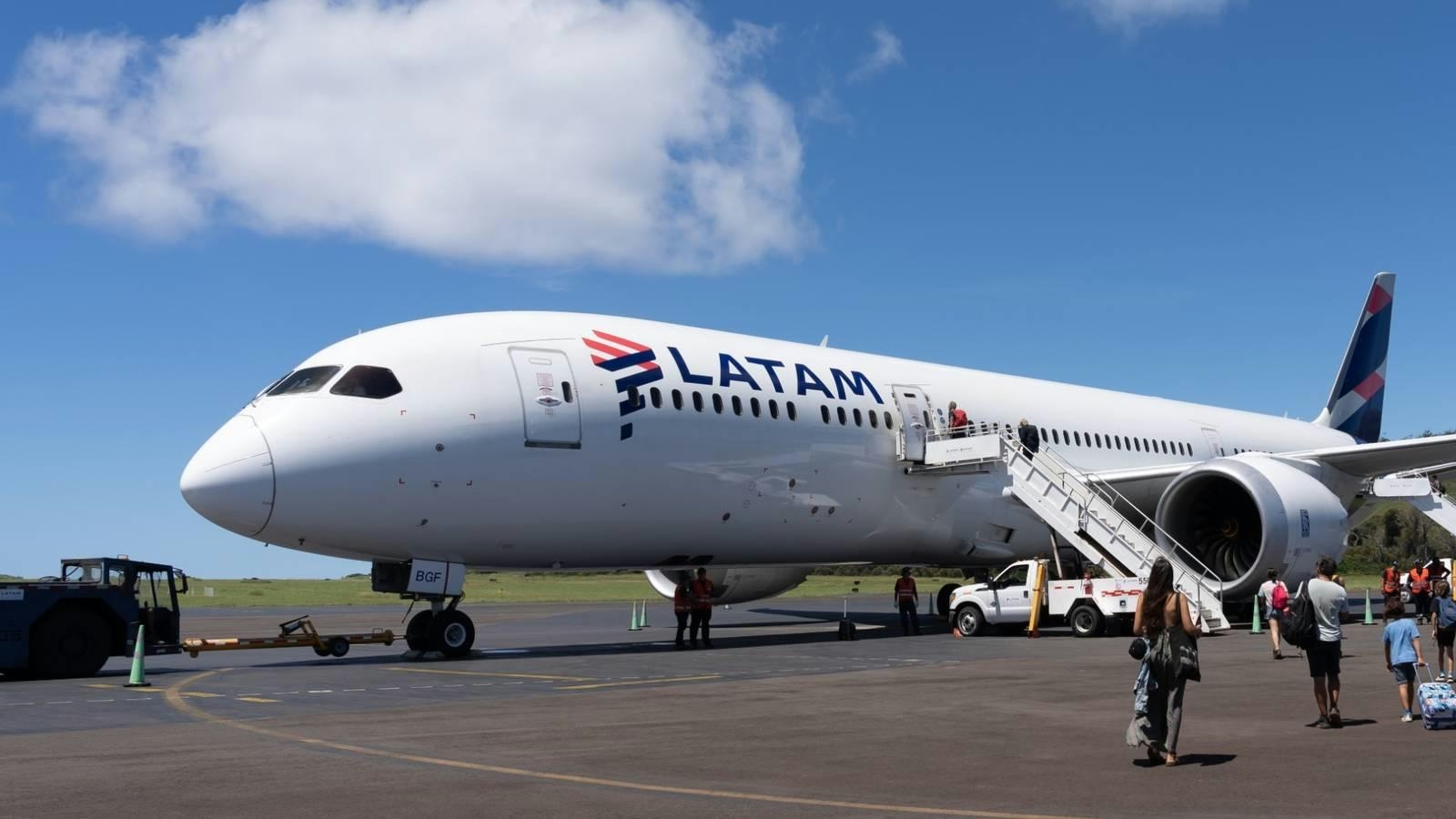
LATAM Boeing 787 Grounded at Remote Airport After Door Damaged by Airstairs
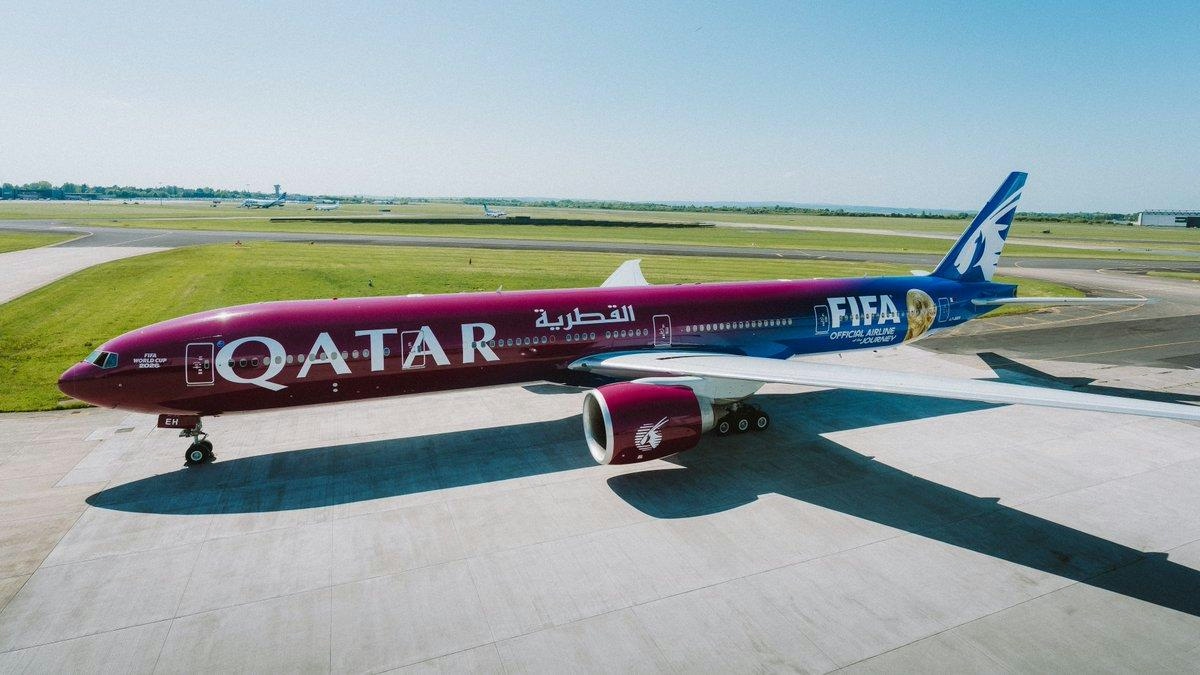
Qatar Airways Boosts Budapest-Paris Flights with New Wide-Body Jets Ahead of PSG Matches
