
AeroGenie — Ваш интеллектуальный второй пилот.

В тренде
Categories
FedEx Conducts First Intra-City Drone Delivery Trials in Bengaluru

FedEx Completes Pioneering Intra-City Drone Delivery Trials in Bengaluru
FedEx has successfully concluded India’s first intra-city drone delivery flight trials in Bengaluru, marking a notable advancement in the country’s urban logistics landscape. Conducted in partnership with the Indian Institute of Technology Madras under the FedEx SMART Centre research framework, the trials aimed to assess the operational efficiency of drone deliveries within metropolitan boundaries.
Efficiency Gains and Operational Insights
The FedEx SMART Centre’s analysis demonstrated that a typical 53-kilometer road journey in Bengaluru, which generally exceeds one hour, could be reduced to an aerial route of approximately 39 to 42 kilometers. During the trials, this translated into a one-way transit time of around 21 minutes, underscoring the potential for significant time savings in time-sensitive logistics operations. The drone flights successfully navigated complex airspace, including Airport Yellow and Red Zones, with all requisite approvals obtained from the Directorate General of Civil Aviation.
Nitin Navneet Tatiwala, vice president of marketing, customer experience, and air network for the Middle East, Indian Subcontinent, and Africa (MEISA) at FedEx, emphasized that these trials align with the broader objectives of the FedEx SMART Centre. Beyond drone delivery, the centre’s research agenda encompasses air cargo optimization, electric vehicle integration, and advanced demand forecasting. These initiatives collectively aim to develop resilient, sustainable, and future-ready supply chain ecosystems through collaboration with academia, industry stakeholders, and policymakers.
Challenges and Industry Implications
Despite the promising results, the widespread adoption of drone deliveries in India faces considerable challenges. Regulatory complexities, safety concerns, and the integration of emerging technologies into existing logistics frameworks remain significant barriers. Industry analysts caution that while drone deliveries have the potential to alleviate urban congestion and expedite delivery times, questions about scalability and cost-effectiveness persist.
FedEx’s progress is being closely monitored by competitors within the logistics sector, some of whom may accelerate their own drone initiatives or engage in regulatory lobbying to influence the competitive landscape. Concurrently, advancements in universal robotic systems and artificial intelligence-driven logistics solutions could provide FedEx with a strategic advantage. However, the ultimate success of these drone delivery trials will depend on the company’s ability to navigate immediate operational and regulatory challenges.
As FedEx and its partners continue to explore drone technology, the outcomes of the Bengaluru trials may play a pivotal role in shaping the future of urban logistics in India and potentially on a global scale.

Six Aircraft With the Largest Passenger Capacity
Narrow-Body Aircraft Lead Growth in Commercial Aircraft MRO Market as Wide-Body Segment Recovers
Boeing and Honeywell expand aftermarket parts access
FTE Airport Digital Transformation Power List EMEA 2026 Highlights Leading Airports
Airbus Achieves Milestone in A350F Cargo Door Development
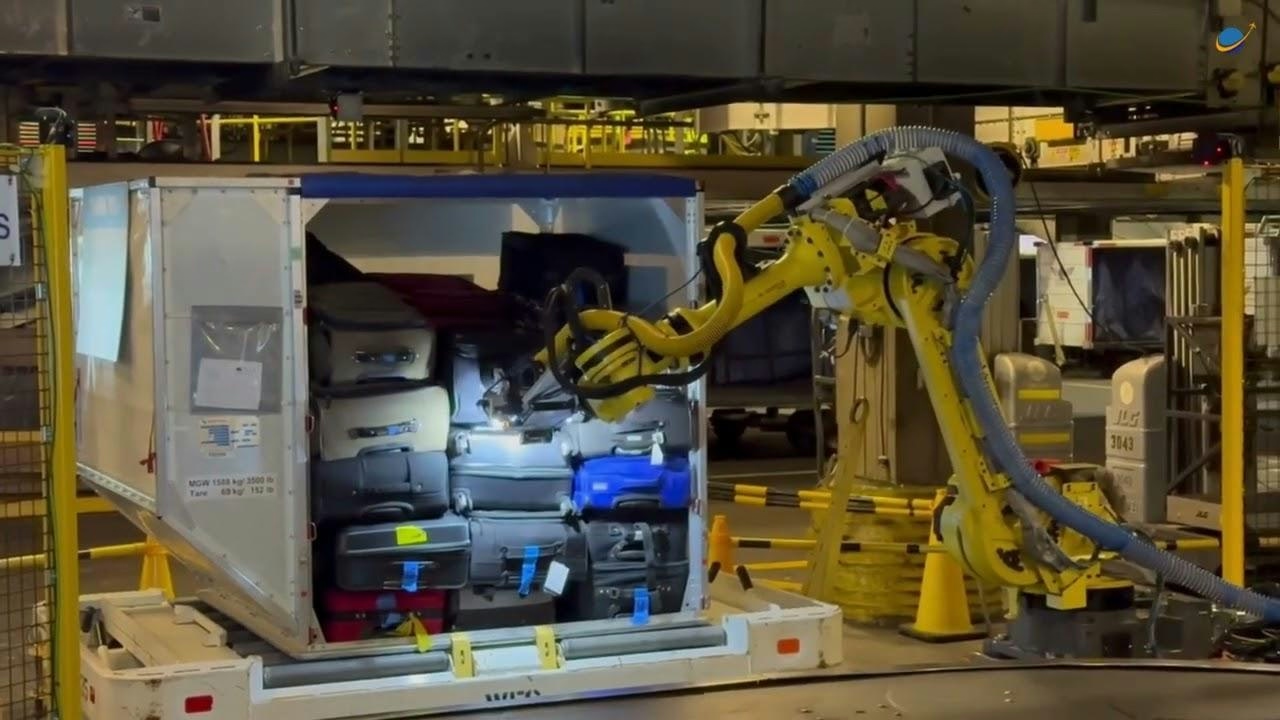
Aeroporti di Roma Implements Outsight’s Physical AI System at Fiumicino Airport
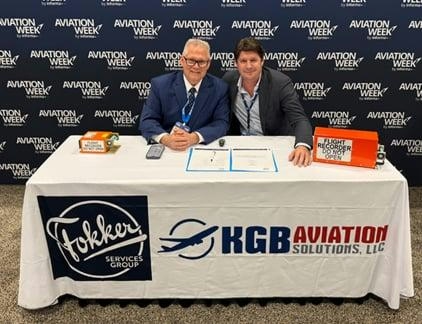
Fokker Expands Flight Recorder Line with SkyLog-25 Acquisition
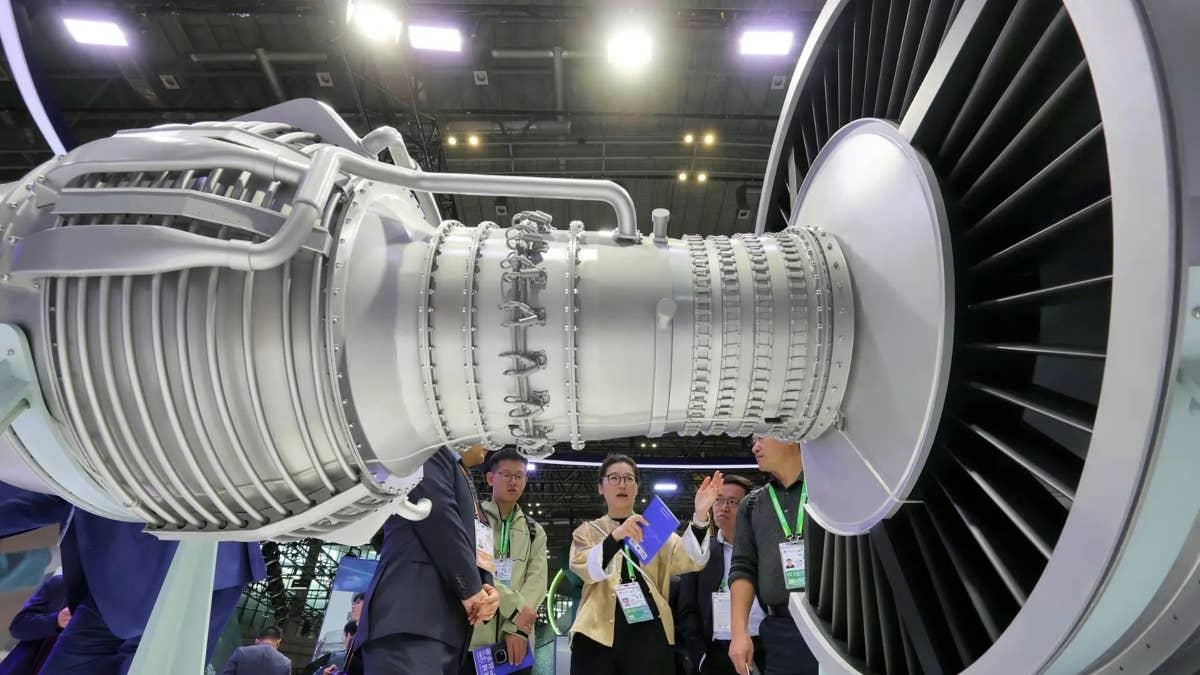
Safran Exceeds First-Quarter Jet Engine Revenue Estimates, Affirms Outlook

Alibaba Opens Qwen App to Partners in Collaboration with China Eastern Airlines
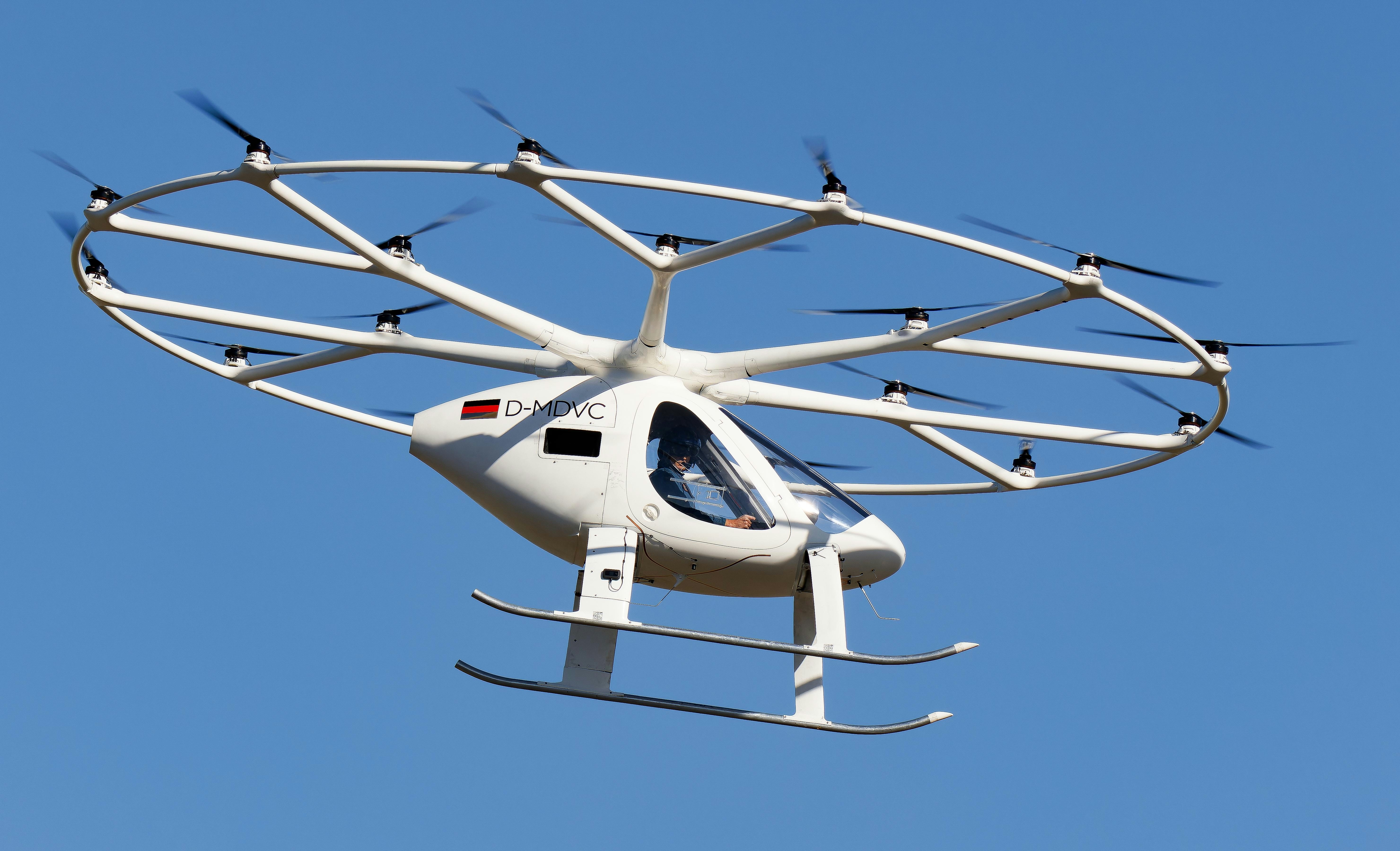
Gov. DeSantis Signs Florida Law Advancing Air Taxi and Urban Air Mobility
