图像

AeroGenie — 您的智能副驾驶。

问任何问题。分析一切。立即行动。

热门趋势

Categories

Acorn Capital Management and MTI Aviation Form Strategic Partnership

April 20, 2026By ePlane AI
Acorn Capital Management and MTI Aviation Form Strategic Partnership
0
0
Acorn Capital Management
MTI Aviation
Aerospace Mergers And Acquisitions

Acorn Capital Management Acquires Majority Stake in MTI Aviation

Acorn Capital Management, a private equity firm specializing in aerospace, defense, intelligence, and space sectors, has announced a strategic partnership with MTI Aviation through the acquisition of a majority interest in the company. MTI Aviation is a prominent provider of repair, overhaul, and parts distribution services, focusing on electro-mechanical, hydraulics, pneumatics, and power generation components. Its global clientele includes commercial airlines, maintenance, repair, and overhaul (MRO) providers, and aviation parts distributors.

The transaction, expected to close in the coming weeks, represents the first platform investment for Acorn’s Fund VI. Jorge Mejia, MTI’s founder and CEO, will retain a significant ownership stake and continue to lead the company. Greg Agnew, Partner at Acorn Capital Management, emphasized the strategic fit of MTI within Acorn’s portfolio, highlighting the company’s strong market position, technical expertise, and established customer relationships. He expressed optimism about collaborating with Mejia and the MTI team to support the company’s next phase of growth.

Strategic Growth and Industry Context

The partnership aims to provide MTI with enhanced resources and capital to accelerate expansion through both organic growth and targeted acquisitions. Mejia described the alliance as an exciting new chapter for MTI, noting that Acorn’s deep industry knowledge and shared vision for growth position the company well to build on its solid foundation and continue delivering high-quality solutions worldwide. Rick Nagel, Managing Partner at Acorn, added that MTI’s high-quality operations and strong corporate culture make it an ideal investment to complement Acorn’s existing portfolio companies focused on parts.

This development occurs amid a period of volatility in the aviation sector. Fluctuating aviation fuel prices, which surged sharply in March according to iFlightPlanner, continue to present operational challenges. The deal also comes at a time of increased scrutiny within the industry, as stakeholders evaluate the financial implications of partnerships following significant funding rounds, such as Vertical Aerospace’s recent capital raise for electric vertical takeoff and landing (eVTOL) aircraft. Competitive pressures are expected to intensify, with companies like Air Elite Network expanding their footprint in the business aviation market. Furthermore, geopolitical instability, underscored by recent warnings from industry leaders, may pose additional risks to the long-term success of the partnership.

Terms of the transaction have not been disclosed.

Company Profiles

Acorn Capital Management is a middle-market private equity firm exclusively focused on aerospace, defense, space, and intelligence sectors. The firm is known for its deep industry expertise and collaborative approach with management teams to build market-leading companies.

MTI Aviation specializes in component repair and parts sales for electro-mechanical, hydraulics, pneumatics, and power generation components, serving a diverse global customer base.

More news
Raytheon Delivers Next-Generation Jammer Pods for Australian EA-18G Growlers
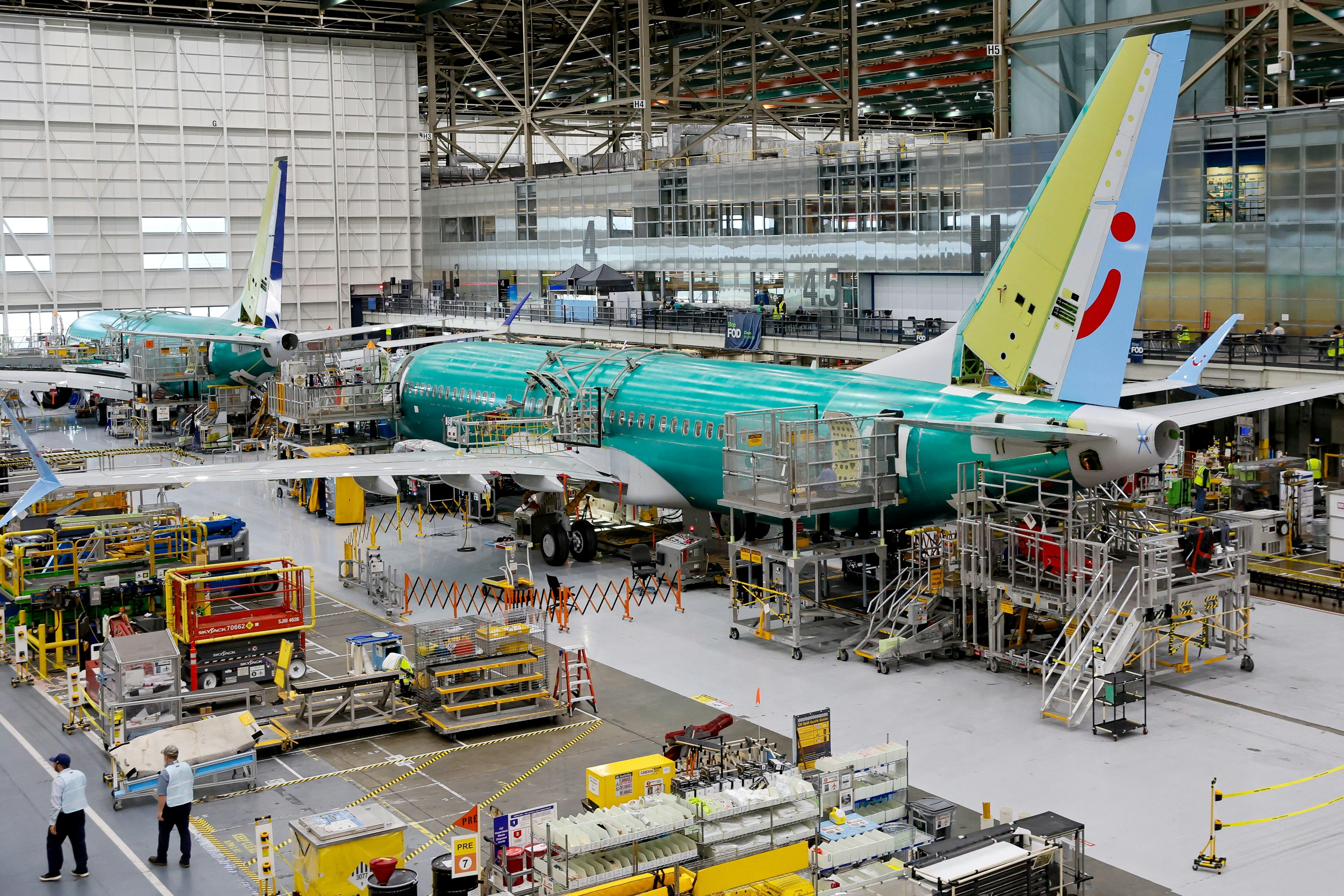
Raytheon Delivers Next-Generation Jammer Pods for Australian EA-18G Growlers

Raytheon Delivers Next-Generation Jammer Pods to Australian EA-18G Growlers Raytheon has announced the delivery of the first Next Generation Jammer (NGJ) pods to the Royal Australian Air Force (RAAF) for its EA-18G Growler fleet, marking a pivotal advancement in Australia’s electronic warfare capabilities. The initial shipment, which arrived ahead of schedule in September 2025, was publicly confirmed on April 20, 2026. This milestone follows the December 2025 sighting of an Australian Growler equipped with the ALQ-249 NGJ-MB (Mid-Band) pod. Enhancing Electronic Warfare Capabilities The NGJ-MB pod represents a significant technological upgrade, featuring active electronically scanned arrays that operate within the mid-band frequency range. This system offers enhanced jamming capabilities designed to neutralize adversary technologies more effectively across a broad spectrum of missions. Australia’s inclusion in the December 2024 production contract secured four pairs of these advanced pods, with further deliveries scheduled throughout 2026. Barbara Borgonovi, president of Naval Power at Raytheon, emphasized the importance of this delivery, stating, “This advanced technology will greatly enhance RAAF’s electronic warfare capabilities, safeguarding vital assets on its aircraft and more effectively neutralizing adversary technologies across a wide range of missions.” The NGJ program itself is a collaborative effort between the U.S. Navy and the RAAF, with Australia actively participating since 2017 in the development of both the NGJ-MB and NGJ-LB (Low Band) variants. This partnership was further strengthened in 2020, reflecting deepening bilateral defense ties. The RAAF remains the sole foreign operator of the EA-18G Growler, currently operating 12 aircraft through No. 6 Squadron based at RAAF Base Amberley. Replacing Legacy Systems and Addressing Integration Challenges The NGJ is intended to replace the aging AN/ALQ-99 Tactical Jamming System, which has been in service since 1972. The older system has faced increasing limitations, including interference with friendly radars, significant airframe load, and high crew workload, making it less suited to the demands of modern, network-centric warfare. The NGJ family consists of three variants—Mid Band (NGJ-MB), Low Band (NGJ-LB), and High Band (NGJ-HB)—each designed to target specific segments of the electromagnetic spectrum. Despite the promise of the NGJ pods, integrating them with existing EA-18G Growler systems presents notable challenges. Ensuring seamless compatibility with other electronic warfare assets and maintaining operational effectiveness against rapidly evolving threats will be critical to the system’s success. The introduction of the NGJ-MB is also expected to have broader implications for the global defense market, potentially driving increased demand for advanced electronic warfare solutions among allied nations. In response, competitors may accelerate the development of their own next-generation jamming technologies to counter the enhanced capabilities offered by Raytheon’s NGJ pods. As deliveries continue, the RAAF’s adoption of the NGJ-MB underscores Australia’s commitment to maintaining a technological edge in electronic warfare and highlights the growing importance of international collaboration in defense innovation.
Boeing Reports Smaller Loss as Aircraft Deliveries Increase, Anticipates 737 Max Certifications This Year

Boeing Reports Smaller Loss as Aircraft Deliveries Increase, Anticipates 737 Max Certifications This Year

Boeing Reports Smaller Loss as Aircraft Deliveries Increase Boeing has reported a narrower-than-expected loss for the first quarter of 2026, driven by a rise in aircraft deliveries and improved performance across its various business segments. The aerospace giant continues to navigate its recovery from several years of financial and operational difficulties, even as it contends with intensifying competition from Airbus and ongoing regulatory scrutiny surrounding its 737 Max program. First-Quarter Financial Performance In the first quarter, Boeing posted an adjusted loss per share of 20 cents, significantly better than analysts’ forecasts of an 83-cent loss, according to estimates compiled by LSEG. The company’s revenue increased by 14% year-over-year, reaching $22.22 billion and surpassing the anticipated $21.78 billion. The net loss narrowed substantially to $7 million, or 11 cents per share, compared to a $31 million loss, or 16 cents per share, in the same period last year. Boeing’s commercial aircraft division, the company’s largest segment, delivered 143 airplanes during the quarter, marking a 10% increase from the previous year. This unit generated $9.2 billion in revenue, up 13%, although it continued to operate at a loss. Production of the 737 Max jets has been ramped up to approximately 42 units per month. However, any further increases in output will require approval from the Federal Aviation Administration (FAA) following a high-profile fuselage door plug incident in January 2024. Focus on 737 Max Certifications Boeing reaffirmed its expectation to obtain certification for the long-delayed 737 Max 7 and Max 10 variants later this year. These models, representing the smallest and largest in the Max family, are scheduled for deliveries beginning in 2027. The certification process remains under intense regulatory scrutiny, and delays have allowed competitors, particularly Airbus, to capture additional market share. Competitive Pressures and Market Dynamics Despite Boeing’s improved financial results and increased deliveries, concerns linger regarding the pace of 737 Max certifications and ongoing production challenges. Airbus has been leveraging these setbacks by accelerating its own production schedules and intensifying marketing efforts, aiming to expand its presence in the commercial aircraft market further. Growth in Other Business Segments Boeing’s defense division also demonstrated robust growth, with revenue rising 21% to $7.6 billion. Meanwhile, the services segment experienced a 6% increase from 2025, reaching $5.37 billion in the first quarter. Leadership Perspective and Outlook Since assuming the role of CEO in August 2024, Kelly Ortberg has acknowledged the company’s recent difficulties but commended employees for their resilience. In a note to staff, Ortberg stated, “Though we’ve faced some challenges, I’m proud of how our team has pulled together and worked through them to keep us on plan for the year.” As Boeing strives to restore its reputation and stabilize operations, its ability to meet the 737 Max certification timeline and resolve production issues will remain under close observation by investors and industry competitors alike.
L2 Aviation Acquires Advance Aero

L2 Aviation Acquires Advance Aero

L2 Aviation Acquires Advance Aero to Enhance Manufacturing Capabilities L2 Aviation has announced the acquisition of Advance Aero, a precision machining and sheet metal fabrication specialist based in Mooresville, Indiana. This strategic move aims to bolster L2 Aviation’s vertical integration and expand its manufacturing capabilities, granting the company greater control over critical aspects of its supply chain. The acquisition is also intended to strengthen support for aircraft installation and kitting operations, enabling L2 Aviation to offer more comprehensive solutions to its global clientele. Strengthening Production and Integration Advance Aero brings decades of experience in aerospace-grade machining and fabrication, with a well-established reputation for quality, responsiveness, and technical expertise. Its proficiency in producing complex components and assemblies is expected to complement L2 Aviation’s growing manufacturing and integration framework. By incorporating Advance Aero’s capabilities, L2 Aviation seeks to enhance production efficiency and deliver turnkey solutions that meet the evolving demands of the aerospace sector. Following the acquisition, Advance Aero will be integrated into L2 Aviation’s manufacturing organization. While primarily focused on supporting internal programs, Advance Aero will continue to serve its existing customers. Integration efforts are already in progress, concentrating on harmonizing systems, processes, and quality standards across both companies. L2 Aviation has underscored the importance of maintaining operational continuity and performance throughout this transition. Challenges and Market Implications Despite the strategic benefits, the acquisition presents several challenges. L2 Aviation must navigate the complex regulatory environment of the aviation industry while managing the integration of operational and technological capabilities between the two firms. Addressing potential cultural and operational differences will be essential to ensuring a seamless transition and achieving the anticipated efficiencies. The market has responded with heightened interest in L2 Aviation, particularly as the company expands its presence in the rapidly evolving electric vertical takeoff and landing (eVTOL) sector. Industry analysts suggest that competitors, including Vertical Aerospace, may accelerate their research, development, and funding initiatives to maintain competitive positioning. The possibility of strategic partnerships or acquisitions by rival firms could also increase as companies seek to enhance their technological capabilities and market reach in response to L2 Aviation’s expanded footprint. The integration of Advance Aero is expected to reinforce L2 Aviation’s capacity to scale operations and support its ongoing commitment to domestic manufacturing. As both companies align their operations, L2 Aviation is positioning itself to deliver greater value to customers while navigating the complexities of a competitive and highly regulated industry.
JetBlue Updates A320 Cockpits with Airbus EEIS2 Displays

JetBlue Updates A320 Cockpits with Airbus EEIS2 Displays

JetBlue Advances A320 Cockpit Technology with Airbus EEIS2 Displays Fleet Modernization Amidst Industry Challenges Airbus has entered into an agreement with JetBlue to upgrade the cockpit display systems on 46 aircraft within the airline’s A320 fleet. This initiative, announced at MRO Americas, represents a key component of JetBlue’s broader fleet modernization and operational strategy. The installation of Enhanced Electronic Instrument System (EEIS2) displays aims to standardize the fleet’s cockpit environment while enhancing long-term performance and reliability. The EEIS2 upgrade replaces legacy cockpit displays with advanced high-resolution LCD technology, significantly improving the pilot interface and expanding system capabilities. Developed by Thales and integrated by Airbus, these new displays are designed to modernize older aircraft, ensuring their continued safety, efficiency, and operational viability. The system also supports future avionics enhancements, including satellite- and ground-based landing systems and improved weather radar functionality. These advancements are expected to provide pilots with clearer and more timely operational information, thereby strengthening situational awareness, particularly in congested airspace. Strategic Investment Amid Financial Pressures JetBlue has emphasized that this investment aligns with its JetForward strategy, which prioritizes operational dependability and maintaining high service standards. However, the upgrade occurs during a period of significant financial pressure for the airline and the wider discount carrier sector. Like many of its competitors, JetBlue is contending with elevated fuel costs and market overcapacity. In a recent effort to bolster liquidity, the airline secured $500 million in financing by pledging 22 Airbus jets as collateral, highlighting the financial headwinds it currently faces. Industry analysts remain cautious about JetBlue’s capacity to sustain such modernization efforts amid ongoing speculation about potential consolidation within the U.S. airline industry. Larger carriers, benefiting from stronger financial positions, are perceived as better equipped to navigate market volatility and may leverage their resources to outcompete smaller rivals. In response to these concerns, JetBlue’s CEO has publicly reassured employees that bankruptcy is not being considered, despite persistent rumors driven by rising operational expenses. Positioning for Future Competitiveness As the airline industry anticipates possible consolidation, JetBlue’s commitment to upgrading its fleet with EEIS2 displays signals a strategic effort to remain competitive and uphold service quality. The cockpit modernization is viewed as a foundational step toward integrating next-generation systems in accordance with the latest Federal Aviation Administration (FAA) roadmap. This approach aims to ensure that JetBlue’s aircraft remain efficient and viable within a rapidly evolving market landscape. While the EEIS2 upgrade promises operational and safety benefits, its ultimate success will depend on JetBlue’s ability to manage ongoing financial challenges and adapt to shifting industry dynamics, as competitors leverage their resources to respond to changing market conditions.
Joby Aviation President Didier Papadapoulos to Resign in July
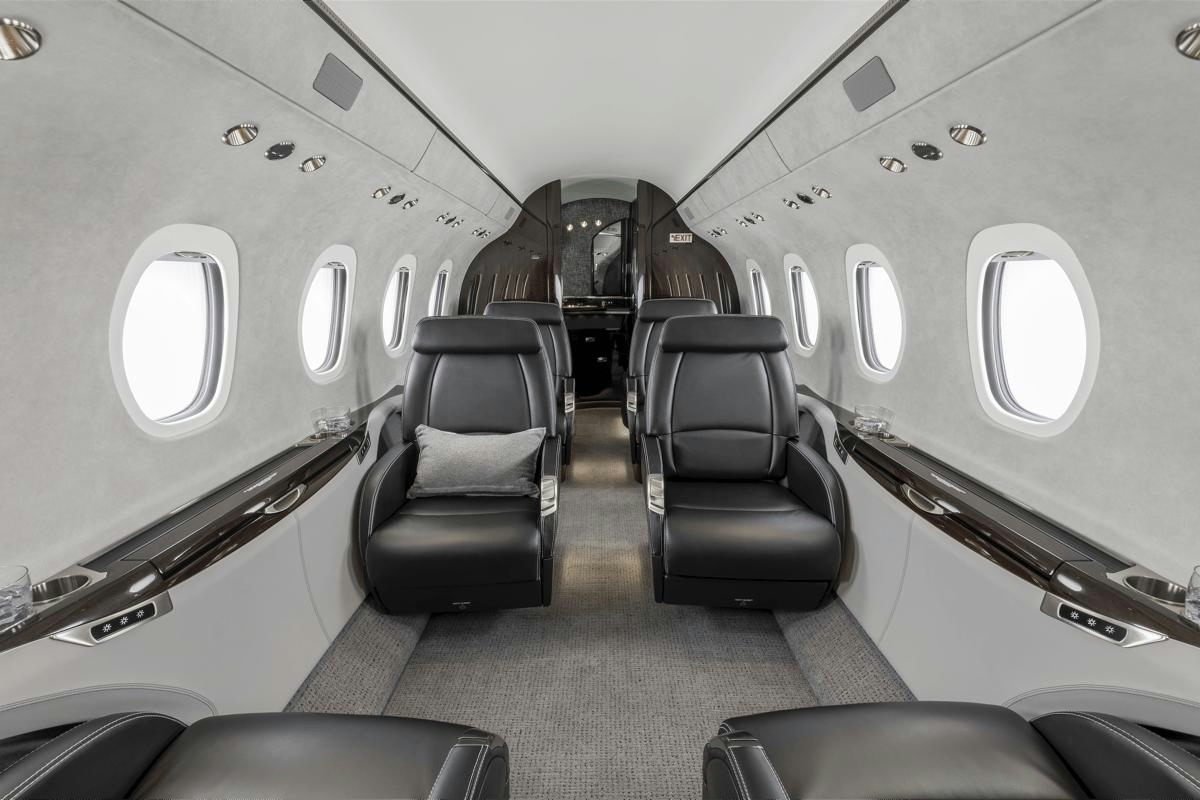
Joby Aviation President Didier Papadapoulos to Resign in July

Joby Aviation President Didier Papadapoulos to Resign in July 2026 Joby Aviation has announced that Didier Papadapoulos, the company’s president and head of aircraft development, will resign effective July 3, 2026. Papadapoulos has led Joby’s aircraft development efforts for five years and is stepping down to dedicate more time to his family and personal pursuits. The company emphasized that his departure is amicable and unrelated to any internal disagreements. Following his resignation, Papadapoulos is expected to continue supporting Joby in an advisory role under a forthcoming agreement. This leadership transition occurs during a critical period for the $8.78 billion company, whose shares currently trade at $8.97. Despite a 52% increase over the past year, the stock has declined 42% in the last six months. Market analysts suggest the stock is trading near its fair value. Challenges and Strategic Developments Papadapoulos’ departure coincides with a period of intensified scrutiny and competition for Joby Aviation. The company is embroiled in legal disputes with rival Archer Aviation, which has accused Joby of misrepresenting its operations and business relationships in China. Additionally, Joby is under investigation by the U.S. International Trade Commission for potential import violations. The company is also preparing to release its first-quarter 2026 financial results, which may further impact investor sentiment. Despite these challenges, Joby continues to advance its electric air taxi ambitions. Recently, the company announced a partnership with Air Space Intelligence (ASI) to integrate its electric vertical take-off and landing (eVTOL) aircraft into the U.S. National Airspace System. This collaboration will utilize ASI’s Flyways AI platform to optimize flight operations and enhance airspace integration. Joby also completed a series of demonstration flights across the San Francisco Bay Area as part of its 2026 Electric Skies Tour. Piloted by Andrea Pingitore, the aircraft flew from Oakland International Airport past the Golden Gate Bridge, highlighting the company’s technological progress. Furthermore, Joby’s first conforming aircraft, N547JX, has commenced flight testing at its Marina, California facility, marking a significant milestone ahead of planned Type Inspection Authorization testing in 2026. Competitive Landscape and Market Outlook The advanced air mobility sector remains highly competitive. Joby is collaborating with L3Harris Technologies to demonstrate uncrewed hybrid eVTOL capabilities for the U.S. Army, while facing competition from established aerospace firms such as Archer Aviation, Boeing, and Lockheed Martin Sikorsky. Analyst opinions on Joby’s stock are mixed. Canaccord Genuity has maintained a Hold rating with a $15.50 price target, while H.C. Wainwright continues to recommend a Buy rating at $18.00, citing progress in regulatory milestones. Cantor Fitzgerald rates the stock as Neutral. As Joby navigates leadership changes, regulatory challenges, and a competitive market environment, the company’s efforts to advance electric air taxi operations and secure regulatory approval remain central to investor and industry attention.
Luminar Orders Nine Citation Latitude Jets
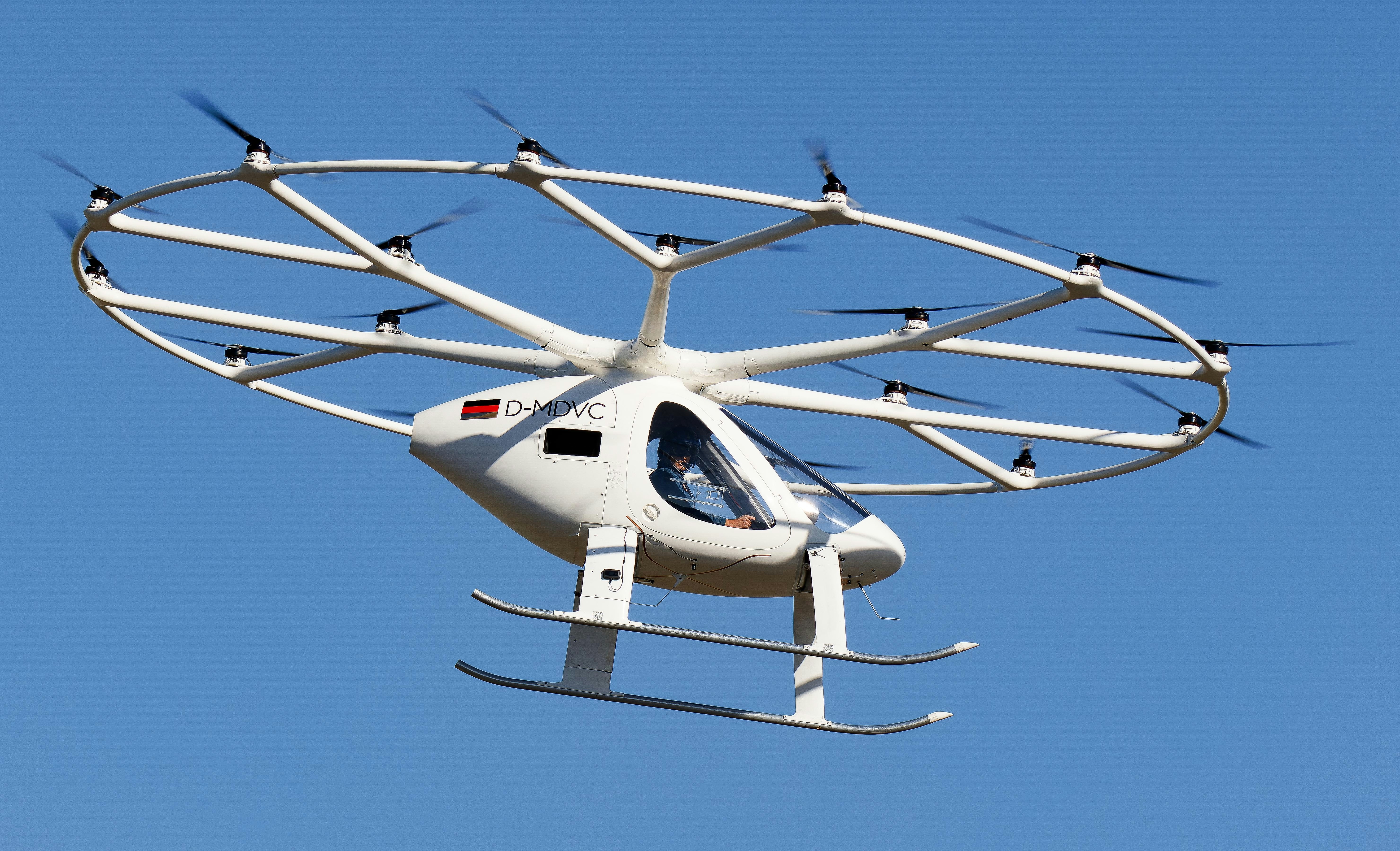
Luminar Orders Nine Citation Latitude Jets

Luminar Expands Fleet with Order of Nine Citation Latitude Jets Textron Aviation has confirmed a major purchase agreement with European private jet operator Luminar for nine Cessna Citation Latitude aircraft. Announced at AERO Friedrichshafen, this acquisition represents a strategic expansion of Luminar’s fleet to address the growing demand for private aviation services across Europe. Strategic Fleet Enhancement and Operational Versatility The midsize Citation Latitude was selected for its combination of range, operational efficiency, and passenger comfort. Its stand-up, flat-floor cabin accommodates up to nine passengers, making it suitable for a diverse range of missions. Luminar plans to utilize the new jets not only for corporate and private travel but also for air ambulance operations and specialized roles including intelligence, surveillance and reconnaissance (ISR), utility transport, aerial survey, flight inspection, and training. The aircraft’s range supports non-stop flights on routes such as Edinburgh to Larnaca, Riga to Tenerife, and Helsinki to San Sebastián, thereby enhancing operational flexibility. Deliveries are scheduled to commence later this year, marking a significant milestone in Luminar’s long-term growth strategy. The addition of the Citation Latitude is expected to strengthen the operator’s capacity to scale services while maintaining adaptability across various mission profiles. Luminar’s leadership has emphasized the importance of this acquisition in fleet planning, underscoring the company’s commitment to expanding capacity without compromising safety or service quality amid increasing regional demand. Challenges and Market Implications Integrating nine new Citation Latitude jets into Luminar’s existing operations will present logistical and operational challenges. The company must ensure seamless incorporation of the aircraft, provide adequate staffing, and deliver specialized training for crews to maintain high standards of customer satisfaction throughout the transition. Successfully managing these factors will be critical to preserving service reliability and quality. Luminar’s expansion is also expected to influence the competitive dynamics within the European charter market. Rival operators may respond by accelerating their own fleet upgrades or adjusting pricing strategies to maintain market share. Notably, competitors such as Bond have already expedited deliveries and placed additional aircraft orders in reaction to evolving market conditions. This heightened activity highlights the competitive nature of the sector and the strategic importance of fleet investments. The deal further underscores the strong presence of Cessna Citation aircraft in Europe, where over 850 jets are currently in operation. These aircraft support a wide array of activities, ranging from executive transport to critical medical missions and specialized aviation services, demonstrating their versatility and sustained relevance in the European market. As Luminar prepares to receive and integrate the new jets, industry observers and competitors will closely monitor the company’s ability to navigate operational challenges and respond to shifting market pressures.
DeSantis Announces State Funding for Vertiports to Support Urban Air Mobility
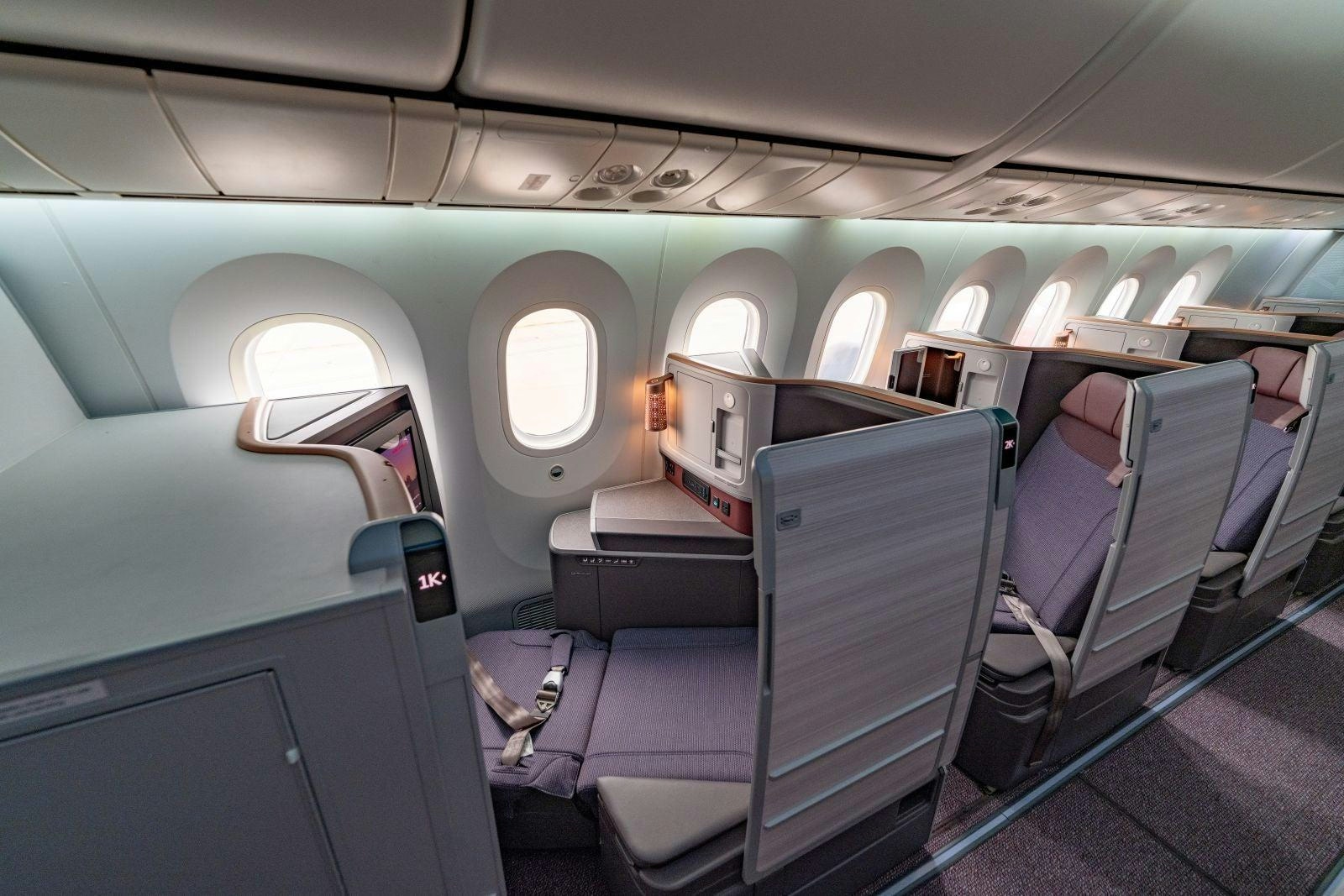
DeSantis Announces State Funding for Vertiports to Support Urban Air Mobility

DeSantis Announces State Funding for Vertiports to Support Urban Air Mobility Governor Ron DeSantis has enacted legislation that positions Florida as a national leader in urban air mobility by allocating state funds to support the development of vertiports—specialized hubs designed for battery-powered electric vertical take-off and landing (eVTOL) aircraft. These vertiports aim to provide commuters with a novel aerial alternative to congested roadways, marking a significant step toward integrating advanced aviation technology into everyday transportation. Legislative Framework and State Support The newly signed bill, HB 1093, authorizes the Florida Department of Transportation (FDOT) to finance up to 100% of public vertiport projects when federal funding is unavailable, or cover up to 80% of the nonfederal share if federal support is secured. Passed unanimously by both legislative chambers, the measure will take effect on July 1. This funding mechanism is designed to accelerate the establishment of vertiports across the state, facilitating the deployment of eVTOL aircraft as a practical mode of urban transit. Florida Transportation Secretary Jared Perdue has been a vocal advocate for this initiative, drawing parallels between the emerging technology and futuristic visions depicted in popular culture such as “The Jetsons” and “The Fifth Element.” While eVTOL technology remains in its infancy—currently limited to certified two-seater electric planes primarily used for training—state officials emphasize the long-term potential of these aircraft to transform urban mobility. Representative Leonard Spencer (D-Gotha), the bill’s sponsor, described the legislation as a “forward-looking infrastructure bill” that will ensure Florida’s continued leadership in aerospace and aviation innovation. Advancing Urban Air Mobility Amid Challenges The push for urban air mobility in Florida reflects growing interest from both public agencies and private enterprises. Last year, Governor DeSantis and Secretary Perdue attended the Paris Air Show, where they examined eVTOL prototypes and subsequently announced plans to utilize the SunTrax test facility in Polk County for developing an aerial highway network. Perdue highlighted the importance of reducing regulatory barriers to enable private sector participation and profitability, describing the initiative as a new opportunity for Florida residents. Despite the enthusiasm, significant challenges remain. Integrating eVTOL aircraft into existing airspace systems, overcoming regulatory complexities, and ensuring the technological maturity of these vehicles are critical hurdles that must be addressed. The legislation does not specify a fixed funding amount but grants FDOT the flexibility to allocate resources within its existing work program as necessary. The market response to Florida’s commitment is expected to be robust, potentially attracting increased investment in urban air mobility infrastructure. Major corporations such as Uber and Amazon may accelerate their own vertiport projects or form strategic partnerships, intensifying competition in the sector. Companies like Vertical Aerospace, which recently secured additional capital, are also anticipated to expand their efforts in the eVTOL market. Governor DeSantis, whose interest in the technology was piqued following the Paris Air Show, acknowledged both the promise and the uncertainties surrounding urban air mobility. He emphasized the importance of collaboration between the industry and state facilities like SunTrax to foster innovation. Last year, DeSantis also signed a comprehensive transportation package mandating FDOT to develop an advanced air mobility plan in coordination with the Department of Commerce and to incorporate aviation technology advancements into its annual work program. As Florida accelerates its initiatives, the state is poised to play a pivotal role in shaping the future landscape of urban transportation.
Air India Accelerates Cabin Upgrade with RECARO Seat Retrofit

Air India Accelerates Cabin Upgrade with RECARO Seat Retrofit

Air India Accelerates Cabin Upgrade with RECARO Seat Retrofit Air India has embarked on an ambitious retrofit programme in partnership with RECARO Aircraft Seating to enhance the cabin experience across its Boeing 787-8 fleet. The initiative involves the installation of RECARO’s PL3530 seats in premium economy and CL3710 seats in economy class, both tailored to Air India’s specifications with a strong emphasis on passenger comfort and functionality. This comprehensive upgrade aims to bring the airline’s older 787-8 aircraft in line with the cabin standards of its newer Boeing 787-9 fleet. Enhancing Passenger Comfort and Operational Consistency The new seats feature improved ergonomics, increased recline, adjustable headrests, and integrated charging ports for personal electronic devices, reflecting modern passenger expectations. The retrofit will encompass 26 aircraft, with nearly 6,000 seats to be replaced across the 787-8 fleet. The completion of the first aircraft marks a significant milestone in the programme’s rollout, signalling Air India’s commitment to elevating its onboard product. Standardising the cabin across its wide-body fleet is expected to streamline maintenance processes and provide a more uniform passenger experience. The same RECARO seat models are already operational on Air India’s Boeing 787-9 aircraft, reinforcing the airline’s strategy to harmonise its fleet interiors. Challenges and Industry Context Despite the clear benefits, the retrofit programme presents considerable challenges. Air India must manage substantial retrofit costs and navigate the logistical complexities of coordinating installations across multiple aircraft. Nevertheless, the airline anticipates that these investments will enhance passenger satisfaction and bolster its brand image, thereby improving its competitive positioning in the international aviation market. This upgrade aligns with a broader industry trend where carriers seek to modernise cabin interiors while maintaining operational efficiency. RECARO’s lightweight seating designs, developed around the company’s “magic triangle” of weight, comfort, and ergonomics, offer potential fuel savings alongside improved passenger comfort. The PL3530 seat is positioned as a premium product focused on enhanced comfort, whereas the CL3710 is designed to optimise space utilisation in economy cabins. Market Implications and Competitive Dynamics Air India’s move may prompt responses from domestic competitors such as IndiGo and SpiceJet, who might consider similar cabin enhancements or alternatively reinforce cost-cutting measures to sustain competitive pricing. Meanwhile, RECARO’s expansion into premium seating intensifies competition within the aircraft seating market, as new entrants like Expliseat introduce innovative lightweight solutions and vie for market share. Ultimately, Air India’s collaboration with RECARO highlights its dedication to fleet modernisation and delivering a consistent, high-quality passenger experience, even as it contends with the financial and operational demands of a large-scale retrofit programme.
Norway Advances Aviation with Hybrid-Electric Aircraft Trials
Norway Advances Aviation with Hybrid-Electric Aircraft Trials

Norway Advances Aviation with Hybrid-Electric Aircraft Trials Norway is positioning itself at the forefront of sustainable aviation through the launch of hybrid-electric aircraft trials at its government-supported international test arena. This initiative, led by Avinor—the state-owned airport operator—and the Civil Aviation Authority of Norway, aims to accelerate the development, regulation, and deployment of zero- and low-emission aircraft technologies, marking a significant step toward decarbonising the aviation sector. Strategic Development and Expanded Demonstrations The international test arena serves as a critical component of Norway’s long-term strategy to transition its aviation industry toward zero-emission operations. By leveraging the country’s extensive network of airports and diverse airspace, the arena provides a real-world environment to evaluate emerging technologies such as hybrid-electric and electric flight systems under operational conditions. In April 2026, Avinor and the Civil Aviation Authority initiated a second major test project focused on hybrid-electric aircraft. This phase features demonstration flights conducted by Bristow Group and the US-based company Electra, showcasing a hybrid-electric ultra-short takeoff and landing (Ultra-STOL) aircraft. Designed to operate from extremely short runways, this aircraft has the potential to significantly enhance connectivity for Norway’s remote and geographically challenging regions. Regulatory Innovation and Operational Challenges The trials are conducted within Norway’s regulatory sandbox, a framework established to safely assess innovative aviation technologies. This sandbox enables operators to test new aircraft capabilities and operational concepts—including flights from unconventional locations such as short runways, parking lots, and field sites—while adhering to stringent safety and regulatory standards. The controlled environment also facilitates the collection of critical data on emissions, operational efficiency, and scalability across Norway’s varied regional contexts. Despite the promise of these trials, several challenges remain. Infrastructure adaptation, regulatory approval, and market readiness are key hurdles that must be addressed. Nevertheless, the initiative has garnered growing interest from aviation stakeholders eager to invest in sustainable technologies. Industry competitors are accelerating their own development of hybrid-electric and electric aircraft to maintain competitiveness. The partnership between Bristow and Electra is particularly focused on evaluating operational, infrastructural, and regulatory factors to enable broader adoption of these technologies. Enhancing Regional Connectivity and Industry Collaboration The hybrid-electric Ultra-STOL demonstrations aim to illustrate how new propulsion systems can transform regional mobility in a country characterized by fjords, islands, and mountainous terrain. These technologies promise to reduce travel times and emissions, supporting Norway’s commitment to decreasing reliance on fossil fuels in domestic aviation. Officially launched in April 2024, the international test arena provides manufacturers, developers, and operators with a collaborative platform to test infrastructure, evaluate airspace integration, and co-design regulatory pathways for next-generation aircraft. Concurrently, companies such as Honeywell and Odys are developing anti-drone platforms tailored for hybrid-electric vertical takeoff and landing (VTOL) aircraft, further expanding the ecosystem of sustainable aviation solutions. Building on Early Electric Aviation Experience Prior to the current hybrid-electric trials, Norway completed its first electric aviation test project in early 2026, which yielded valuable insights that continue to inform ongoing efforts. As Norway advances its test arena and regulatory frameworks, it remains a global leader in the transition toward cleaner, more efficient air travel.
CADA/26 Highlights Aviation Digitalization in Central Asia

CADA/26 Highlights Aviation Digitalization in Central Asia

CADA/26 Highlights Aviation Digitalization in Central Asia The Central Asia Digital Aviation conference, CADA/26, convened on April 21 in Almaty, drawing over 200 professionals representing nearly 80 companies from 18 countries. The event reaffirmed its role as a critical platform for advancing digital transformation within the region’s aviation sector. Airlines, airports, travel technology firms, and solution providers engaged in focused discussions aimed at shaping the future of aviation in Central Asia through practical, business-oriented dialogue. Embracing Digital Infrastructure Amidst Sector Growth As the aviation industry in Central Asia experiences rapid expansion, the conference emphasized that growth alone is insufficient to sustain long-term development. Instead, the sector’s future depends on establishing a robust digital infrastructure that integrates airline retailing, revenue management, IT resilience, and enhanced passenger experiences. This strategic imperative aligns closely with Kazakhstan’s national priorities, where President Kassym-Jomart Tokayev has identified transport and aviation digitalization as essential to transforming the country into a logistics hub for Eurasia. The government’s designation of 2026 as the Year of Digitalization and Artificial Intelligence further underscores the importance of these initiatives. Despite the momentum, significant challenges remain. Effective data coordination across diverse systems and stakeholders was a recurring theme, reflecting insights from SITA’s 2025 Air Transport IT Insights report. As airlines and airports invest heavily in technology to improve data integration and operational efficiency, competitive dynamics are evolving. Industry players are increasingly developing proprietary technologies to secure market advantages, while digitalization is also catalyzing new route development and strategic partnerships. These trends mirror global examples such as Vietnam Airlines’ network expansion and Dublin Airport’s efforts to enhance Ireland’s position as a tourism and business gateway. Comprehensive Agenda and Industry Perspectives CADA/26’s program was organized into four sessions that spanned the full spectrum of digital aviation, including airline operations, retailing, airport systems, and travel distribution. The conference commenced with a welcome address from Aldiyar Kabdolda of the Almaty Tourism Bureau, setting a pragmatic and business-focused tone. Maxim Pyadushkin, Chief Editor of Central Asia+ Aero, delivered an in-depth overview of the regional aviation market, outlining key growth drivers, structural challenges, and emerging opportunities. A central focus of the event was revenue optimization and the transformation of distribution channels. Richard Cooke, Vice President of Business Development at Accelya, provided an analysis of the practical implementation of New Distribution Capability (NDC) frameworks in emerging markets. Cooke highlighted the value of the conference as a rare opportunity for direct, high-quality engagement among airline customers, facilitating conversations that would otherwise require months to coordinate across the region. From the airline perspective, Zhanna Shayakhmetova, Vice President of Marketing & Sales at Air Astana, shared insights into the company’s digital transformation efforts in sales and marketing, emphasizing customer engagement and channel strategy. Emin Emiroglu, Regional Director at Sabre, discussed the evolution toward modern airline retailing models, focusing on Offers & Orders frameworks and their commercial impact. Additionally, Aliya Bazhenova, Marketing Manager at FlyArystan, underscored the significance of digital marketing in promoting self-service adoption and influencing passenger digital behavior. As Central Asia’s aviation leaders confront the complexities of digital transformation, CADA/26 provided a collaborative forum to explore actionable solutions. The event positioned the region to advance toward a more connected, resilient, and digitally enabled aviation future.
line