
AeroGenie — 您的智能副驾驶。

热门趋势
Categories
Chinese Team Develops First Flight Control Software for Bamboo Drones
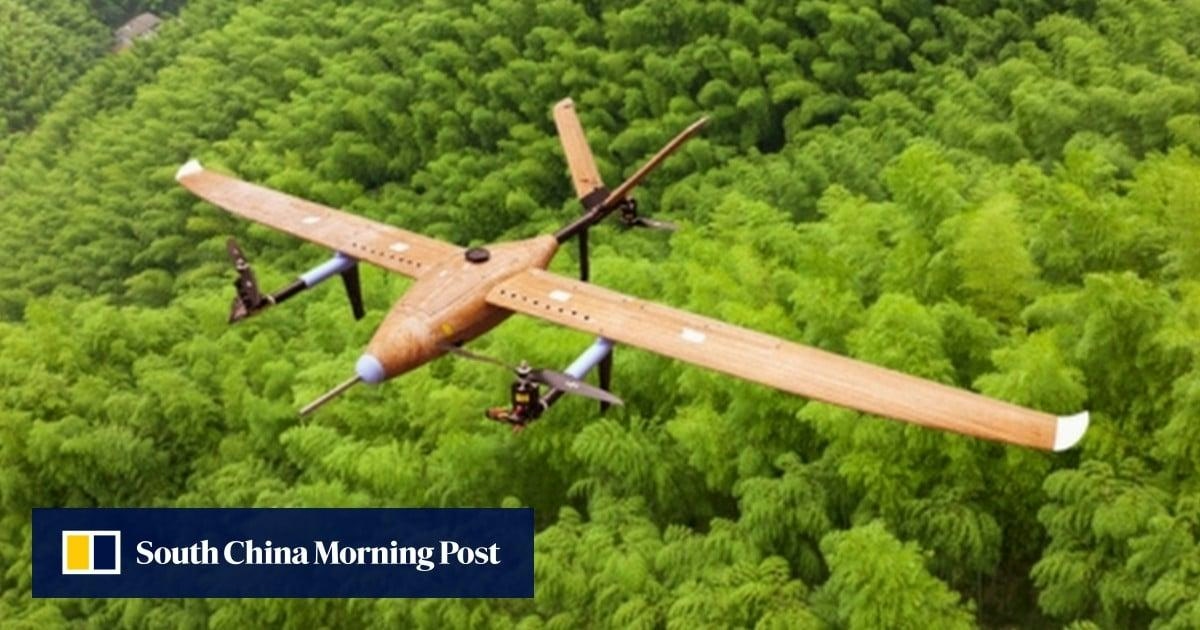
Chinese Researchers Develop First Flight Control Software for Bamboo Drones
A team at Northwestern Polytechnical University’s School of Civil Aviation in China has announced the creation of what they describe as the world’s first open-source flight control system specifically designed for bamboo-frame drones. This development represents a significant stride toward producing low-cost, environmentally sustainable unmanned aerial vehicles (UAVs), addressing the technical challenges associated with integrating natural materials like bamboo into high-performance drone frameworks.
Engineering Innovations for Bamboo-Based UAVs
Traditional UAVs typically utilize composite materials, but bamboo airframes introduce distinct engineering complexities. The natural structure of bamboo generates low-frequency vibrations, generally between 8 and 20 hertz, which conventional flight controllers are not equipped to handle effectively. The research team detailed in a paper published on February 28 in the journal Heilongjiang Science that existing commercial flight controllers tend to be either closed-source and inflexible or open-source but inadequately adapted to meet local development requirements. These limitations have impeded the wider industrial adoption of bamboo-based drones.
To address these issues, the researchers engineered a bespoke flight control board featuring an industrial-grade chip and a dual inertial measurement unit system. Crucially, they redesigned the control algorithms to accommodate the unique structural properties of bamboo. By refining an extended Kalman filter and exploiting bamboo’s natural vibration-damping qualities, the new system reduces control latency from 15–20 milliseconds to approximately 8–10 milliseconds. This improvement significantly enhances the drone’s responsiveness and stability during flight.
Geopolitical Context and Security Concerns
The introduction of this bamboo drone flight control system occurs amid intensified global scrutiny regarding the security implications of Chinese drone technology. The extensive deployment of Chinese-manufactured drones in both civilian and military spheres has raised concerns about data privacy and potential cybersecurity risks. Recent events, including the strategic vulnerabilities exposed by Chinese drones in Israel, have heightened these apprehensions.
In response, several nations are reassessing their procurement policies. The United States, for instance, is considering legislation such as the American Security Robotics Act, which aims to restrict federal acquisitions of drones from companies linked to the Chinese military. Concurrently, international competitors are accelerating the development of more secure and autonomous flight control technologies. Notably, Mitsubishi Heavy Industries and Shield AI have recently demonstrated the successful integration of advanced autonomy software in Japan, signaling a broader shift toward domestically controlled UAV systems.
China’s advancement in bamboo drone flight control technology thus underscores both the promise of sustainable innovation and the complex geopolitical dynamics influencing the future of unmanned aerial vehicles. The intersection of technological progress and security considerations is poised to shape not only the adoption of bamboo-based drones but also the overall direction of the global drone industry.
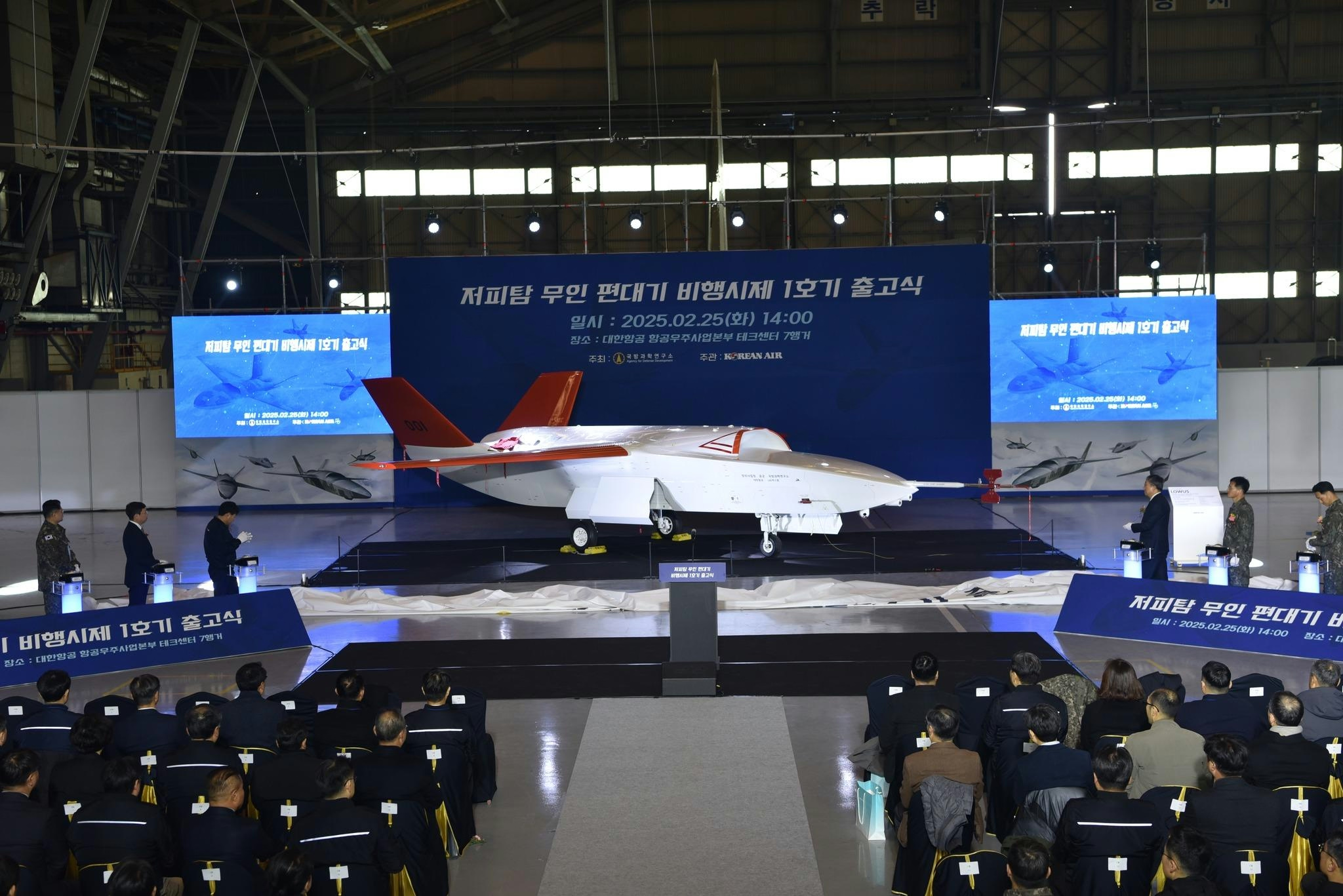
South Korea’s Busan Invests $145 Million in UAV Manufacturing Facility

Shein Partners with DHL to Use Sustainable Aviation Fuel
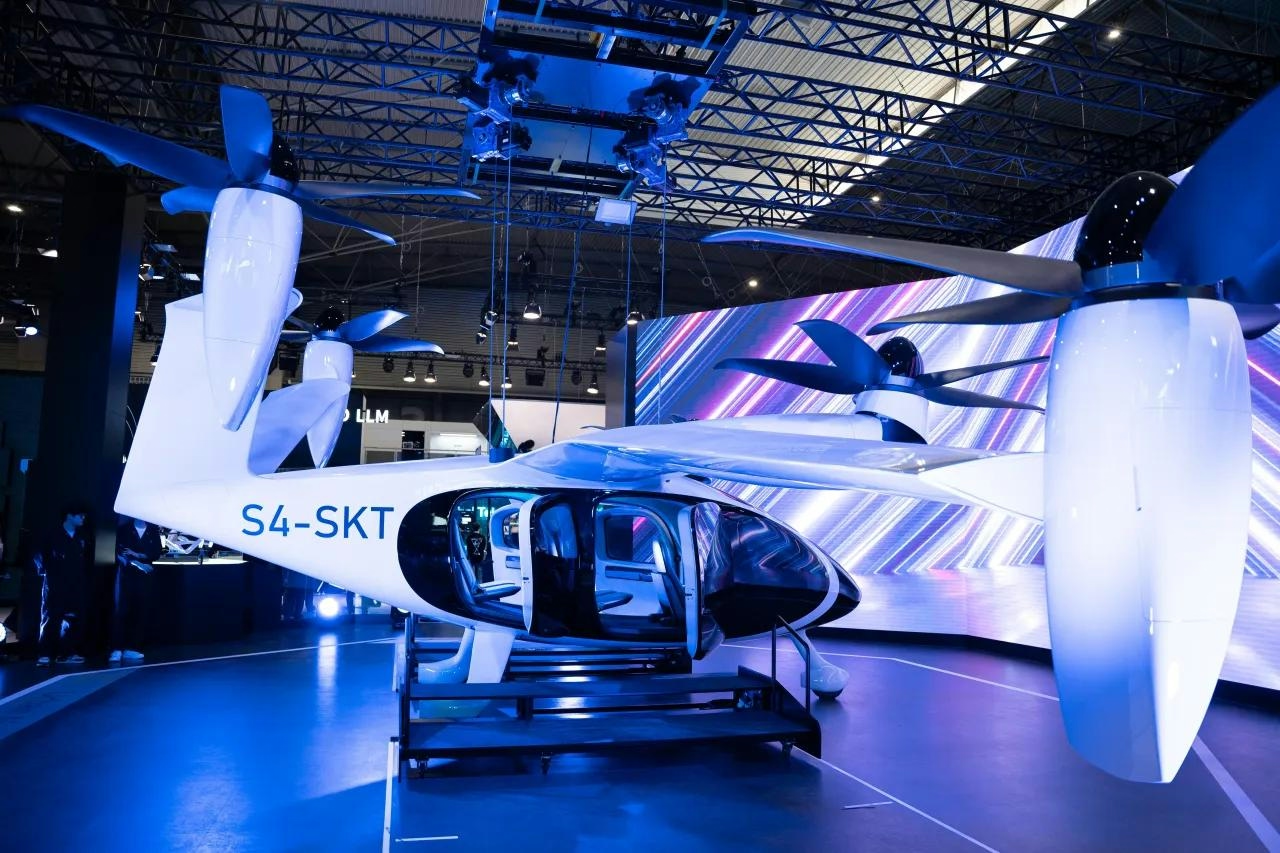
Investor Confidence Declines in Air Taxi Sector for 2026
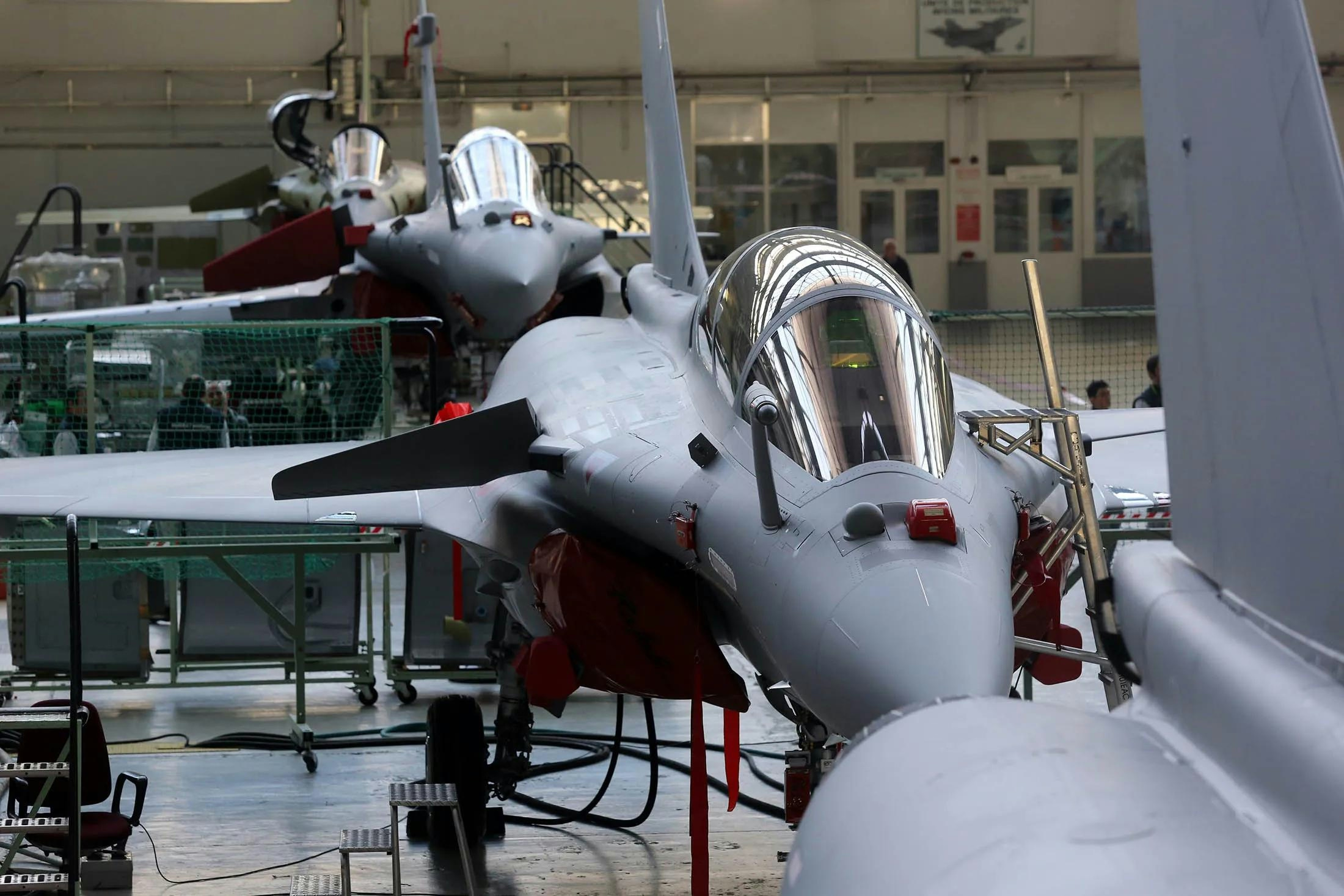
Software Issues Delay Full Delivery of Rafale Jets to India Despite Full Payment
Cathay Pacific Expands Long-Haul Routes Alongside Singapore Airlines, Korean Air, and Emirates
Five Aircraft Equipped with the Most Powerful Jet Engines
Jet Fuel Shortages Disrupt Flights in Milan, Venice, and Bologna Amid Broader European Supply Issues
Delta Places First U.S. Order for Airbus A350-1000 Widebody Jets

Plane lands on Pennsylvania highway due to ‘engine issues,’ FAA says
LEVEL Suspends San Francisco Flights Due to Engine Shortage
